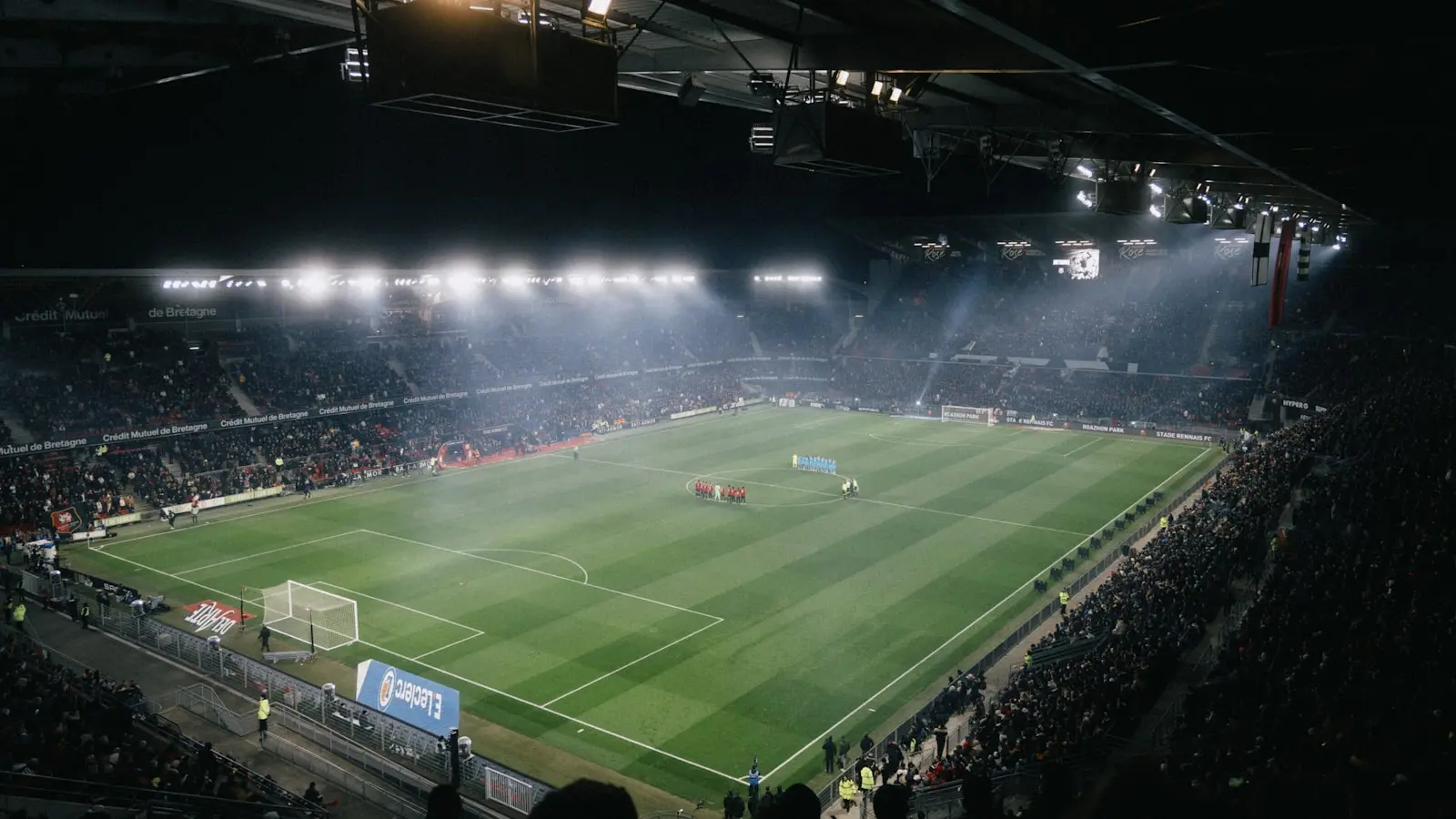
A football match can feel more culturally memorable than a celebrated television episode because its ending remains genuinely unresolved while people experience it together. A decisive goal, save, error or final whistle has consequences for players, clubs and supporters, and those consequences cannot be rewritten after the event.
That does not make football inherently better than television. Scripted drama can offer greater control of writing, performance, imagery and thematic payoff. But iconic football match moments draw force from a particular combination of uncertainty, compressed stakes, appointment viewing and the sense that something consequential is unfolding in real time.
Key Takeaways
- Football’s suspense comes from an outcome that is genuinely unknown, rather than one that has already been written and filmed.
- Titles, elimination, relegation, rivalries and national-team identity can make a single action carry years of meaning.
- Live scheduling turns major matches into shared events, where the reactions around the screen or stadium become part of the memory.
- Highlights and commentary give brief incidents a long afterlife, but reach alone does not determine cultural value.
- Television can be equally lasting through craft, character investment and thematic depth; it simply creates emotional peaks by different means.
Live uncertainty creates a different kind of suspense
Television suspense is constructed. Writers and directors control what viewers know, when information is revealed, how long a scene lasts and which details foreshadow a later turn. The outcome may still surprise an audience, but it has already been decided, performed and edited before anyone presses play.
Live sport works differently. No one knows whether a defender will misjudge a bouncing ball, a goalkeeper will save a penalty or a stoppage-time attack will produce a goal. The uncertainty is not a storytelling technique. It is the basic condition of the event.
Football is especially suited to this tension because goals are relatively scarce. One finish can separate victory from defeat, qualification from elimination, or celebration from a long off-season of regret. Long spells of tactical caution can therefore make a breakthrough feel larger rather than less important.
The clock adds another layer. As the final minutes disappear, clearances, stoppages and set pieces gain significance. A late goal is dramatic not only because it changes the score but because it may leave the opponent too little time to respond.
Still, unpredictability alone does not create an iconic moment. An erratic low-stakes match can be entertaining without becoming part of broader cultural memory. For unpredictable sports to produce a lasting moment, the uncertainty usually needs context: a title race, knockout tie, derby, major tournament or long-running rivalry.
Football match stakes compress years of meaning into 90 minutes
Football match stakes can bring a backlog of history into a short contest. One fixture may carry the work of an entire season, the importance of league position, the pressure of a local rivalry or the hopes attached to a national team.
That compression changes how viewers interpret small actions. A misplaced pass is not merely a technical error when relegation or knockout elimination is at stake. A blocked shot may become the intervention that protected months of work.
Supporters also arrive with prior investment. Their connection may come through a club, city, family tradition, local identity or national allegiance. That does not mean every supporter experiences the same intensity, but it helps explain why a result can matter beyond the players on the pitch.
Irreversibility is central. A cup defeat ends a campaign. A missed chance can become a reference point for years. A title-winning goal may shape how a player, manager or team is discussed long after the table is final.
Underdog stories sharpen the effect. When a less-fancied side defeats a dominant opponent, the result does more than produce a surprising scoreline. It challenges an expected hierarchy. The story is easy to retell: reputation, resources or history pointed one way, while the match went another.
This is why memorable match endings are not always the most technically polished. A scrappy winning goal can outweigh a beautiful low-stakes finish because its consequence is clearer. Skill matters, but context determines how much that skill comes to mean.
Scarcity and shared attention turn live sports drama into an event
A football match has one first viewing. It begins at a set time, develops minute by minute and ends whether a viewer is ready or not. Missing the decisive sequence means missing it in its unresolved form.
That scarcity encourages appointment viewing. People plan evenings, travel to stadiums, gather in homes or public venues, and accept the event’s timing rather than setting their own. In an era of flexible entertainment, that fixed schedule can make live sports drama feel unusually communal.
Immediate reactions matter. A goal is experienced not only through the broadcast image but through noise, silence, disbelief, arguments and celebration around the viewer. For some people, the location and company become attached to the match itself, making a decisive game a social memory as well as a sporting result.
Television can create shared attention too. A major premiere or finale may prompt simultaneous viewing and sustained conversation. Yet on-demand releases also let viewers pause, delay or watch at different speeds, reducing the pressure of a single collective moment.
That flexibility is not an artistic weakness. It lets audiences revisit scenes, absorb complex storytelling and watch on their own schedule. It simply creates a different kind of event from a live match, where learning the score early can fundamentally change the experience.
Replays, commentary and retelling extend iconic football match moments
Football’s live uncertainty does not vanish at the final whistle. Highlights, commentary calls, photographs and repeat broadcasts preserve the event. A sequence lasting seconds can be extracted from a 90-minute match and revisited for years.
This gives iconic football match moments a double life. First comes the original experience, when the outcome is unknown. Then comes the retelling, when viewers know the result but can return to the technique, tension and reaction.
Commentary, stadium images and player celebrations can become part of the memory because they capture the speed and texture of the live response. They help turn a sporting incident into a compact story that remains understandable even for those who did not watch the full match.
Later consequences can add another layer. A goal may be reconsidered through a player’s career, a manager’s legacy, a club’s later success or the changing direction of a rivalry. The incident does not change, but its place in the larger story can.
Replay volume and audience size do not prove cultural value. Some moments endure because they are visually spectacular; others matter because of what they signify to a club, city or community. Reach measures how widely a moment travels. Resonance concerns what it continues to mean.
Why landmark TV episodes can be just as lasting in different ways
A landmark television episode can be iconic without live risk. Its force may come from how carefully it pays off character development, reveals an idea, changes the meaning of an earlier scene or creates an image that stays with viewers.
Scripted television has forms of control that sport cannot replicate. Directors can shape pacing down to the second. Actors can refine a scene through multiple takes. Music, editing, lighting and production design can focus attention on a particular emotional or thematic effect.
A predetermined outcome does not erase surprise. A well-made episode can create intense uncertainty by managing information and perspective. The difference is that television’s uncertainty belongs to what the audience knows, while football’s uncertainty belongs to the event itself.
Rewatching also serves different purposes. A television episode can reward close attention to performance, structure and visual clues. A football replay preserves the knowledge that the result was once unresolved. One often invites appreciation of construction; the other invites a return to contingency.
Neither medium needs a crude hierarchy. Memorable match endings tend to draw force from real-time consequence. Great television episodes often draw force from execution, meaning and accumulated investment in fictional characters. Both can become cultural reference points, but they arrive there by different routes.
A practical framework for comparing sport versus television moments
Rather than asking whether sport or television produces the better moments, compare them through five questions.
Uncertainty: Did the audience genuinely not know what would happen, or did the work create suspense through controlled revelation? Live football has an advantage in real-world unpredictability, while television can excel at managing perspective.
Consequences: What changed after the moment? In football, that may mean a trophy, elimination, promotion, relegation, reputation or rivalry. In television, it may mean a character’s fate, a moral argument or a shift in how an entire series is understood.
Scarcity: Was the first experience tied to one unrepeatable time and place? A live match usually is. Television may be less scarce, although a coordinated premiere can still feel like an event.
Shared attention: Did simultaneous viewing, conversation and immediate reaction shape the experience? Both media can benefit, but football’s fixed schedule and score-sensitive nature make watching before the outcome is known especially important.
Craft and afterlife: Does the moment hold up through replay, retelling and changing context? A famous goal needs more than late drama to endure, just as a television episode needs more than a twist to remain meaningful after first viewing.
Football often creates a distinctive kind of cultural memory because live risk, collective stakes, scarcity and retelling converge in one event. Television is fully capable of iconic moments, but it usually reaches them through a different bargain: less real-world uncertainty and more authored control.
FAQ
Why do last-minute football goals feel so memorable?
They combine time pressure with irreversible consequence. A late goal can reverse the result while leaving little opportunity for a response. When a title, elimination or rivalry is involved, that swing carries additional weight.
Are live sports more emotionally powerful than television drama?
Not necessarily. Live sport can feel uniquely intense because the outcome and consequences are real and unresolved. Television can be equally affecting through character work, performance and carefully built thematic payoff. The stronger experience depends on the viewer and the particular event.
What makes a football match historically significant rather than merely exciting?
Excitement concerns what happened during the game. Historical significance concerns what the result changed or came to represent. A match becomes more meaningful when it affects a competition, alters a club or player’s legacy, shifts a rivalry or captures a wider underdog or national story.