You can eat well while traveling on a tight budget by using a flexible routine rather than trying to make every meal perfect. A simple breakfast, portable snacks, one satisfying local meal, safe hydration, and a planned amount for treats can control spending without removing spontaneity.
The best healthy budget travel food is not necessarily the cheapest item on a menu. It is the option that offers reasonable fullness, enjoyment, convenience, and confidence in how it was prepared. Those priorities vary by destination, so the goal is to use a repeatable decision process rather than a fixed list of foods or prices.
Key Takeaways
- Divide your food budget into predictable costs and flexible spending for local specialties or treats.
- Use supermarkets, markets, bakeries, and casual restaurants to build cheap healthy travel meals without needing a kitchen.
- Choose meals by looking for a filling protein source, produce or fiber, and a portion that suits your hunger and activity.
- Enjoy pastries, fried foods, and alcohol deliberately while keeping hydration and satisfying meals in the day.
- Check destination-specific food and water guidance, and use practical safety cues before choosing unfamiliar foods.
Set a Flexible Food Budget Before the Day Gets Busy
Start by deciding how much of your daily travel allowance can go toward food. The right amount depends on the destination, trip length, accommodation, planned activities, and whether breakfast or other meals are included. Avoid relying on universal price averages because costs can vary substantially between neighborhoods and countries.
Divide the amount into predictable and flexible spending. Predictable spending might include breakfast, water, and one or two snacks. Flexible spending is the portion reserved for a market dish, regional specialty, dessert, drink, or an unexpected meal with other travelers.
This structure protects spontaneity. If every unit of currency is assigned in advance, an appealing local food experience can feel like a budget failure. If no amount is reserved for surprises, several small purchases can consume the money intended for a substantial meal.
Before sitting down in a tourist-heavy area, look at the menu and prices when possible. A cheap-looking meal may be poor value if it leaves you hungry soon afterward, while a somewhat more expensive dish may include a filling protein, beans, vegetables, rice, bread, or another substantial component.
A useful quick rule is to compare five things: cost, fullness, convenience, food quality, and whether you will probably need another meal soon. This is more practical than asking whether a meal is simply cheap or expensive.
Build Cheap Healthy Travel Meals Around Supermarkets, Markets, and Bakeries
When you do not have a kitchen, supermarkets can provide some of the most flexible cheap healthy travel meals. A simple breakfast might combine fruit or another produce item with yogurt, eggs, oats, whole-grain bread, nuts, cheese, or a comparable protein-rich food available locally.
You do not need to assemble a perfect nutrition formula. The basic aim is to pair something that provides lasting fullness with something fresh or fiber-rich when practical. For example, bread with eggs and fruit may be more sustaining than a pastry alone, while yogurt with oats or nuts can be convenient before a morning of walking.
Portable foods are useful when sightseeing makes regular meals difficult. Fruit, nuts, bread, cheese, yogurt, or other locally available foods can help bridge a long gap between meals. Choose items that travel well in the conditions you will actually face. Refrigerated foods need more care in hot weather or when you will be carrying them for hours.
Markets can combine affordability with a genuine local experience. You might find prepared dishes, fruit, bread, legumes, grilled foods, or regional snacks without the atmosphere and pricing of a tourist-focused restaurant. Conditions vary, however. Pay attention to refrigeration, handling, protection from dust and insects, and whether foods are being kept hot or cold as appropriate.
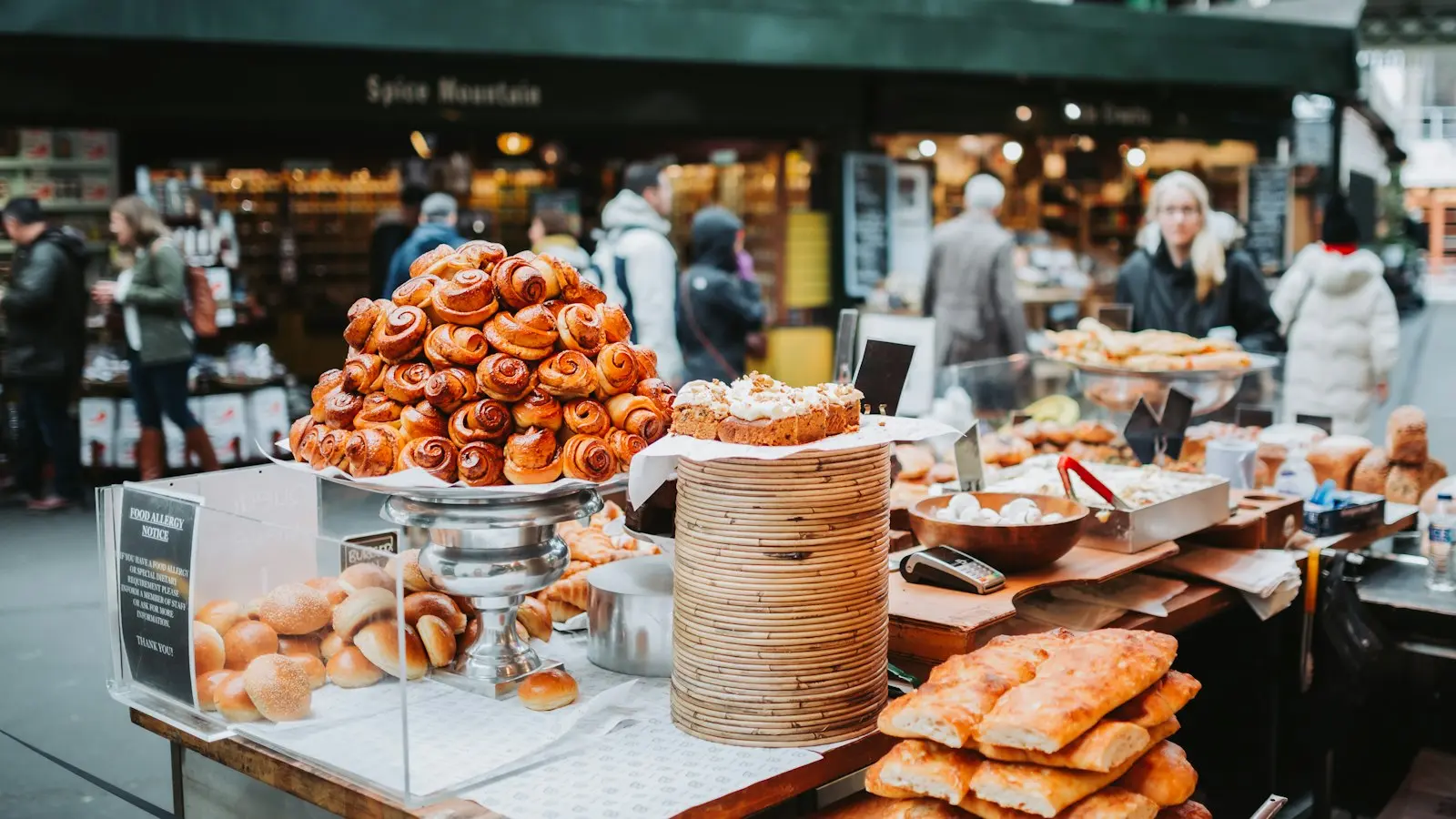
Bakeries are convenient and often culturally important, but many bakery choices are primarily refined carbohydrates and fat. That does not make them forbidden. A pastry can be part of breakfast or an afternoon experience; adding yogurt, eggs, cheese, fruit, or a later substantial meal may help maintain energy.
Food halls and casual restaurants can offer a middle ground between a supermarket and a formal restaurant. They may provide more variety and seating, but prices and preparation standards differ. Tourist districts usually offer convenience and familiar menus, while neighborhoods away from major attractions may offer better value, though each establishment still deserves individual judgment.
Choose Satisfying Local Meals Without Counting Calories
You can make a reasonably balanced choice without weighing food or counting calories. Look briefly for three elements: a protein source, a produce- or fiber-rich component, and a portion that matches your hunger and activity that day.
Protein might come from eggs, fish, meat, poultry, yogurt, cheese, tofu, beans, lentils, or another local food. Fiber and produce may come from vegetables, fruit, beans, whole grains, potatoes, or a soup containing plant foods. Not every meal needs all three in equal amounts, but the combination can make a meal more satisfying than a highly processed snack eaten alone.
Use this check to compare options rather than judge them. A grilled dish with vegetables may be filling and relatively simple, while soup with bread or beans may be practical during a walking-heavy day. A fried local specialty may be exactly what you want to try; you can enjoy it and choose a different balance at another meal.
Ordering strategies can also improve value. Share a large dish if portions are generous, add a vegetable or bean-based side when appealing, or choose soup, grilled food, rice-and-bean combinations, or other substantial local options. These are suggestions, not rules. The best choice depends on local cuisine, your preferences, hunger, and what is available.
Saving part of a large serving can work, but only when safe storage is available. Food that needs refrigeration should not be carried around in warm conditions for an extended period. When in doubt, treat leftovers as a convenience issue as well as a food-safety issue.
Eating well abroad does not require replacing local food with a standardized diet. Regional pastries, inexpensive drinks, fried dishes, and street snacks are part of travel for many people. The practical trade-off is to avoid letting foods that are easy to eat quickly crowd out the meals and fluids that keep you comfortable and energized.
Manage Treats, Alcohol, Hydration, and Energy on Active Travel Days
Treats are easier to enjoy when they are planned as part of the day rather than treated as a loss of control. You might choose a pastry at a bakery, a fried market snack, a dessert after dinner, or a local drink. The choice can fit your budget and preferences without moral judgment.
If one stop is especially rich or small, balance the day by choosing more filling foods at another time. For example, a pastry breakfast might be followed by fruit and yogurt, a substantial lunch, or a snack containing nuts or cheese. This is not compensation or restriction; it is simply a way to avoid becoming hungry and uncomfortable while walking.
Hydration deserves attention because travel often changes your routine. Long walks, hot weather, alcohol, disrupted sleep, and gastrointestinal symptoms can all make fluids more important. Carry safe water when practical, and check destination-specific guidance before assuming tap water or ice is suitable for drinking.
Alcohol can affect judgment, sleep, hydration, and later food choices. If you drink, consider how it fits with walking, heat, transportation, and your ability to recognize when you need water or food. There is no need to build the trip around rigid rules, but it is sensible to avoid allowing alcohol to replace meals or fluids.
Use Food-Safety Checks Before Choosing the Cheapest Option
Price does not determine food safety. An inexpensive meal is not automatically risky, and an expensive restaurant is not automatically safe. Make the decision using the conditions you can observe, along with destination-specific public-health guidance.
At a street stall or unfamiliar kitchen, look for food that is cooked thoroughly and served hot when it is meant to be hot. Notice whether raw and cooked ingredients appear to be handled separately, whether perishable foods are kept at appropriate temperatures, and whether utensils and preparation surfaces appear reasonably managed.
A busy stall may indicate that food is being prepared frequently, but popularity is not a guarantee. Likewise, visible cleanliness is useful information but cannot reveal every contamination risk. Treat these observations as part of a judgment, not proof of safety.
Raw produce, unpasteurized products, ice, tap water, sauces, and foods held at room temperature can have different risk profiles depending on the destination and handling. Check current guidance from a relevant public-health authority for the country or region you are visiting. Packaged foods are not automatically risk-free either; check seals, storage conditions, and dates where relevant.
Travelers who are pregnant, immunocompromised, older, very young, or managing a condition that increases the consequences of foodborne illness may need to be more cautious. Personalized guidance is best discussed with a qualified clinician before travel.
If vomiting, diarrhea, fever, dehydration, blood in the stool, severe pain, or other concerning symptoms develop, seek appropriate local medical advice. Persistent or worsening symptoms should not be managed solely through travel tips.
A Low-Cost Travel Day That Leaves Room for Local Food
A flexible day might begin with a supermarket, bakery, or accommodation-based breakfast. Choose a filling component such as eggs, yogurt, cheese, oats, or bread, and add fruit or another produce item when available. Drink safe water before leaving rather than waiting until you are very thirsty.
During sightseeing, carry one or two portable snacks. Fruit, nuts, bread, yogurt, or cheese can help you avoid buying the first available option after several hours of walking. Keep temperature-sensitive foods appropriately chilled or choose shelf-stable alternatives for longer outings.
For the main meal, select an affordable local dish using a quick check of protein, produce or fiber, portion size, cooking method, and visible handling conditions. A casual restaurant, food hall, market vendor, or street stall may work, depending on the destination and your confidence in the conditions.
Reserve part of the day’s spending for a treat: perhaps a pastry, dessert, fried snack, or local drink. In the evening, decide based on actual hunger, activity, hydration, and what you have already eaten. Choose a lighter or more substantial meal as needed, without trying to punish yourself for an indulgent choice or force yourself to eat when you are not hungry.
FAQ
What are the best cheap healthy travel meals when I do not have a kitchen?
Look for combinations that include a filling food and, when practical, fruit, vegetables, beans, or another fiber-rich item. Examples include yogurt with oats and fruit, eggs with bread and fruit, beans with rice, soup with bread, or a local grilled dish with vegetables. Availability and food-safety conditions vary by destination.
How can I eat street food safely while traveling abroad?
Check whether food is cooked thoroughly and served hot, whether raw and cooked foods are kept separate, and whether perishable ingredients appear to be stored appropriately. Also follow destination-specific advice about tap water, ice, raw produce, and unpasteurized foods. No visual check guarantees safety.
How do I balance local treats, alcohol, and healthy eating on a tight travel budget?
Include treats deliberately rather than trying to avoid them completely. Pair richer or smaller choices with satisfying meals at other times, keep safe water available, and consider how alcohol may affect sleep, hydration, judgment, and later food decisions. A flexible structure usually works better than an all-or-nothing plan.