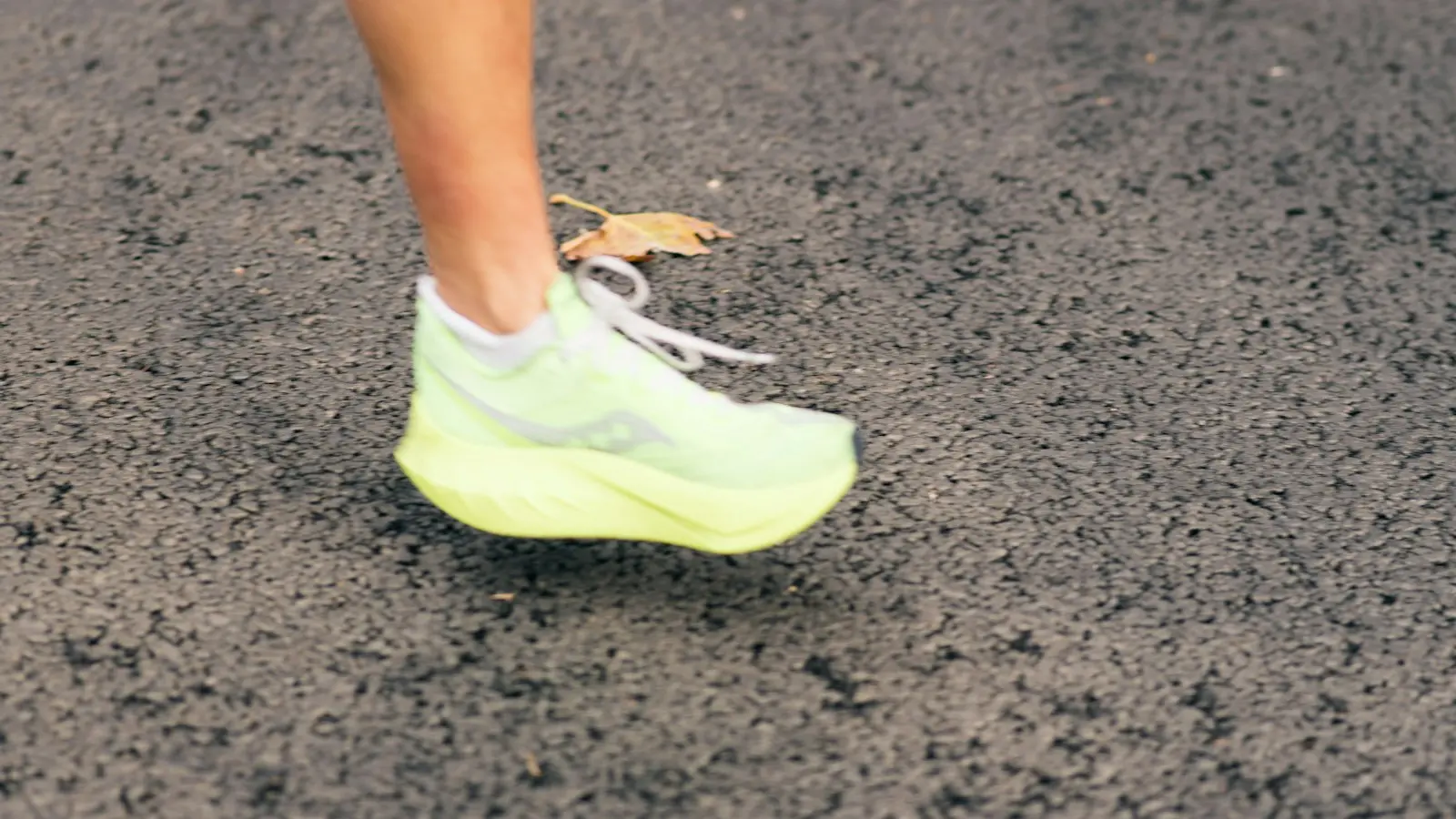
A low or fallen arch does not automatically mean you need stability or motion-control running shoes. The best choice depends on how your foot moves, whether you have symptoms, how the shoe fits, where you run, and how your training has changed.
In practical terms, prioritize a secure and comfortable fit first. Then compare neutral and stability designs based on your experience, not simply on the appearance of your arch. This guide offers general information, not a diagnosis of flat feet or a prescription for footwear.
Key Takeaways
- Flat feet do not automatically require stability or motion-control shoes.
- A comfortable, secure fit matters more than arch appearance alone.
- Choose shoe structure based on movement, symptoms, training demands, and personal preference.
- Introduce major footwear changes gradually and monitor how you feel during and after runs.
- Seek professional assessment for persistent, severe, worsening, one-sided, or activity-limiting symptoms.
1. Understand What “Flat Feet” Means for Running
“Flat feet” can describe several different situations. Some runners have a naturally low arch that remains flexible and causes no discomfort. Others have an arch that appears when the foot is off the ground but flattens while standing. A rigid, painful, or newly collapsed arch is a different concern and deserves more careful assessment.
Arch height while standing also does not tell the whole story about running mechanics. Your foot may roll inward to some degree as it accepts load, a normal movement often called pronation. The question is not whether the foot moves inward at all, but whether the movement is excessive for you, associated with symptoms, or contributing to difficulty controlling your stride.
This distinction matters because a visible low arch is not the same as excessive inward motion, often called overpronation. Two runners can have similarly shaped feet but use very different mechanics. One may run comfortably in a neutral shoe, while another may prefer a shoe with more guidance or need an assessment for recurring pain.
Painless flat feet may not require corrective footwear. If you can run, recover, and increase training without recurring symptoms, your current shoe choice may already be adequate. A shoe should not be changed solely to “fix” an arch that is not causing a problem.
On the other hand, persistent pain, repeated blisters, unusual fatigue, or a noticeable change in foot shape should not be reduced to a simple footwear label. Footwear, training load, running surface, strength, mobility, and an underlying condition can all affect how a runner feels.
2. Match Shoe Structure to Gait, Comfort, and Use
Running shoes are often grouped into neutral, stability, and motion-control categories. These labels describe design intent, but they do not create a universal ranking from least safe to most supportive.
Neutral shoes generally allow the foot to move without prominent guidance features. They can be a reasonable option for a runner with low arches when the fit is secure, the shoe feels comfortable, and there are no recurring symptoms that suggest a need for additional guidance. Neutral does not mean unsupportive; cushioning, width, heel structure, and midsole firmness still influence how the shoe feels.
Stability shoes usually add features intended to guide or moderate movement. The amount and location of that structure vary considerably between models. Some feel subtly supportive, while others create a more noticeable platform under the midfoot or heel. A runner may prefer this sensation because it feels stable during longer runs, turns, hills, or periods of fatigue.
A stability design may be worth testing if you like its feel, experience recurring discomfort that appears related to control or fatigue, or receive individualized guidance from a qualified professional. That does not mean the shoe will correct your gait permanently or prevent an injury. It means the structure may suit your movement and comfort preferences better.
Motion-control shoes are generally more structured and are intended for runners who need a stronger degree of guidance. They can feel reassuring to one person but restrictive, heavy, or intrusive to another. A low arch alone is not a sufficient reason to select this category.
The useful comparison is therefore stability shoes versus neutral shoes for your particular running context. Consider whether the shoe remains comfortable as you tire, whether your heel stays secure, and whether the platform feels natural at your usual pace. A shoe that feels excellent while walking may feel too firm or controlling after several miles.
Training demands also matter. A runner completing short, easy sessions on level pavement may have different needs from someone running long distances on cambered roads, trails, hills, or mixed surfaces. Recent increases in mileage, speed work, hills, or frequency can create discomfort that is incorrectly blamed on flat feet or inadequate arch support.
Arch supports and orthotics are not automatically necessary for every runner with low arches. They may be useful in selected cases, but the reason for using them should be clear. If you already use an insert, take it when trying on shoes and check that the shoe has enough volume and width to accommodate it without creating pressure.
3. Use a Practical Flat-Feet Running Shoe Fit Test
Good flat-feet running shoe fit starts with timing. If practical, shop later in the day or after activity, when your feet may be slightly larger. Wear the socks you run in, and bring any orthotics or inserts you intend to use.
Begin with length. Your toes should have room to spread and move without touching the front of the shoe. Some space in front of the longest toe is useful, especially because feet can swell during longer runs and downhill movement can push the foot forward. If your toes press against the front during a short fitting, the shoe is unlikely to improve on a long run.
Next, check width and shape. Your forefoot should not be squeezed from the sides, and the upper should not bulge significantly over the widest part of the foot. Do not assume that a familiar size in one brand or model will fit the same way in another. Last shape, upper material, platform width, and internal volume can all change the fit.
Your heel should stay in place without requiring the laces to be tightened aggressively. A small amount of movement can be normal, but repeated slipping may cause rubbing or make you grip with your toes. Excessive pressure around the ankle is also a warning sign, particularly if it changes your stride or creates numbness.
Pay close attention to the midfoot. The arch area should feel comfortably held, not pressed by a hard ridge or concentrated bump. Some runners interpret pressure as support, but persistent arch pressure can become a problem as mileage increases. Support should not feel like a painful correction.
Walk in the shoes, then jog if the store allows it. Try your normal stride, a few turns, and a gentle change of pace. Compare both feet because they may differ in length or width. Fit the larger foot, then use lacing adjustments or an appropriate insole to manage the smaller side rather than choosing a size that compresses the larger foot.
If you are making a major change in structure, cushioning, heel-to-toe geometry, or overall feel, introduce the shoes gradually. Start with shorter, easier runs and alternate with a familiar pair if needed. Wearing a substantially different shoe for a long or hard session makes it difficult to separate footwear effects from an abrupt training change.
4. Evaluate Symptoms and Running Context After the Purchase
Do not judge a shoe only by its first five minutes in a store. Track how it feels during the run and later that day. Also note whether discomfort appears at a particular distance, pace, surface, or point in the training week.
Persistent arch pressure, heel slipping, toe numbness, repeated blisters, or rubbing suggest a possible fit problem. Worsening shin, knee, foot, or ankle symptoms may also indicate that the shoe, training change, or running mechanics need review. These signs do not prove that the shoe is wrong, but they are reasons to avoid simply adding more support and hoping the problem disappears.
Consider the wider context. A sudden mileage increase, additional hill work, harder intervals, a new surface, or insufficient recovery can cause symptoms even when footwear has not changed. Conversely, a shoe may expose a problem when it does not provide enough room, feels unstable on your usual route, or changes your stride noticeably.
If pain is significant, worsening, or altering your running mechanics, reduce or stop the provoking activity rather than continuing to test the shoe through pain. A short period of observation can help, but persistent symptoms should not be treated as a normal break-in process.
There is no reliable guarantee that a neutral shoe, stability shoe, insert, or arch support will prevent injury. The more useful goal is a comfortable, secure setup that allows you to train consistently while responding to symptoms early.
5. Know When a Professional Assessment Matters More Than the Label
A podiatry or sports medicine assessment is appropriate when pain persists, keeps returning, is severe, occurs mainly on one side, or limits normal activity. Seek professional input for swelling, weakness, numbness, a rigid-looking or painful arch, or a noticeable change in foot position.
An assessment may consider your symptoms, training history, footwear, walking and running movement, strength, range of motion, and functional tasks. This broader information is more useful than choosing a shoe from arch appearance alone. It can also help distinguish a fit issue from a problem involving the foot, ankle, knee, or training progression.
Treadmill or gait analysis can provide helpful observations, especially when combined with your history and symptoms. It is not a perfect predictor of injury, and it should not automatically dictate one shoe category. Running mechanics can change with speed, fatigue, surface, and footwear, so a brief observation has limits.
If symptoms continue, a professional may discuss exercises, load management, footwear changes, or orthotics. These options should be individualized rather than adopted because a label says “flat feet.”
A practical decision rule is simple: choose the best-fitting comfortable shoe first, then consider neutral or stability structure in light of your gait, symptoms, training demands, and professional advice. The best fit for flat feet is not necessarily the most corrective shoe; it is the one that supports consistent, comfortable running without creating new problems.
FAQ: Running Shoes for Flat Feet
Do flat feet always mean I need stability or motion-control running shoes?
No. A low arch does not automatically require either category. If you are comfortable and symptom-free, a neutral shoe may be entirely reasonable. Stability or motion-control designs should be considered according to feel, movement, recurring symptoms, or individualized professional guidance.
Are neutral running shoes suitable for people with low arches?
They can be. The important questions are whether the shoe fits securely, feels comfortable through your normal run, and allows you to train without recurring problems. Arch height alone cannot determine whether a neutral shoe is suitable.
Are arch supports or orthotics necessary for every runner with flat feet?
No. Some runners benefit from them, while others do not need them. If pain persists or an insert is being considered to address a specific problem, professional assessment can help clarify whether it is appropriate and how it should fit inside the shoe.
When should I see a podiatrist or sports medicine professional about flat feet and running pain?
Arrange an assessment for persistent, worsening, severe, one-sided, or activity-limiting pain, as well as swelling, numbness, weakness, or a rigid or newly changed arch. Professional evaluation is also useful when repeated shoe changes and sensible training adjustments have not resolved the problem.