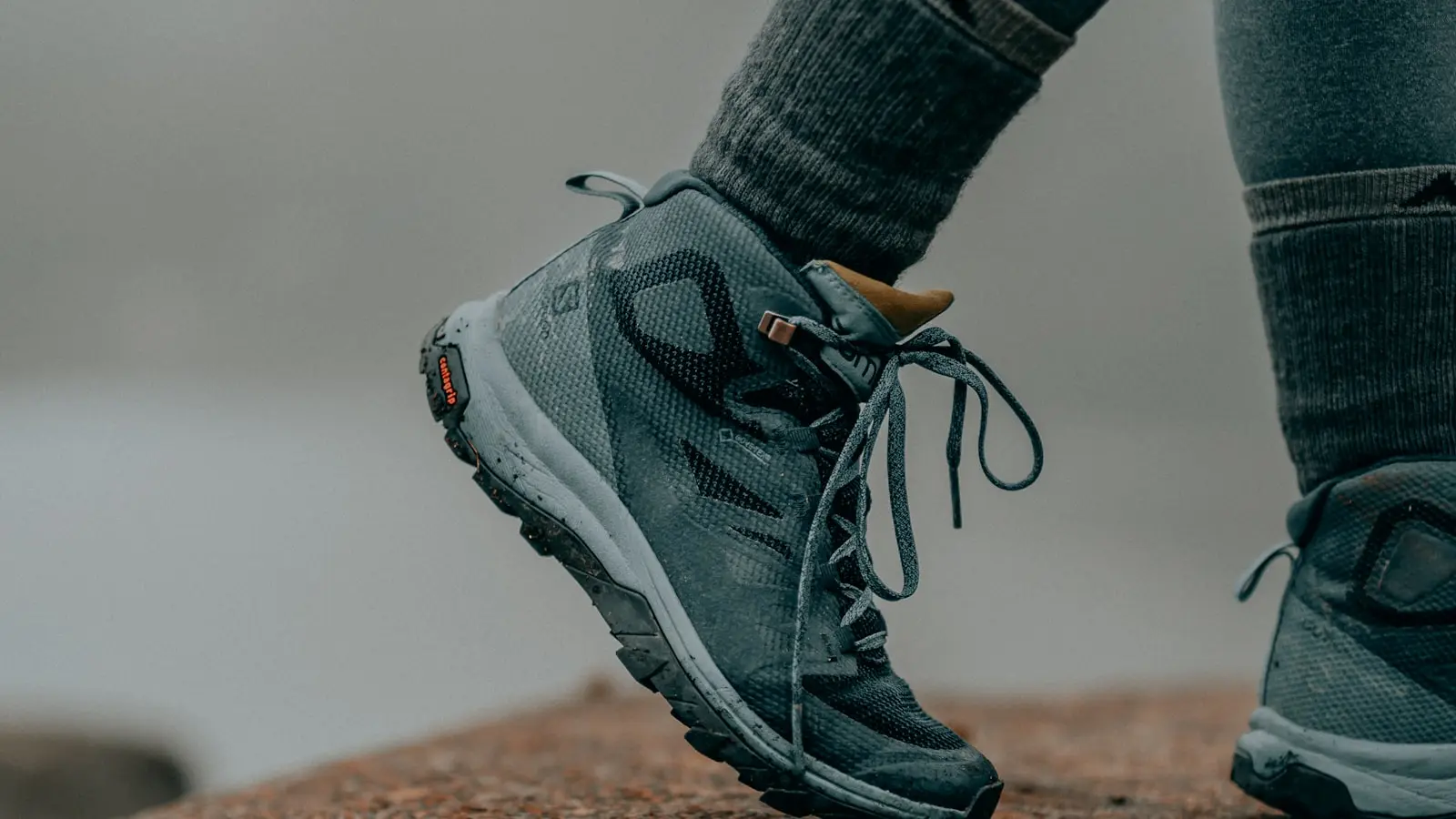
The best hiking boots for steep volcanic terrain combine sticky rubber outsoles, deep aggressive lugs, stiff midsoles with rock protection, and adequate ankle support. Models like the La Sportiva TX Hike Mid, Salomon X Ultra 5 Mid, and Scarpa Zodiac Plus lead the category because they address the specific demands of sharp pumice, loose scree, and wet basalt. Below we explain why standard boots fail, what features matter most, and which seven boots have proven themselves on volcanic trails.
Key Takeaways
- Choose boots with sticky rubber compounds (Vibram Megagrip, Contagrip MA, Continental) for grip on wet volcanic rock; standard rubber becomes slippery.
- Deep, multi-directional lugs 4–5 mm tall with open spacing provide the best traction on loose scree and self-cleaning.
- A stiff midsole with a rock plate protects your feet from sharp edges; mid-cut boots (4–5 in.) offer the best balance of ankle support and weight for most volcanic day hikes.
- Tread can wear down 30–50% after 50–100 miles on sharp pumice; inspect and clean outsoles after each trip to extend boot life.
Why Standard Hiking Boots Fail on Volcanic Rock
Volcanic rock is exceptionally abrasive. Pumice and basalt can shred soft rubber outsoles and thin fabric uppers within a single trip. Tread often wears down significantly after 50–100 miles on sharp volcanic surfaces. Loose scree and steep slopes demand lugs that bite and self-clean; rounded or shallow lugs simply slide. Wet conditions are common on volcanic islands—fog, rain, and small streams—so standard boots that lack a high-friction rubber compound become treacherous on wet rock. Toe protection and ankle support are often inadequate in light hikers; kicking into a step or side-hilling on unstable ground can lead to injury or boot damage.
Critical Features for Volcanic Terrain
Outsole rubber compound is the single most important feature. Look for Vibram Megagrip, Contagrip MA, or Continental rubber. These sticky compounds maintain grip on wet, polished rock where standard hard rubber becomes slippery. Avoid generic outsoles labeled only as “rubber.”
Tread pattern should have deep, multi-directional lugs at least 4 mm in height with open spacing. This allows mud and small rocks to shed so the next step makes solid contact. A pronounced heel brake is also valuable for steep descents.
Midsole stiffness matters because sharp volcanic edges can bruise the foot without a rock plate or stiff shank. A moderately stiff midsole reduces fatigue on long talus fields. Too soft a platform leads to instability on uneven ground.
Toe cap and rand need full rubber wrapping that shields the upper from cuts when you kick into steps. Thin mesh uppers tear quickly on lava; abrasion-resistant nylon or leather is recommended.
Waterproofing vs. breathability is a trade-off. A Gore-Tex membrane keeps feet dry in wet conditions but traps heat and sweat, which can cause blisters in hot, dry volcanic deserts. For very hot, dry hikes, consider unlined synthetic boots that drain and dry quickly.
Ankle Support: Mid-Cut vs. High-Cut vs. Low-Cut
Mid-cut boots (4–5 inches) offer the best balance of mobility and lateral support for loose, uneven terrain. They are the most popular choice for volcanic day hikes, providing enough stiffness to resist ankle rolls without the weight penalty of high-cut boots.
High-cut boots (6+ inches) provide superior ankle stability for carrying heavy packs or navigating steep scree slopes. The extra height reduces the risk of rolling an ankle on unstable rubble, but the added weight can be tiring on long approaches.
Low-cut boots and trail runners are generally not recommended for serious volcanic terrain. They lack the rock protection, tread depth, and ankle support necessary for sharp, loose ground. Only very experienced hikers on well-defined, non-technical trails might consider them.
Decision rule: If you are carrying more than 25 lbs or expect sustained off-trail scree, choose high-cut. For day hikes with light packs, mid-cut is ideal. Low-cut should be reserved for easy, maintained trails.
Top 7 Hiking Boots Tested on Volcanic Terrain
1. La Sportiva TX Hike Mid Leather GTX
- Pros: Vibram Megagrip outsole excels on wet volcanic rock; stiff midsole with a rock plate protects against sharp edges; full-grain leather upper resists abrasion; precise fit for technical scrambling.
- Cons: Narrow fit may not suit wide feet; weight of 1 lb 12 oz per boot is moderate; limited cushioning for heavy packs.
- Best for: Technical day hikes and light backpacking on mixed volcanic terrain where wet rock is common.
2. Salomon X Ultra 5 Mid GTX
- Pros: Lightweight at about 1 lb 8 oz; Contagrip MA compound provides good grip on wet and dry rock; quick-lace system is convenient; out-of-box comfort requires little break-in.
- Cons: Upper is less durable than leather—sharp pumice can wear through faster; not ideal for frequent off-trail scrambling.
- Best for: Fast day hikes and travelers who prioritize low weight and convenience.
3. Scarpa Zodiac Plus GTX
- Pros: Vibram Drumlin outsole with deep, aggressive lugs; bi-density midsole balances protection and comfort; half-length rock plate; supportive high cuff for ankle stability.
- Cons: Heavy at approximately 2 lb per boot; stiff break-in period; premium price.
- Best for: Multi-day backpacking with heavy packs on rugged volcanic terrain where durability and support are paramount.
4. Zamberlan 996 Vioz GTX
- Pros: Full-grain leather upper is extremely durable against cuts and abrasion; Vibram Pentagram outsole with an aggressive heel brake; excellent ankle support; can last hundreds of miles.
- Cons: Very heavy (around 3 lb per boot); long break-in; hot in warm climates; expensive.
- Best for: Extended expeditions where boot longevity is critical and weight is less of a concern.
5. Merrell Moab Speed 2 Mid GTX
- Pros: Lightweight (1 lb 5 oz); Vibram Megagrip outsole; comfortable with moderate cushioning; affordable price.
- Cons: Less protective than full-leather boots; lugs may wear faster on sharp rock; upper is less abrasion-resistant.
- Best for: Budget-conscious hikers doing primarily dry volcanic trails with moderate loads.
6. Hoka Mafate Hike Boots
- Pros: Maximum cushioning absorbs shock on long descents; Vibram Megagrip with deep lugs; stable platform with a rock plate.
- Cons: Heavy (2 lb 2 oz) and bulky; less nimble for technical scrambling.
- Best for: Hikers who prioritize comfort and shock absorption on long, rocky traverses, such as the Kalalau Trail on volcanic islands.
7. Adidas Terrex Free Hiker 2 (Mid)
- Pros: Continental rubber outsole performs well on wet rock; lightweight knit upper with Parley mesh; great energy return; no break-in required.
- Cons: Knit upper is less abrasion-resistant than leather; limited ankle support; less durable for frequent off-trail use.
- Best for: Trail runners transitioning to boots for moderate volcanic terrain where weight and comfort are top priorities.
How to Extend Boot Life After a Volcanic Trip
After hiking on volcanic rock, inspect the outsoles carefully. Small fragments of pumice can embed in the lugs and accelerate tread wear. Remove any embedded rocks with a stiff brush or pick. Rinse the boots with fresh water to remove abrasive dust, especially from the sole and rand. If the boots have leather or nubuck uppers, apply a waterproof treatment to restore the coating. Check for sole delamination along the edges—heat and sharp rocks can weaken the adhesive bond. Store boots in a cool, dry place away from direct sunlight to prevent rubber degradation. If you notice significant tread wear or reduced grip on wet rock after a few trips, it may be time to replace the boots.
FAQ
Are trail runners enough for volcanic terrain? Trail runners can work on well-groomed trails, but on steep, loose scree and sharp lava rock they lack necessary ankle support, rock protection, and tread durability. Most experienced hikers recommend at least a mid-cut boot with a rock plate for serious volcanic hiking.
Which rubber compound is best for wet volcanic rock? Vibram Megagrip is widely considered the best for wet traction on volcanic surfaces. Contagrip MA and Continental rubber also perform well. Avoid standard outdoor rubber compounds that become slippery on wet basalt.
How often should I replace boots after hiking on volcanic terrain? Check the sole after every significant trip. Deep lugs can wear down significantly after 50–100 miles on sharp pumice. If you feel reduced grip on smooth rock or notice uneven wear, it is time for new boots. Uppers may also develop cuts from lava shards.
Can waterproof boots cause problems in hot volcanic environments? Yes. A waterproof membrane like Gore-Tex traps heat and sweat, increasing the risk of blisters in hot, dry conditions. Unlined synthetic boots are a better choice for arid volcanic deserts. For mixed conditions, consider a boot with a breathable upper and a waterproof lining that can be managed with moisture-wicking socks.
What is the ideal lug depth for volcanic terrain? At least 4 mm. Deeper lugs (5–6 mm) provide better bite on loose scree and mud, but they can be overly aggressive on smooth rock. A depth of 4–5 mm with multi-directional edges is the best compromise.
How do the La Sportiva TX and Salomon X Ultra compare for volcanic use? The La Sportiva TX offers superior wet-rock grip and upper durability, making it better for technical terrain. The Salomon X Ultra is lighter and more comfortable out of the box, but its upper wears faster. Choose the TX if you expect heavy scrambling and sharp rocks; choose the X Ultra for fast-and-light day hikes on well-defined trails.
What price range should I expect for boots that are proven on volcanic terrain? Expect to spend between $160 and $300. Budget models like the Merrell Moab Speed 2 start around $150, while premium leather boots like the Zamberlan 996 exceed $350. Investing in a quality mid-cut boot with a sticky rubber outsole is worthwhile given the accelerated wear on volcanic rock.
What should I do after a volcanic hike to prevent premature boot wear? Clean outsoles of embedded rock fragments, rinse with fresh water, apply waterproof treatment as needed, check for delamination, and store away from direct heat. These steps can add many miles to boot life.