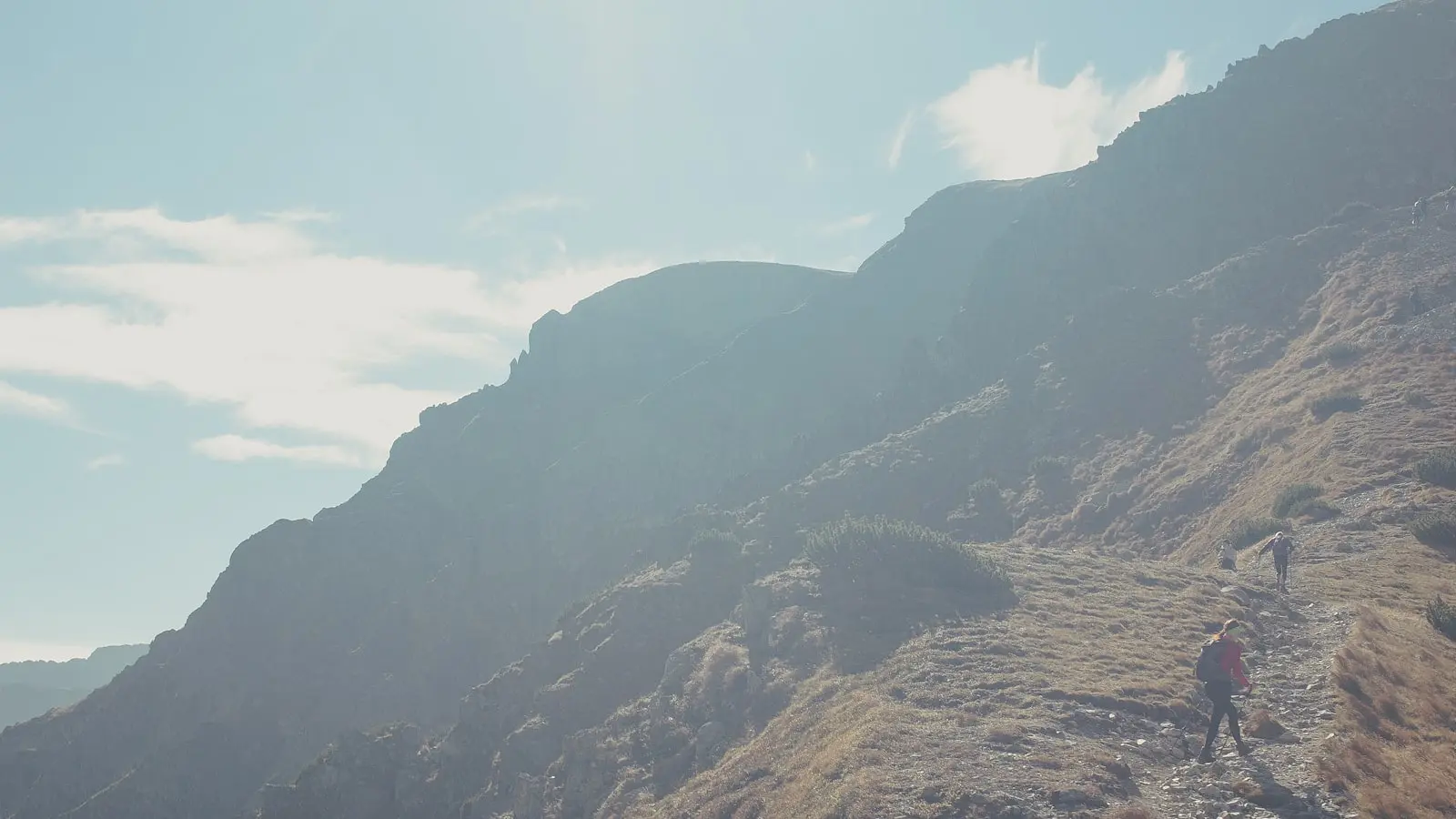
Hill training for hiking should develop four things gradually: time on your feet, sustainable uphill effort, downhill leg control, and comfort with the gear you will carry. The usual mistake is treating a hilly walking trip as a cardio test. Climbing matters, but descents, uneven ground, pack load, weather, and consecutive walking days can be just as demanding.
For beginners, the most effective approach is a repeatable week of easy walking, one controlled incline session, basic strength and balance work, and enough recovery to absorb it. Trying to make up fitness in the final weeks often produces soreness or pain that disrupts the trip itself.
Key Takeaways
- Build a walking base before adding steep hills, difficult terrain, or a heavier pack.
- Train uphill stamina and downhill control separately; strong climbing fitness does not automatically prepare your legs for descents.
- Change only one main training demand at a time: duration, elevation, terrain, intensity, or pack load.
- Use stairs, incline walking, and low step-ups if you do not live near hills or have gym access.
- In the final week, reduce training stress and arrive healthy rather than chasing last-minute fitness.
Start With a Realistic Baseline and Trip Demand
Finishing one flat local walk does not necessarily mean you are ready for long hill walks. A walking holiday may involve several hours outside, changing surfaces, cool-down periods during stops, a day pack, and a second or third walking day before your legs have fully recovered.
Break the trip into practical demands: time on foot, distance, ascent and descent, surface conditions, likely weather, expected pack weight, and the number of walking days in a row. A route with modest ascent can still be difficult if its descent is steep, loose, wet, or late in a long day.
Use a baseline walk rather than a maximum-distance test. Choose a comfortable local route and note how long it takes, whether you can speak in full sentences, how your feet and joints feel, and how you feel the following morning. The goal is to find a repeatable starting point, not prove your fitness in one outing.
Your starting level should reflect consistency, not ambition. Someone returning from inactivity may need shorter walks and more recovery. A regular flat walker can usually introduce gentle hills or stairs sooner. Someone already comfortable with longer walks may benefit most from route-specific practice, especially controlled descents and back-to-back walking days.
A longer preparation period allows smaller, steadier increases. If departure is close, reduce route ambition rather than trying to compress months of adaptation into a few punishing weekends. Persistent pain, chest symptoms, dizziness, unusual breathlessness, or a relevant heart, lung, metabolic, neurological, balance, or joint condition should be discussed with a qualified clinician before training volume increases.
Build the Weekly Walking Base Before Chasing Steep Hills
A beginner hiking fitness plan can fit into four or five activity days without requiring a mountain or gym. The structure matters more than making every workout hard.
A practical week might include:
- Two easy walks at a conversational effort.
- One hill, stair, incline, or step-up-focused session.
- One lower-body strength and balance session, progressing to two nonconsecutive sessions when recovery is consistently good.
- One longer easy walk on a forgiving surface.
- At least one complete rest day.
Easy walks should allow full sentences. This builds useful time-on-feet capacity without turning every outing into a recovery problem. Gentle mobility or a short stroll can fit on a rest day if it feels restorative, but it should not become another disguised workout.
The most useful progression rule is to change one main variable at a time. That might mean increasing walking duration, adding elevation, using rougher terrain, raising the pace, carrying a pack, or completing another hill repeat. Avoid making a longer route, steeper terrain, and heavier pack part of the same session simply because the previous walk felt manageable.
Repeat the current week, or reduce the next session, if soreness changes your walking form, fatigue affects normal daily activity, sleep is noticeably disrupted, or new pain worsens during movement. Recovery is part of training: it gives the body time to adapt to the walking, climbing, and strength work already completed.
Train the Uphill Engine Without Living Near Mountains
Walking uphill training raises cardiovascular demand while asking the calves, thighs, hips, and trunk to produce repeated force. The aim is not sprint fitness. It is the ability to settle into a sustainable rhythm before breathing and leg fatigue become difficult to control.
A local hill is the most direct option. Warm up with easy walking, climb a short section at a controlled pace, then walk down easily. Start with a small number of repeats and finish while your posture and step quality remain steady.
Stairs can substitute for hills when the setting is safe. Walk rather than race, use a handrail when needed, and do not rush the descent. Stairs are efficient, but they can produce a concentrated dose of leg fatigue when introduced too aggressively.
A treadmill incline is another useful option. Choose a walking speed and incline that let you maintain good posture. Hold the rails only for balance rather than leaning heavily on them, which changes your position and reduces the work done by the legs.
If you have no hill, stairwell, or treadmill, use low step-ups on a stable platform and pair them with longer easy walks. This does not fully replicate a long climb, but it can help build leg endurance and movement confidence in flat areas.
Progress one feature at a time: add a repeat, lengthen a work interval, modestly extend the session, or choose a slightly steeper route. This approach helps you understand how a training dose affects your calves, knees, feet, and recovery instead of discovering the limit halfway through a holiday.
Trail pacing is also a skill. Shorten your stride on steeper ground, keep a steady rhythm, and slow down before breathing becomes uncontrolled. Brief planned pauses are generally more useful than pushing until technique deteriorates and a long forced stop becomes necessary.
As departure approaches, include some terrain or sustained incline that resembles the planned walks if it is safely available. Specific practice helps, but the final weeks are not the time to introduce a major new hill, technical descent, or all-day route that greatly exceeds prior training.
Build Downhill Hiking Strength, Balance, and Footing Tolerance
Downhill hiking strength deserves as much attention as climbing fitness. During a descent, the quadriceps repeatedly work while lengthening to control the body’s drop from one step to the next. This braking action can produce delayed soreness even in walkers whose lungs and uphill pace feel strong.
That is why someone may climb comfortably in the morning but struggle after a long descent. Downhill preparation is not about punishing the legs with endless repetitions. It is about building controlled strength, balance, and familiarity with accurate foot placement while tired.
Try a simple circuit once or twice a week, ideally leaving at least a day before the longest walk:
- Supported sit-to-stands or bodyweight squats.
- Low step-ups.
- Supported split squats or reverse lunges.
- Slow step-downs from a low, stable step.
- Calf raises.
- Hip bridges or basic hip-hinge practice.
- Single-leg balance beside a wall, counter, or sturdy support.
Step-downs are especially relevant because they rehearse controlled lowering. Keep the step low at first, move slowly, and stop if the knee collapses inward, the pelvis twists, or balance becomes unreliable. Good movement quality is more useful than adding repetitions after form has broken down.
Start with bodyweight and a range of motion you can control. Later, progress through a small increase in repetitions, a slightly deeper comfortable range, or modest resistance. There is no need for deep unsupported lunges or maximal leg sessions as a beginner default.
Real downhill practice should be gradual as well. Begin with short, low-angle descents on predictable surfaces, then increase time or steepness only when recovery remains good. Avoid descending quickly while fatigued; speed increases braking demand and leaves less margin for a misplaced step.
Footing and weather are performance factors, not afterthoughts. Wet leaves, mud, loose gravel, ice, poor visibility, and unstable trails can turn a conditioning session into a fall-risk session. On poor days, choose a safer route or substitute stairs, incline walking, or strength work.
Add Pack Weight, Longer Walks, and a Final-Week Taper
Pack practice matters because even a modest load affects posture, shoulder comfort, balance, and leg demand. But it should come after unweighted walks feel routine. A pack is not a shortcut to fitness; it is another stressor that can compound an already demanding session.
Begin with the essentials you expect to carry or another light, stable load. Adjust the straps so the pack sits close to your body and does not swing with each step. If the load changes your gait, causes rubbing, or leaves your shoulders and lower back excessively sore, reduce it and address the fit before adding more walking time.
Increase pack load separately from major changes in route duration, elevation, or terrain difficulty. A longer walk can remain unweighted, while a familiar shorter route can test a slightly fuller pack. This makes it easier to identify what your body is tolerating and what needs more time.
Build the long walk toward a duration and terrain profile relevant to the trip, but do not feel compelled to duplicate the hardest itinerary day. A better readiness check is whether you can complete a sensible long walk, recover normally, and return for another easy outing without altered gait or escalating soreness.
For a multi day hike training goal, add occasional back-to-back easier walks only after a dependable weekly base exists. Day two provides useful information: notice how your feet, knees, hips, and quadriceps respond when they are no longer fresh. Keep these walks easier than a single maximal outing.
Practical preparation reduces avoidable surprises. Test footwear and socks before travel, rehearse food and hydration breaks, check descent as well as ascent when reviewing routes, carry weather-appropriate layers, and allow for driving fatigue between walks. A scenic itinerary can make tired legs feel fresher than they are, particularly when the next trail begins soon after a long drive.
During the final five to seven days, taper rather than chase fitness. Reduce total volume and avoid new exercises, hard hill sessions, maximal pack loads, and strenuous downhill exposure. Keep a few short easy walks and light mobility sessions so movement stays familiar while your legs arrive fresher.
FAQ: How Long Does Hill Training for Hiking Take?
Several weeks of steady, progressive work is generally more useful than a brief intensive push. The appropriate timeline depends on your current activity level, route demands, terrain, pack weight, and whether the trip includes consecutive walking days.
When time is limited, prioritize regular easy walking, one controlled incline session, basic descent-focused strength, footwear testing, and routes that match your present ability. A more conservative itinerary is often the smartest adjustment available.
FAQ: Can Stairs and a Treadmill Prepare Me for Hill Walks?
Yes. Stairs, incline walking, and step-ups can develop useful uphill-specific capacity when mountains are unavailable. They help build rhythm, leg endurance, and confidence with sustained climbing effort.
Their limitation is specificity. They do not fully reproduce uneven footing, long natural descents, changing weather, or route decisions. Add safe outdoor terrain practice when possible, but do not force it when footing or visibility is poor.
FAQ: Should I Train With the Same Pack Weight I Will Carry on the Trip?
Eventually, some practice with a realistic load can be useful, but start lighter and only after unweighted walking is comfortable. Keep the load stable and the route familiar when first introducing it.
Do not combine a sudden pack-weight increase with a major jump in duration, elevation, or descent exposure. Progressing one demand at a time gives your legs, feet, shoulders, and balance a better opportunity to adapt before the trip begins.