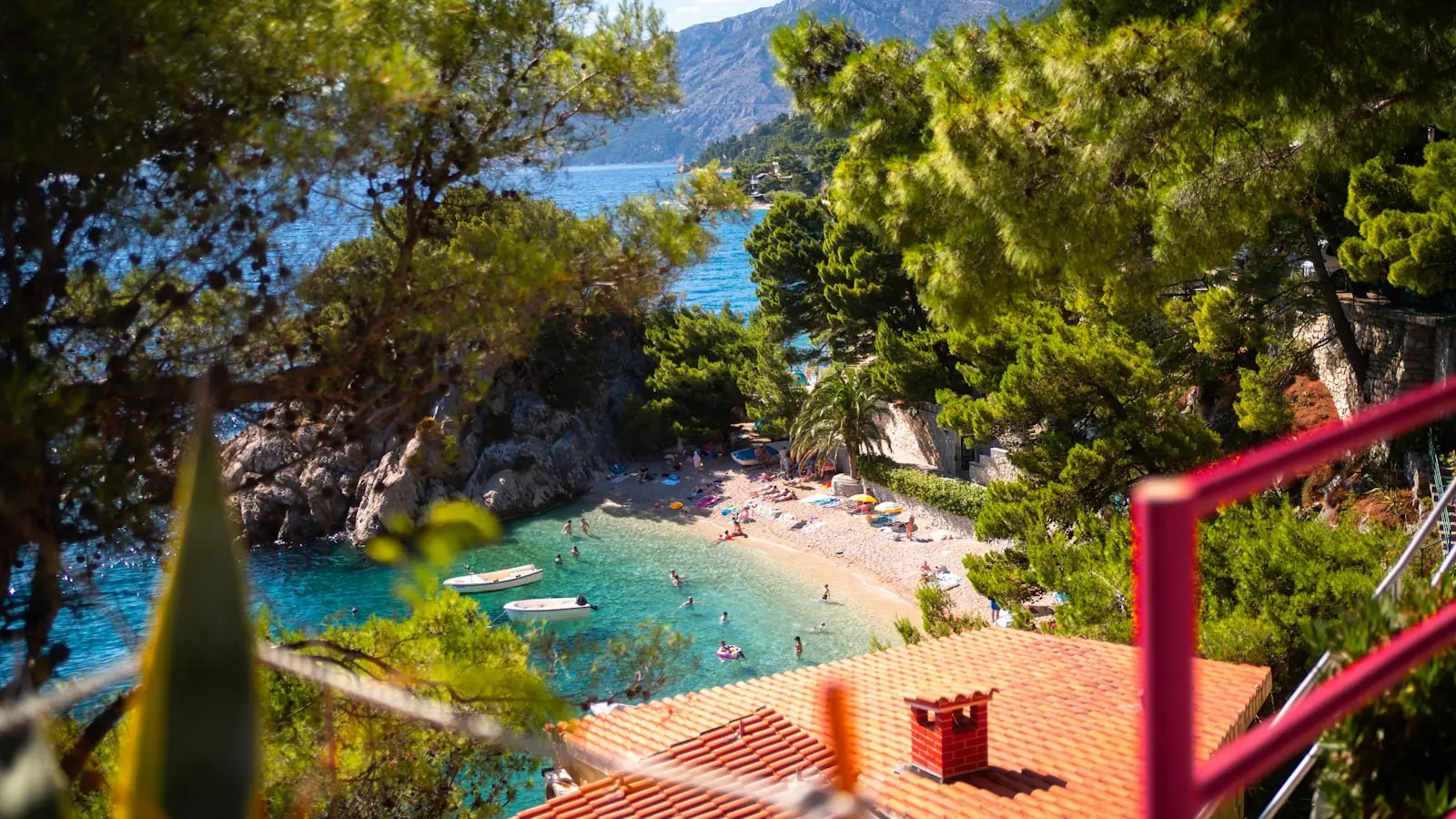
To avoid sunburn in Hvar, use a layered routine rather than relying on one application of sunscreen. Check the local Croatia UV index, apply broad-spectrum water-resistant sunscreen before leaving, use shade and protective clothing, and reapply after swimming, toweling off, or sweating.
A sea breeze, cool water, and a cloudy morning can make exposure feel less intense than it is. On a trip that includes repeated beach mornings, waterfront lunches, ferry waits, walks, and drives between coves, each outdoor stretch adds to the day’s overall UV exposure.
Key Takeaways
- Check the UV index before leaving and adjust plans when conditions are high or very high.
- Use sunscreen with shade, clothing, a hat, and sunglasses; no single measure is enough for a long exposed day.
- Reapply sunscreen according to the label and after swimming, toweling off, or heavy sweating.
- Water and pale stone can reflect UV, so shade reduces exposure but does not eliminate it.
- Treat warning signs of heat illness seriously, especially in children, older adults, and anyone who is unwell.
Start with the day’s UV conditions, not just the temperature
Hvar’s bright Adriatic conditions can create substantial UV exposure even when the air feels comfortable. A sea breeze cools the skin but does not reduce the ultraviolet radiation reaching it. Clouds can also reduce visible brightness without blocking all UV, so a cloudy morning is not a reason to skip protection.
Check the local Croatia UV index before leaving your accommodation. Check again if a quick swim becomes lunch, sightseeing, or an afternoon at another cove. Use the reading as a planning tool: when it is high or very high, reduce long stretches in direct sun and build in a reliable shaded or indoor break.
Think beyond time on the towel. Exposure accumulates while walking from parking areas, waiting for transport, sitting outside for lunch, or moving along the waterfront. A swim followed by sightseeing can create more total exposure than either activity seems to involve alone.
Use a layered beach-sun-protection routine before leaving
Sunscreen is an important layer, but it is not the entire plan. Choose a broad-spectrum sunscreen with SPF 30 or higher and water resistance if you expect to swim or sweat. Broad-spectrum products are designed to protect against both UVA and UVB radiation.
Apply sunscreen before heading out rather than waiting until you are already on the beach. Cover exposed skin evenly and generously, ideally while skin is dry where practical. Thin or rushed application can leave gaps and provide less protection than the label suggests.
Frequently missed areas include the ears, neck, hairline, shoulders, upper chest, backs of the legs, tops of the feet, and hands. Use an SPF lip product. If hair is thin, very short, or parted, protect the scalp with a hat, sunscreen along the part line where suitable, or both.
Follow the product label for reapplication guidance. Reapply after swimming, toweling off, or heavy sweating, and do not treat water resistance as all-day protection. Set a phone reminder before settling in; it is easy to lose track of time after a swim or while changing beaches.
Sunscreen works best alongside a hat, sunglasses, cover-up, shade, and sensible timing. Reducing the amount of UV reaching the skin is more reliable than trying to offset hours of direct exposure with sunscreen alone.
Plan around Hvar’s exposed beaches, water, and pale stone
Beach exposure does not come only from overhead sun. Water and pale stone, concrete, or pavement can reflect UV toward skin that is not directly facing the sun. This can add exposure to areas such as the legs, chest, chin, and underside of the jaw.
Shade helps, but it is not complete protection. Scattered and reflected UV can still reach skin under an umbrella, especially near bright water and light-colored surfaces. Keep using sunscreen and protective clothing even after finding shade.
A practical approach is to arrive early, secure a shade option first, and keep the most exposed activities brief. Depending on the setting, this may mean using a fixed umbrella, choosing a shaded lounger, or planning a café or indoor lunch break. If carrying portable shade, make sure it is suitable for the conditions and does not obstruct others.
When feasible, schedule waterfront errands, cove-to-cove walks, and exposed parking-area transitions for lower-exposure periods. This does not mean giving up plans. It means avoiding an unnecessary long walk in direct sun after a swim, when sunscreen may have worn away and heat may be easier to overlook.
For time out of the water, use a lightweight long-sleeved cover-up or shirt with a dense weave or UPF rating, plus a wide-brimmed hat and UV-protective sunglasses. A rash guard can be particularly useful for long swims or snorkeling because it protects the back and shoulders without depending entirely on sunscreen in the water.
For families, shade should be part of choosing a beach for a long morning. Accessible water, toilets, food, and an easy route back to transport or accommodation make it easier to take breaks before anyone becomes overheated or burned.
Keep the routine working through swimming, driving, and sightseeing
Use a repeatable sequence: check UV conditions, apply protection before departure, establish shade, set a reapplication reminder, take a shaded break, and reassess before adding another beach or walk. The reassessment matters. If skin feels hot, shade is limited, or the group is tired, changing plans is usually safer than pushing through.
A car ride between coves is not a reset. Earlier UV exposure still counts, and transitions are when hats get forgotten and sunscreen is not reapplied before an outdoor lunch or walk. Dry off, cover up, and reapply as needed before leaving the beach, waiting for a boat, or sitting at a waterfront table.
Children need active help with this routine. Adults should apply and reapply sunscreen rather than relying on children to manage it alone. Protective swim clothing, hats, regular shade breaks, and shorter periods in direct sun are useful because children may keep playing without noticing fatigue or skin discomfort.
Pack for the whole outing, not just the first swim. A useful beach bag includes broad-spectrum water-resistant sunscreen, SPF lip product, hats, sunglasses, cover-ups or rash guards, refillable water bottles, snacks, a shade plan, and a charged phone for weather and UV checks. Keep sunscreen accessible rather than buried in a bag or left in a hot car.
If you are considering a product marketed as reef-safe sunscreen in Croatia, read the ingredients and claims carefully. Terms such as “reef-safe” and “reef-friendly” are not universally standardized, and a label alone does not guarantee environmental safety. Check current site-specific guidance where relevant, but do not assume there is one Croatia-wide product requirement.
Prevent heat illness as well as sunburn and know when to get help
Sunburn prevention and heat-illness prevention overlap, but they are not the same. Sunscreen reduces UV exposure; it does not by itself prevent dehydration, heat exhaustion, or heat stroke. Someone can be well covered and still become unwell after prolonged heat, activity, alcohol, or inadequate fluid intake.
Drink regularly throughout the day rather than waiting until you feel very thirsty. Build in shade or cooler indoor spaces, reduce strenuous activity during the hottest part of the day, and be cautious with alcohol when spending hours outdoors. Children, older adults, and people affected by certain medical conditions or medicines may need a more conservative plan.
Headache, dizziness, nausea, unusual weakness, heavy sweating, muscle cramps, or fainting are signs to stop activity and cool down. Move the person to shade or a cooler place, loosen excess clothing, and offer fluids only if they are awake, alert, and able to drink safely.
Seek urgent medical help for confusion, fainting, seizures, loss of consciousness, or suspected heat stroke. If symptoms worsen or do not improve with cooling and rest, seek prompt medical advice.
For sunburn, get out of the sun and avoid further exposure. Extensive blistering, severe pain, fever, dehydration symptoms, or sunburn in a young child should prompt medical advice. The aim is not to chase a tan, but to protect comfort and energy for the rest of the trip.
FAQ
What UV index is considered high in Croatia?
UV-index categories are used internationally. When a forecast describes the UV index as high or very high, use multiple forms of protection, minimize prolonged direct sun, and schedule a shade break. Check the current local forecast because conditions vary by day, time, season, and cloud cover.
Do I need to reapply sunscreen after every swim in Hvar?
Follow the product label and reapply after swimming, toweling off, or heavy sweating. Water resistance does not mean one application will last for an entire beach day, especially with repeated swims.
Is reef-safe sunscreen required on Hvar beaches?
Do not assume it is required across Hvar. “Reef-safe” does not have one universal definition, and any local guidance may vary by location or operator. If environmental impact is a priority, review ingredients and check current guidance for the specific place you plan to visit.