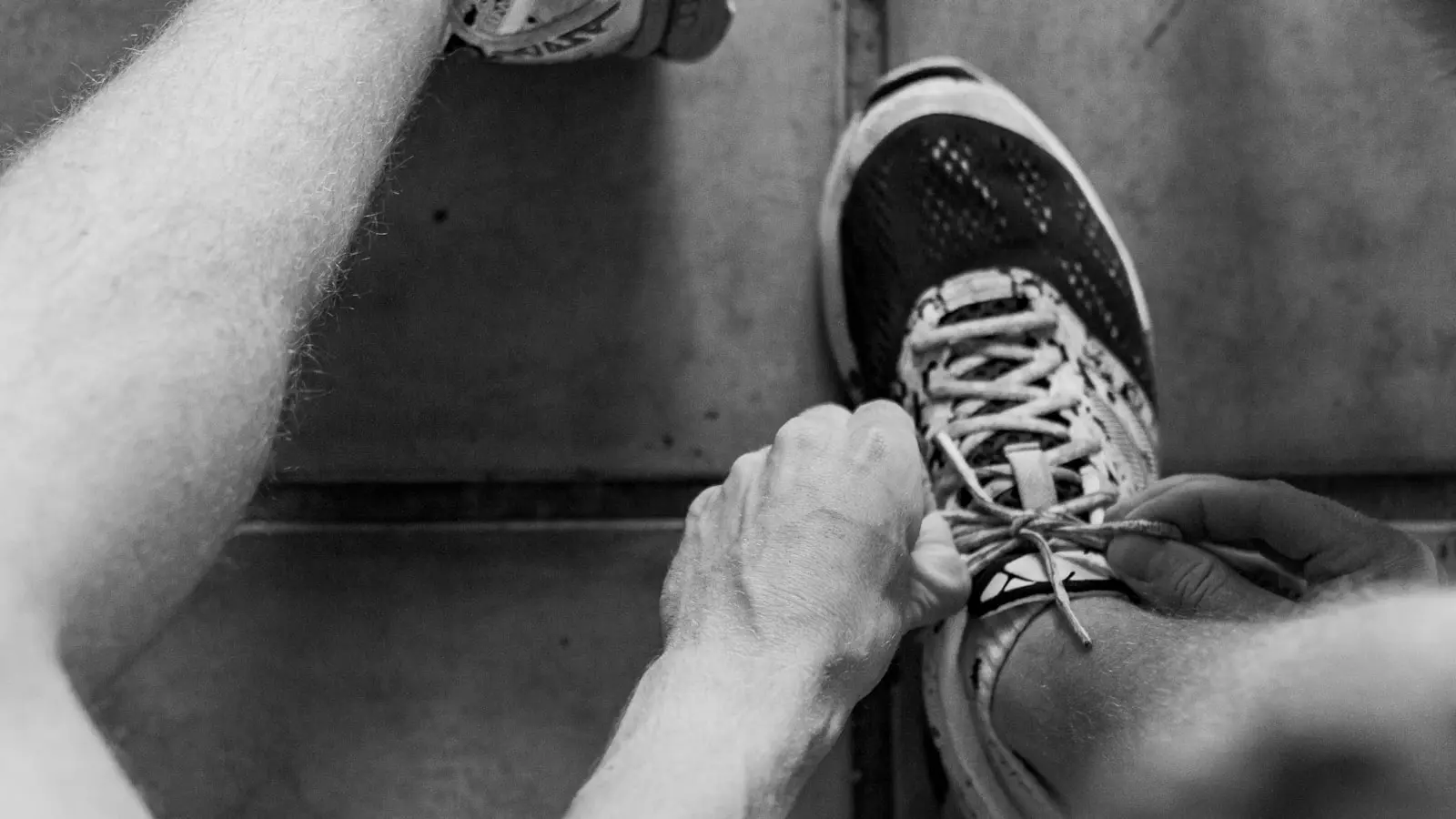
When runners step off a motorized treadmill belt and onto rigid city pavement, the mechanical load applied to the lower extremities multiplies instantly. The human skeletal system anticipates the predictable shock absorption of a suspended wooden deck beneath a rubber belt. Asphalt offers zero structural compliance. The kinetic energy a treadmill deck actively absorbs instead shoots directly back into the foot, travels straight through the ankle complex, and disperses heavily into the lower leg. The tibia catches the absolute brunt of this ground reaction force. Tissue failure begins here.
According to data from the American Academy of Orthopaedic Surgeons, this sudden shift in environmental mechanics drives a predictable, massive spike in medial tibial stress syndrome. The condition occurs when the connective muscle tissues attached to the medial edge of the tibia become acutely inflamed from repetitive structural overload. The pathology originates precisely at the periosteum. Micro-tears accumulate faster than the body can synthesize new collagen.
Beginners attempting to match their indoor running volume on outdoor surfaces force an unprepared musculoskeletal system into an immediate and severe deficit. A motorized treadmill physically pulls the leg backward. Pavement requires the runner to actively generate all forward propulsion while simultaneously managing unmitigated deceleration forces upon footfall. (Most runners ignore this kinetic difference entirely.) They load the lower limbs with a velocity they lack the structural integrity to support. They break down.
Ground Reaction Forces and the Physics of Concrete
The current surge in outdoor running clubs pushes thousands of novice athletes onto concrete sidewalks every single week. These individuals often possess adequate cardiovascular fitness from extensive indoor training but entirely lack the localized bone density and tendon stiffness required for road running. Cardiovascular capacity outpaces structural readiness.
When a novice runner strikes a concrete sidewalk near a busy intersection, the acoustic slap of the shoe indicates immediate mechanical inefficiency. A treadmill belt moves over a flex-deck system designed specifically to dampen impact. Every footstrike depresses the board. The surface gives way. Concrete sidewalks consist of unyielding Portland cement. When a running shoe strikes cement, the rapid deceleration force equals roughly two to three times the runner’s total body weight. Because the surface does not deform, the human body must deform instead.
The tibialis posterior and the soleus muscles attach directly to the posterior medial border of the tibia. During the loading response phase of the normal gait cycle, these muscles undergo massive eccentric contraction to control foot pronation and absorb shock. On concrete, the required force output drastically exceeds the tissue’s current tolerance. The muscular attachments pull violently against the periosteum covering the bone. Inflammation initiates an aggressive healing response. (Pain serves as the primary biological warning signal.) Without clinical intervention, continued mechanical stress pushes the bone past the initial inflammatory phase and toward structural failure, escalating medial tibial stress syndrome into outright tibial stress fractures.
Bone Remodeling and the Fallacy of Immediate Adaptation
Living bone operates as a highly dynamic tissue that continuously adapts to the specific physical loads placed upon it. This physiological principle, known in biomechanics as Wolff’s Law, dictates that bone density increases in direct response to applied mechanical stress. The timeline for this biological adaptation remains strictly non-negotiable.
Physical therapists heavily advocate for the strict ten percent rule during all surface transitions. This protocol dictates that runners increase their total weekly mileage by no more than ten percent per week. The reasoning relies entirely on cellular biology. When mechanical stress stimulates the tibia, osteoclasts first arrive to dismantle old, damaged bone tissue. This necessary process temporarily weakens the skeletal structure. Weeks later, osteoblasts arrive to lay down new, denser bone matrix. (Biology cannot be rushed by enthusiasm.)
If a runner abruptly transitions from logging twenty treadmill miles to twenty outdoor miles, the osteoclastic breakdown aggressively outpaces the osteoblastic rebuilding phase. The tibia becomes highly porous exactly when it faces maximum ground reaction forces. Strict adherence to gradual volume increases prevents this dangerous structural deficit. Beginners must treat the transition to asphalt as a fundamentally new biomechanical stimulus, completely regardless of their indoor aerobic base. Start with low-volume outdoor exposures. Build the skeletal infrastructure.
Kinematic Adjustments to Mitigate Impact
Pace matching destroys novice road runners. Maintaining a high velocity on a high-impact surface inherently modifies baseline running kinematics. As localized muscle fatigue sets in on the pavement, runners invariably alter their gait.
Overstriding remains the single most destructive kinematic error observed during surface transitions. When runners attempt to hit their familiar treadmill pace outdoors, they frequently reach forward with their lead leg, striking the ground heel-first well ahead of their center of mass. This specific posture creates a massive transient impact peak. The leg acts as a rigid braking strut, sending unattenuated shockwaves directly up the tibia.
Shortening stride length and simultaneously increasing step cadence immediately alters this loading profile. Increasing cadence by five to ten percent naturally brings the footfall closer to the body’s center of mass. A midfoot strike pattern typically emerges. The knee flexes slightly upon impact. This subtle joint flexion allows the larger, more powerful muscles of the quadriceps and glutes to share the shock absorption burden, drastically reducing the isolated strain on the tibial attachments.
- Metric Comparison of Running Mechanics:
| Kinematic Metric | Treadmill Dynamics | Pavement Dynamics |
|---|---|---|
| Propulsion Force | Belt actively assists leg extension | Leg generates all forward force |
| Impact Shock | Dampened by suspended deck | Fully absorbed by the runner |
| Ground Contact Time | Uniform and highly predictable | Highly variable based on fatigue |
| Friction Coefficient | High and structurally consistent | Fluctuates with surface debris |
Structural Fortification and Footwear Interventions
Muscular capacity ultimately dictates mechanical resilience. Tendons and muscles act as the first physiological line of defense against incoming impact forces. If the calf complex lacks the requisite strength, the bone takes the hit.
Targeted resistance training isolates and expands the specific capacity of the lower leg. The gastrocnemius operates across two joints, the knee and the ankle, providing explosive power during the toe-off phase. The soleus sits much deeper, crossing only the ankle joint, and manages the immense continuous load of postural control and deceleration. Shin splints rarely result from a weak gastrocnemius. They stem almost exclusively from an under-conditioned soleus failing to stabilize the tibia.
Straight-leg calf raises target the gastrocnemius. Bent-knee seated calf raises completely isolate the soleus. Clinicians strictly mandate the inclusion of heavy, slow seated calf raises for any athlete attempting to transition to high-impact surfaces. Building a resilient soleus transforms the muscle into an active, high-capacity shock absorber, directly shielding the periosteal attachments from repetitive micro-trauma.
External footwear functions as a secondary dampening system. While the current commercial running market heavily promotes stiff carbon-plated racing shoes designed for pure kinetic energy return, these highly rigid structures often exacerbate lower leg stress in unconditioned runners. Transitioning athletes require mechanical protection, not maximum propulsion.
High-cushion daily trainers utilizing modern expanded polymer foams provide necessary structural compliance. Traditional ethylene-vinyl acetate (EVA) foams provide basic shock absorption but tend to compress permanently over long distances. Newer polyether block amide (PEBA) compounds deliver exceptional structural compliance under high compressive loads. When an eighty-kilogram runner lands on asphalt, a PEBA-based midsole absorbs the kinetic energy and deforms rapidly, protecting the metatarsals and the tibial shaft.
By physically extending the duration of the impact over a few extra milliseconds, the peak force transmitted to the tibia drops significantly. (Equipment solves nothing if underlying mechanics remain flawed, but proper foam densities buy the skeletal system crucial time to adapt.) However, high-cushion shoes possess an inherent clinical drawback regarding proprioception. A thick layer of dense foam deadens the critical sensory feedback traveling from the plantar fascia to the central nervous system. Runners may strike the ground with greater force simply because they cannot feel the true impact. Clinicians therefore advise pairing maximalist footwear with strict external cadence control to prevent the runner from unconsciously overstriding.
The transition from the suspended treadmill to the hard road exposes every underlying biomechanical weakness. Cardiovascular endurance frequently masks profound musculoskeletal fragility. Protecting the tibia requires an absolute, unyielding respect for applied physics and cellular biology. Bone density demands time. Connective tissues require progressive, calculated loading. Adapting kinematics and leveraging appropriate cushioning technologies remain the only scientifically proven methods to navigate concrete infrastructure without inducing structural collapse.