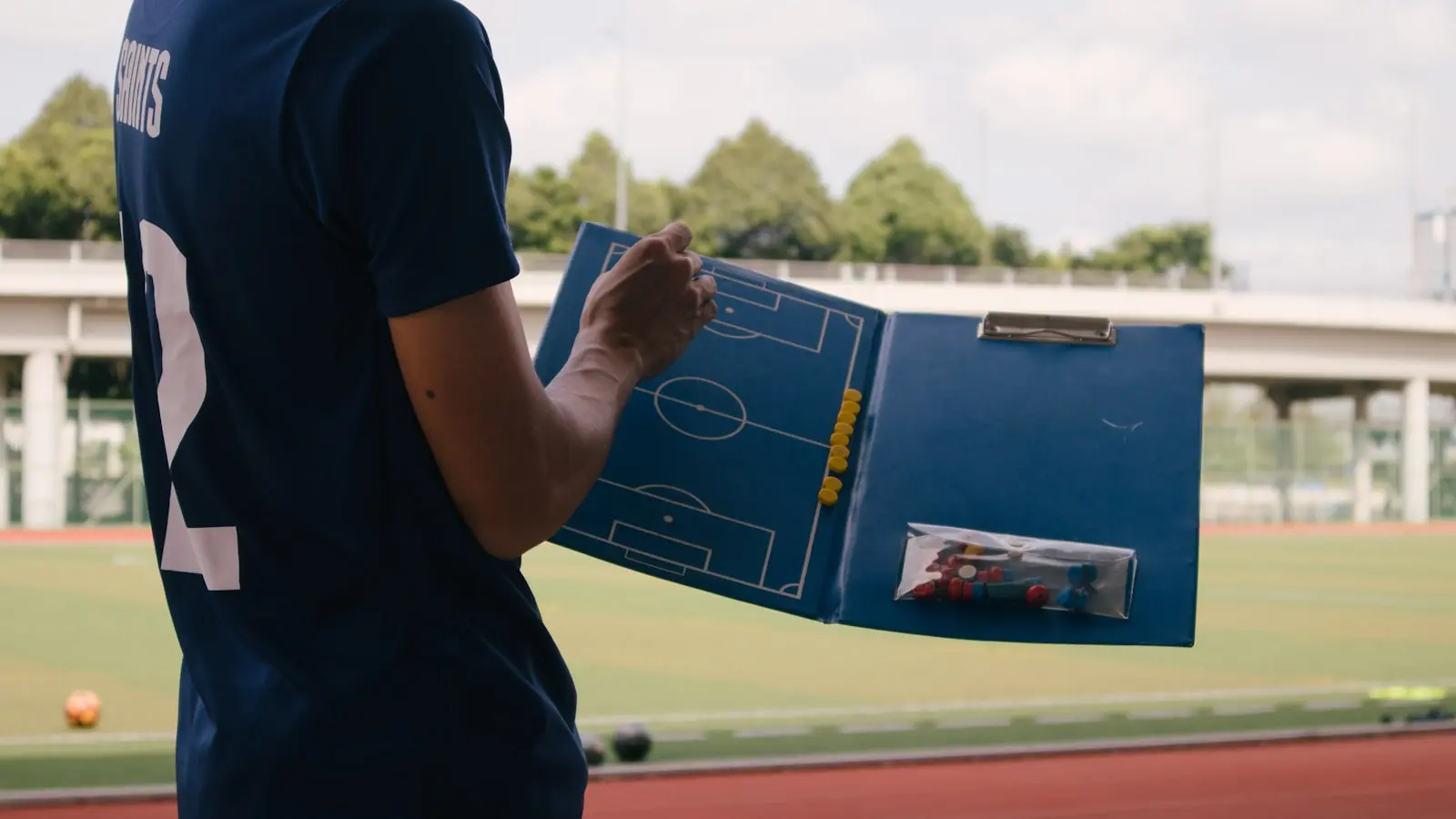
Some coaches walk into the break with one clear fix. Others walk in with a pulse check. That difference often separates a game-changing adjustment from a costly overreaction.
Key Takeaways
- A halftime switch works when it targets one specific problem, not when it merely reacts to the scoreboard.
- Successful mid-game tactical changes are usually small: a higher press, a new defensive shape, a tempo shift, or a player repositioning.
- Evidence matters more than urgency. A vulnerable zone, a tired press, or a player mismatch gives a change its logic.
- Fatigue and time limit what a coach can install. A tweak in the 55th minute is easier to execute than a full identity shift in the 75th minute.
- Sticking with the original plan can be smarter than teaching a new shape under pressure.
The High-Risk, High-Reward Moment of a Tactical Change
Why do some teams win by changing tactics at halftime? Because the best switches solve a specific, observable problem. A story that changes genres halfway through can feel thrilling or ridiculous, and a tactical switch works the same way. If the shift is earned, it looks bold. If it comes from nowhere, it can ruin the narrative.
Coaches have roughly 15 minutes to deliver information, adjust roles, and calm players. There is no full practice and no time to fix every detail. That makes any mid-game tactical change risky, even when it looks correct from the stands.
The strongest halftime tactical adjustments are targeted responses: losing the midfield, struggling to break a press, or watching one matchup get exploited repeatedly. Changing tactics mid match becomes defensible when the coach can name the flaw behind the score. If the change solves that flaw without forcing players to abandon their core identity, it can shift the match. If it asks too much too quickly, it can create the exact confusion it was meant to remove.
So the first question for fans is not whether the coach should change something. It is what specific problem the change is solving.
Planned Shift or Panic Switch? The Conditions That Decide
A planned shift is built on evidence from the first half. Maybe the opponent is conceding space in one channel. Maybe a defender is carrying a yellow card and can be attacked with dribbles. Maybe the press is winning balls high but the forwards are not filling the right zones.
A panic switch is different. It usually starts with the scoreboard, not the shape. The coach changes because the team is losing, but the new plan does not target a specific weakness. It just chases a different look.
Four conditions separate a successful switch from a failed experiment.
Clear information about the opponent. The coach needs something concrete: a vulnerable zone, a tired press, a player mismatch. Without that, the change is guesswork.
Enough time to communicate and drill the new shape. One positional adjustment can be explained in a few minutes. A full formation reset needs more. Trying to change three things at halftime usually means none of them take hold.
Personnel that fit the change. A high-pressing system needs faster forwards. A back three needs wing-backs. A basketball team switching to full-court pressure needs guards who can defend without fouling. If the bench cannot supply those skills, the plan has no legs.
An emotional state that allows calm execution. Anxiety makes tactical switches worse. If players are already unsettled, a complicated new instruction can freeze them. The best coaches simplify the message when nerves are high.
There is one more question: does the new shape preserve the team’s identity? A tweak to the current plan is easier to pull off than asking players to become a different team mid-match. The latter demands more adaptation under fatigue than most squads can manage in 15 minutes.
Common Mid-Game Tactical Turns That Actually Work
Some tactical changes appear again and again because they create clear strategic advantages.
Pressing higher. If the opponent is passing out from the back with little conviction, a team can shorten the pitch and win the ball closer to goal. The cost is space behind the defense. A missed press leaves runners in behind. Coaches often save this switch for the second half, when the opponent’s energy is dropping.
Changing the defensive shape. A back four can shift to a back three to match an opposing attack. The trade-off is simple: an extra center-back improves central protection but can create gaps in wide areas unless the wing-backs cover quickly. The reverse switch can be just as effective when a team needs to chase a game with an extra attacker.
Controlling tempo. This is less flashy but often decisive. In soccer, a team can slow the game with patient passing to deny the opponent momentum. In basketball, a team can extend possessions to reduce the number of scoring opportunities left for the opponent. The mechanism is subtle: it changes rhythm more than structure.
Repositioning key players. Moving a creator into the middle, pushing a ball-winner higher, or putting a better playmaker at the top of a press can create new angles without changing formation. This is the quietest form of halftime tactical adjustment and often the most effective.
Successful tactical switches in soccer and basketball rarely involve wholesale reinvention. They are usually one movement, one role change, or one tempo decision that creates a new problem for the opponent. Changing tactics mid match works best when the adjustment is small enough to be absorbed quickly.
Fatigue, Opponent Adjustments, and the Clock
Halftime decisions happen when players are already fatigued. A tactical change that demands extra sprinting may look good in the coach’s notes but fade in the final 20 minutes when legs refuse to carry the plan.
Opponents also adjust. A coach might commit more bodies forward after halftime, only to leave space at the back. The best mid-game tactical changes are not just reactions to the first half; they are attempts to anticipate the opponent’s counter-response.
The clock changes the risk profile. A tactical tweak in the 55th minute is executable. A full identity shift in the 75th minute is a gamble because there is little time to adapt if the new shape is not working. American football in-game strategy has more natural stopping points, but the same principle applies: a subtle role change is more executable than a full system reset.
Substitutions are the quiet companion to any tactical change. A fresh player changes the physical ceiling of the plan. If a coach wants to press higher, the new forward can make that press credible. If the goal is to slow the game down, a more composed passer can replace a runner who has lost discipline.
The Fan’s Framework: Tweak or Identity Shift?
The next time you watch a coach make a halftime adjustment, work through a simple checklist.
What specific problem is being solved? If the answer sounds like “we are losing” or “we look bad,” that is a panic switch. If the answer names a concrete weakness, it is a planned adjustment.
Is it a tweak or a full abandonment? A tweak keeps the original structure but makes a targeted change. An identity shift asks players to play an entirely different way. The former is far easier to execute under pressure.
Does the roster actually fit the new shape? A back three requires different personnel than a back four. A full-court press requires defensive speed. If the bench cannot supply the right pieces, the switch is unlikely to hold.
How much time remains, and how much energy is left? A higher press in the 60th minute can be decisive. The same press in the 85th minute might just leave gaps while tired players watch the opponent break.
Is the coach responding to evidence or to emotion? Evidence comes from what happened in the first half. Emotion comes from the scoreboard. Coaches who diagnose first and react second tend to make better decisions.
There is also a case for stubbornness. If the original plan is being executed at an acceptable level and the opponent’s advantage is small, staying the course can be smarter than teaching a new shape under pressure. Fans often see a change as a sign of life, but a change made for the wrong reasons can make things worse.
In the end, the question is not whether the coach changed tactics. It is whether the change was a reasoned adjustment or a reactive lurch. The best mid-game tactical changes look inevitable in hindsight because they are anchored to real information. The worst look random because they are born from desperation.
FAQ
Why do coaches usually wait until halftime to make tactical changes?
The halftime break gives coaches time to talk without the chaos of the game. They can share notes with assistants and deliver a full instruction to the whole squad. Tactical changes during play are limited by the flow of the match and the need to keep players focused in real time.
Can a halftime tactical switch actually make a team worse?
Yes. A switch can disrupt rhythm, confuse players, or remove the strengths of the original plan. It is especially risky when the change requires more energy than the players have left or when the bench does not have the right personnel.
What are the most common successful halftime tactical adjustments?
The most common are pressing higher, changing the defensive shape, controlling tempo, and repositioning key players. In soccer, that can mean moving to a back three to close down an overload. A common basketball adjustment at halftime is switching defensive coverages or changing which defender takes the lead ball-handler. These work because they target a specific problem without asking the entire team to abandon its identity. They also leave room for substitutes to add fresh energy to the new plan.