
Travel itineraries operate on an economy of consensus, and currently, the algorithmic consensus instructs visitors to bypass the Belgian capital entirely. Backpackers stepping off trains at Bruxelles-Midi immediately encounter concrete overpasses, hurried commuters, and the towering glass facades of the European Union’s bureaucratic machinery. Forums advise tourists to board the next connection toward the cobblestone preservation of Bruges or Ghent. (This advice remains fundamentally flawed). When visitors restrict their movement to transit hubs and corporate zones that empty completely after business hours, the resulting narrative portrays a hollow business center. The reality demands a slower pace.
Urban reputation heavily depends on physical geography and the specific paths tourists trace through a city. The European Quarter imposes a sterile architecture. Steel and glass dominate the skyline, housing policy institutes and diplomatic missions that dictate continental regulations. At dusk, the briefcases vanish. The streets hollow out. Rushed day-trippers judge the entire metropolis based on this engineered vacancy, contrasting it against the meticulously maintained canals of surrounding Flemish territories. Bruges offers immediate visual gratification. Brussels requires excavation.
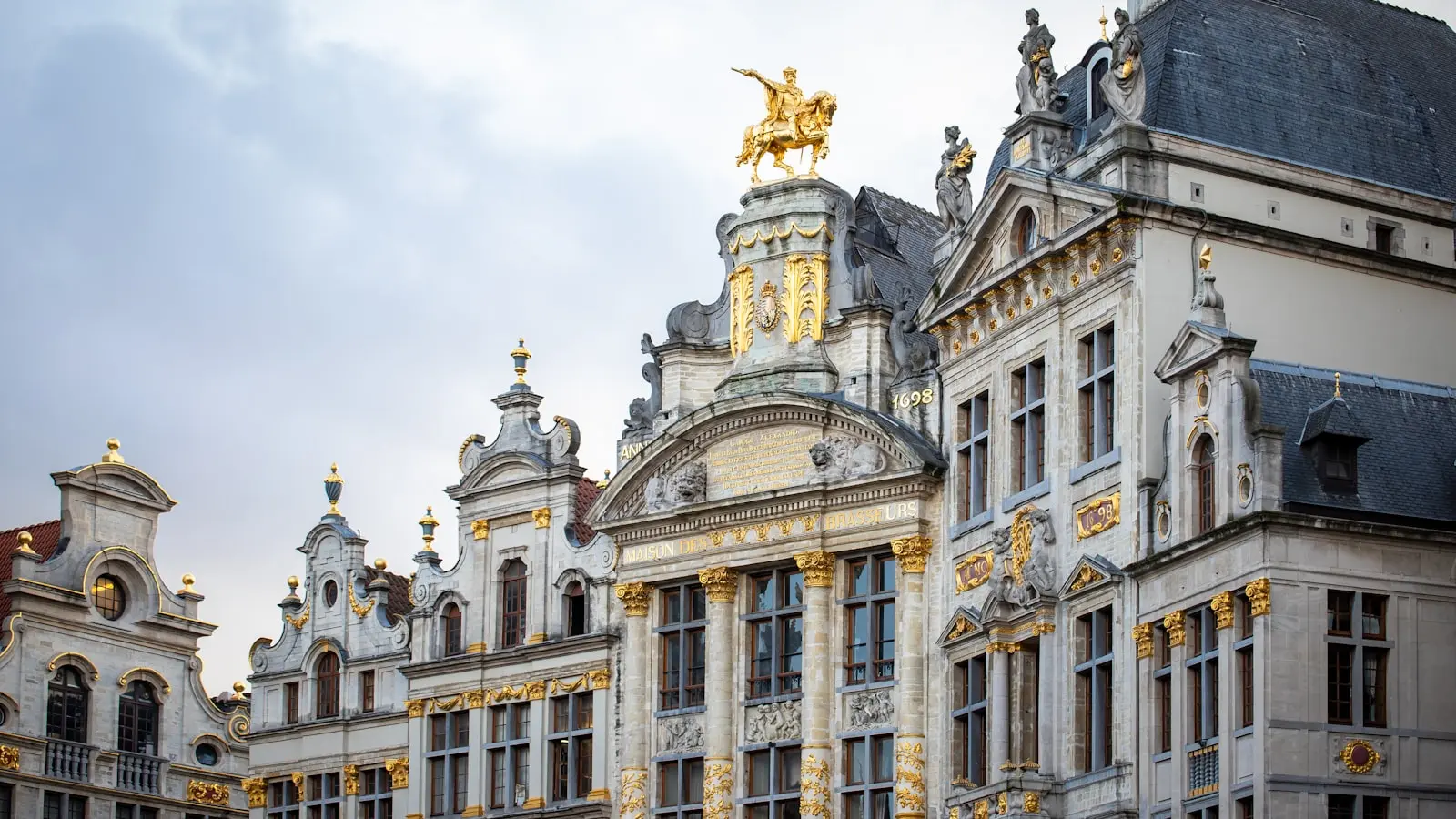
Infrastructure dictates first impressions. The North-South connection, the central railway artery cutting through the city, forces trains through a subterranean concrete trench. Travelers stepping out at Gare Central emerge into a heavily trafficked tourist corridor engineered for rapid extraction of capital. Souvenir shops sell mass-produced merchandise. Waffle stands pump artificial vanilla scent into the street to trigger impulse purchases. The spatial layout herds pedestrians directly toward the Grand-Place, concentrating the demographic into a highly congested, easily monetized zone. (This is commercial extraction, not cultural immersion). Visitors mistake this transactional gauntlet for the city’s actual character.
Moving away from the center shifts the atmospheric pressure entirely. South of the corporate geometry sit Ixelles and Saint-Gilles, districts where the city breathes. Here, Art Nouveau facades crumble slightly at the edges, revealing a lived-in texture absent from museum-like tourist destinations. The environment dictates behavior. Instead of snapping photographs of pristine guild halls, residents gather around historic neighborhood squares. The demographic makeup splinters into a hyper-dense multicultural reality. North African bakeries operate alongside natural wine bars and century-old brasseries. The sensory input overwhelms the sanitized expectations of standard European tourism. Cardamom and roasting meats bleed into the scent of damp pavement and spilled beer.
Design shapes behavior. When urban planners construct districts purely for legislative function, they strip away the residential infrastructure that sustains evening activity. The EU district features minimal localized grocery markets, neighborhood bars, or informal gathering spaces. Planners prioritized broad avenues for diplomatic motorcades over pedestrian-scale intimacy. Corporate entities purchased the surrounding real estate, driving out small businesses. Consequently, the moment the bureaucratic machinery halts, the area enters a state of suspended animation. Observers cannot fault the casual visitor for sensing this sterility. The error lies in assuming this legislative zone represents the entire urban mass.
Venture toward Place Flagey in Ixelles as the sun drops. The spatial dynamics shift completely. The square functions as a massive, open-air living room for the surrounding population. Students, artists, and established professionals converge around the frites stands and cafe terraces. The soundscape transitions from the low hum of traffic to overlapping conversations in French, Dutch, Arabic, and English. The built environment here encourages loitering. Wide sidewalks and clustered seating arrangements force physical proximity. This is the authentic European urban experience travel guides promise but rarely deliver. It lacks the curated perfection of smaller towns, substituting aesthetic purity for vital energy.
To understand the disparity between forum critique and geographic reality, one must analyze how visitors allocate their time. The typical backpacker schedule allocates a mere four to six hours to the capital.
- Hour 1-2: Arrival at major transit hubs, navigation through heavily congested and visually harsh commuter arteries.
- Hour 3-4: Rushed consumption of Grand-Place architecture, purchase of commercialized chocolate, navigation of densely packed traps near Manneken Pis.
- Hour 5-6: Retreat to the train station, solidifying the impression of a chaotic, transactional hub devoid of local culture.
This timeline guarantees failure. It isolates the visitor within a highly commercialized ring, preventing any interaction with the actual fabric of the city. Altering the trajectory alters the perception.
| Urban Metric | The Tourist Corridor (Center/EU) | The Lived-In City (Ixelles/Saint-Gilles) |
|---|---|---|
| Architectural Dominance | Corporate glass, restored gothic facades | Art Nouveau, weathered brick, organic decay |
| Evening Atmosphere | Hollowed out, transient, transactional | Dense, community-focused, localized |
| Culinary Focus | Export-grade chocolate, generic waffles | Regional lambic, Congolese stews, natural wine |
| Economic Driver | Bureaucracy, mass tourism | Local commerce, creative industries, residential living |
The culinary architecture of the city tells a story of migration and colonial history. Just off the luxury shopping avenues of the upper town lies Matongé. Named after a neighborhood in Kinshasa, this district serves as the focal point for the Congolese diaspora. The sensory shift happens within a single city block. High-end fashion boutiques give way to grocers stocking plantains, palm oil, and cassava. Hair salons double as community centers. Restaurants serve moambe chicken and grilled tilapia, introducing a distinct, necessary spice profile into the heavy, butter-laden traditional Belgian diet. This demographic layering represents the actual economic and social reality of modern Europe. You do not find this depth in towns reliant solely on historical preservation.
Taste reflects environment, and nothing embodies the unvarnished identity of the region like traditional lambic brewing. Tucked away in Anderlecht, Brasserie Cantillon ignores modern industrial scaling. Visitors cross the threshold and confront the physical weight of time. Dust coats the aging barrels. Cobwebs stretch across the ceiling beams. The brewers leave the roof vents open, inviting ambient wild yeast and bacteria from the air to spontaneously ferment the wort in shallow copper cooling tuns. Modernization demands control and predictability. Industrial brewers rely on monoculture yeast strains cultivated in laboratories to ensure identical batches. Lambic embraces atmospheric chaos.
The process requires years. The brewers blend young, sharp beer with older, mellowed casks to create Gueuze, a highly carbonated, complex liquid. The resulting drink delivers a sharp, bone-dry tartness that jolts the palate. (Tourists expecting sweet commercial lagers often leave confused). This represents craftsmanship bound entirely to its specific geographic coordinates. You cannot replicate this biological process outside this specific pocket of the Senne valley. The wood breathes. The liquid evolves.
Residents push back aggressively against the prevailing travel forum narratives. Analysts tracking migration patterns note that the capital absorbs populations from across the globe, forcing continuous cultural evolution. Bruges, conversely, functions as a static preservation project. The architecture remains frozen in a specific century, scrubbed clean for daily consumption by coach tours. Authenticity becomes a contentious metric in urban analysis. A perfectly preserved medieval bell tower provides historical context, but it does not represent contemporary Belgian life. True urban culture requires friction. It requires graffiti on 19th-century brickwork, the clatter of trams competing with market vendors, and the organic collision of different economic classes occupying the same physical space. Brussels provides this friction. It lives.
A city without tension functions as a theme park. Bruges masters the theme park model. Municipal regulations strictly control signage, building materials, and commercial activities to protect the medieval aesthetic. The local economy relies almost entirely on the hospitality sector, funneling foreign capital into hotels and guided tours. The physical space becomes a commodity. Brussels operates on a fractured, decentralized model. The economy diversifies across technology, policy, service industries, and localized commerce. This economic diversity prevents any single narrative from defining the landscape.
Travel forums prioritize ease of consumption. They algorithmically reward destinations that photograph well and demand zero intellectual engagement from the visitor. A pristine canal requires no interpretation. Navigating the linguistic divide between French and Dutch speakers in a crowded Saint-Gilles market requires effort. Real exploration demands this effort. The Belgian capital rewards those willing to push past the bureaucratic exterior to locate the pulsing, uncurated life beneath. The algorithm fails. The city remains.