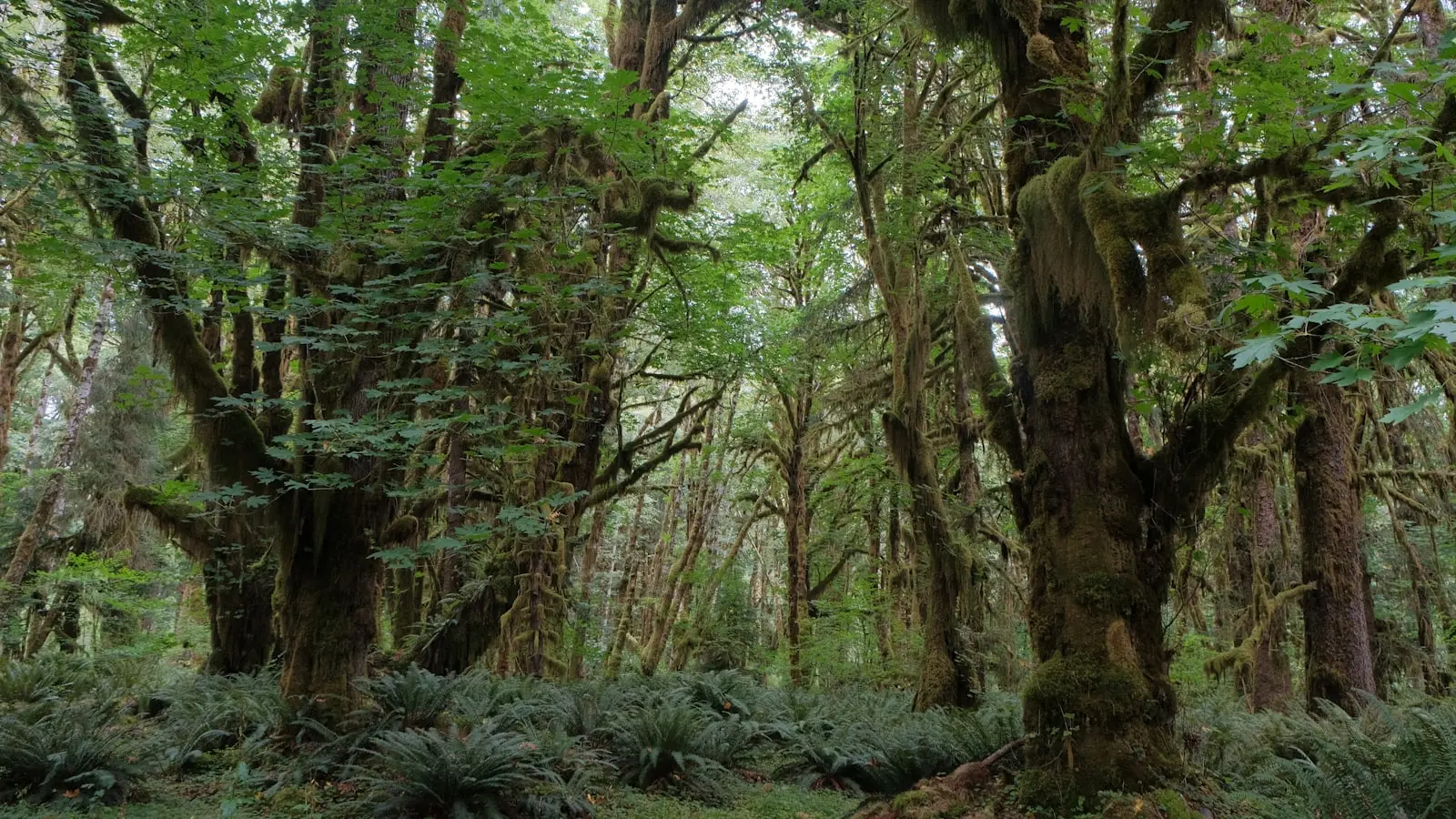

The survival of primeval forests represents more than a nostalgic nod to Europe’s ancient past. These untouched landscapes function as sophisticated, autonomous carbon-sequestering machines that modern industry has yet to emulate. Across the continent, sites like the Perućica forest in Bosnia’s Sutjeska National Park stand as rare remnants of the dense woodlands that blanketed Europe millennia ago. Research from the European Environment Agency in 2024 underscores a sobering reality: managed timber plantations, no matter how efficiently replanted, fail to replicate the structural complexity and biodiversity of these old-growth zones. (The difference is architectural.)
The Complexity of Old-Growth Ecosystems
Primeval forests are defined by a vertical and horizontal architecture that managed forests simply lack. In a timber plantation, trees are often of uniform age and species, planted in rigid rows to maximize harvestable biomass. In contrast, Perućica is a chaotic, multi-layered environment where death and decay are as vital as growth. Fallen logs, or coarse woody debris, act as massive sponges that store carbon and provide specialized niches for endemic mosses, fungi, and rare high-altitude flora that cannot survive in sanitized, human-monitored environments.
This complexity generates a robust biological defense system. When pathogens or extreme weather events strike, these old-growth areas demonstrate an inherent resilience that monoculture forests lack. The biodiversity acts as a safety net. If one species struggles against a drought or a pest, dozens of others fill the ecological gap. This stability is not merely a curiosity for biologists; it is a blueprint for the future of land management.
Living Laboratories for a Warming World
As climate change accelerates, scientists are forced to predict how temperate ecosystems will behave under radical stress. Current climate models are often limited by the data available from disturbed or managed landscapes. Primeval forests serve as essential baseline controls. By studying how a forest like Sutjeska thrives without human intervention, researchers can observe natural adaptive behaviors. This includes the subtle shift in soil chemistry as temperatures rise and the migration patterns of flora within deep, shaded canyons.
Without these baseline data, global restoration strategies become guesses. If conservationists attempt to reforest large swathes of the globe using only commercial timber strategies, they risk creating fragile, uniform deserts rather than resilient ecosystems. (Is this truly restoration?) The insights gained from observing natural succession are the only way to ensure that mass tree-planting initiatives actually result in permanent carbon sequestration rather than temporary green-washing.
The Economic and Environmental Stakes
Protecting these sites involves a clash of immediate resource demands and long-term biological security. Timber remains a valuable commodity, and the pressure to monetize remote woodlands is constant. Yet, the environmental cost of losing the last primeval stands is irreversible. Beyond their role as carbon sinks, these areas provide critical ecosystem services:
- Water purification and filtration for surrounding watersheds.
- Prevention of soil erosion through complex root systems.
- Natural regulation of local microclimates, which prevents heat island effects in mountainous terrain.
If policymakers treat these forests as mere fuel or lumber, they effectively burn the library before the book has been read. The primary value of these ecosystems lies in their status as living laboratories. They hold the secrets to surviving a changing climate. As human-induced shifts in weather patterns become more erratic, the stability provided by these ancient refuges will become increasingly rare. Protecting them is not just about conservation; it is about maintaining the biological infrastructure that supports life on the continent. The goal is no longer just to plant trees, but to foster the self-sustaining complexity that only a primeval forest provides.