The Collapse of the Collaboration Hypothesis
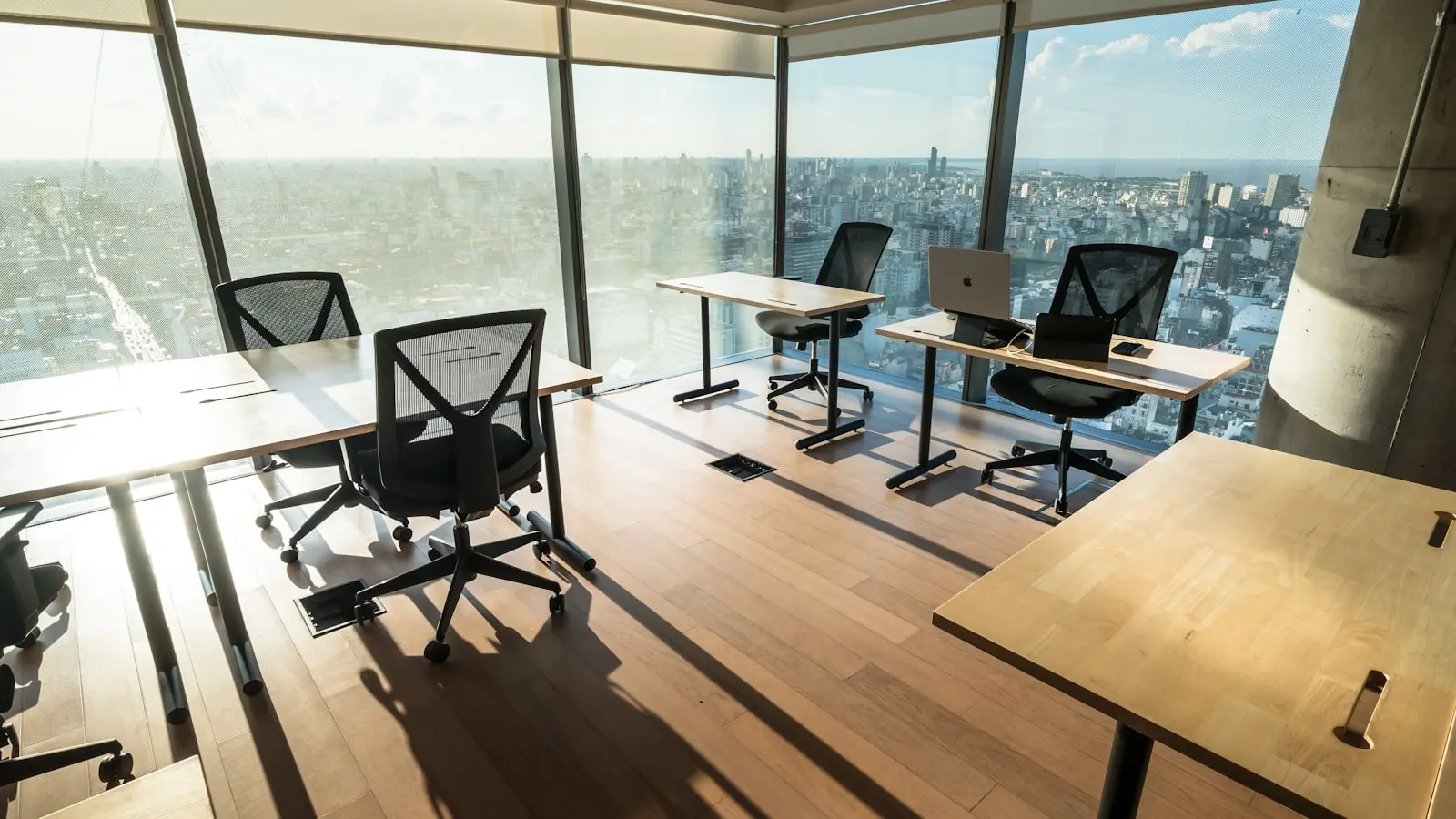
The open plan office, marketed aggressively over the last two decades as an engine of corporate synergy, fundamentally degrades workplace productivity. Ongoing studies from the Journal of Environmental Psychology reveal a structural failure in modern office design. Removing physical barriers between desks triggers a defensive withdrawal among employees rather than fostering spontaneous interaction. When management strips away spatial boundaries, face-to-face communication does not multiply. It collapses. Workplace behavioral tracking indicates physical collaboration drops by up to 70 percent when companies transition to completely open floor plans. The financial calculus favored density. The psychological reality mandated isolation. The system broke.
Corporate real estate strategies previously prioritized headcount density above all other metrics. Executives masked the financial incentive of minimizing square footage per employee behind the corporate vernacular of flattening hierarchies and democratizing workspaces. (Cost arbitrage rebranded as culture.) The reality involved cramming larger workforces onto single floor plates, systematically dismantling the acoustic and visual privacy required for deep, analytical output. The cost savings achieved by compressing headcount into reduced square footage directly manifest as elevated cognitive stress and continuous task interruption.
The Real Estate Arbitrage Illusion
Understanding the open office failure requires examining the capital incentives that drove its adoption. When a corporation leases Class A commercial real estate at premium rates per square foot, the immediate directive from the finance department is to maximize the utilization rate of that asset. Throughout the early 2000s, corporate planners realized they could compress the standard allocation of 250 square feet per employee down to under 120 square feet by eliminating walls, private offices, and standard cubicle partitions.
They sold this density to the workforce as an intentional move to empower innovation. Terms like “serendipitous collision” and “agile workspace” translate economically to reduced overhead and lowered capital expenditure on lease agreements. The empirical data now proves this narrative false. A 70 percent reduction in verbal interaction means an office floor that previously facilitated thousands of brief, localized discussions per week suddenly goes silent. Workers do not talk more. They hide.
The Mechanics of Defensive Withdrawal
Human beings operate on spatial boundaries. When architectural boundaries disappear, employees erect psychological and digital ones. The adoption of enterprise messaging platforms accelerated perfectly in tandem with the open office trend. Workers forced to sit shoulder-to-shoulder with colleagues handling disparate tasks deploy noise-canceling headphones as visual indicators of unavailability. (This is behavioral self-defense.) The communication flows migrate from verbal, high-bandwidth exchanges to typed, low-bandwidth messages on platforms like Slack or Microsoft Teams.
This digital migration creates a permanent, searchable record of mundane interactions while simultaneously flooding employees with continuous notifications. The open office layout attempts to force collaboration through physical proximity, but proximity without privacy generates friction. Employees subjected to constant visual cross-traffic and ambient noise withdraw entirely from their surroundings to protect their remaining focus.
Acoustic Contagion and Cognitive Friction
When engineers attempt to build complex backend architectures while seated three feet from a sales development representative cold-calling prospects, the architectural failure becomes undeniable. Acoustic contagion acts as a massive tax on organizational output. Every time an employee breaks focus to process ambient noise—a colleague’s phone call, footsteps, a peripheral conversation—the cognitive reset requires measurable time.
Data indicates it takes an average of twenty-three minutes for an individual to return to a state of deep concentration following a disruption. If an analyst experiences just three interruptions per morning, half of their highly compensated cognitive capacity evaporates. The lack of spatial boundaries leads to continuously elevated cortisol levels. Organizations trade high-value analytical output for marginal savings on lease agreements. The math fails. If a senior developer costs a company $150,000 annually, and the real estate savings generated by removing their cubicle amounts to $3,000 annually, a mere 5 percent drop in their coding efficiency destroys the financial gain entirely.
Tactical Evasion and Misallocated Assets
The operational friction manifests physically in the commercial footprint. Corporate workers across Reddit and professional forums overwhelmingly express deep frustration with open layouts, detailing complex strategies to secure quiet zones. Employees, seeking refuge from the visual and acoustic chaos of the open floor, resort to structural evasion. They book continuous, fake meetings in enclosed conference rooms simply to secure an environment necessary for deep work.
Others retreat to building cafeterias, unused fire stairs, or lobby corners. The enclosed conference room, originally designed for eight-person strategy sessions, becomes a private sanctuary for a single stressed employee. This tactical evasion creates artificial scarcity. The resulting bottleneck forces legitimate meetings off-site or delays critical decision-making. Management observes fully booked meeting rooms and assumes high levels of collaboration. (They measure the wrong metric.) The reality is a workforce desperately attempting to reclaim the privacy that was value-engineered out of their daily environment.
The Technology Tax and Asynchronous Migration
The reliance on noise-canceling headphones and instant messaging platforms fundamentally alters corporate communication dynamics. Face-to-face interaction historically allowed for rapid consensus-building, nuance interpretation, and immediate feedback loops. By pushing employees into a state of defensive withdrawal, the open office forces these interactions onto asynchronous channels.
A conversation that previously required a two-minute desk visit now requires a twenty-minute text exchange. The friction inherent in digital text communication slows down operational velocity. Employees spend valuable hours managing their digital presence, curating Slack responses, and navigating notification fatigue. The open office design creates the exact siloed behavior it was purportedly built to eliminate.
The Financial Calculus of Deep Work
Markets eventually price in inefficiencies. Organizations demanding high-level intellectual capital are quietly abandoning the extreme open-floor model. Deep work—the ability to focus without distraction on a cognitively demanding task—produces the vast majority of economic value in the knowledge economy. When companies design environments that actively hostility deep work, they cap their own growth potential.
The initial justification for the open plan relied on an industrial-era mindset applied to information-era output. Factory floors required open sightlines for supervisors to monitor manual labor. Applying that same spatial logic to software developers, financial analysts, and legal teams represents a fundamental misunderstanding of how value is created. Knowledge workers do not produce value through visible motion. They produce value through sustained concentration.
Capital Corrections in Office Design
The pivot toward hybrid work schedules functions as a direct market correction against the open office failure. Employees demonstrated during global remote-work mandates that they could execute deep work at home with higher efficiency. The modern mandate increasingly treats the physical office strictly as a venue for scheduled collaborative events, not a warehouse for daily individual execution.
Commercial real estate developers must now retrofit millions of square feet to include soundproof pods, smaller enclosed focus rooms, and distinct acoustic zones. The capital expenditure required to undo two decades of excessive floor plate density will pressure corporate balance sheets for years. Smart capital follows operational efficiency. Companies that continue to force complex knowledge work into open, disruptive environments will face higher turnover, lower output quality, and a systemic disadvantage against competitors who allocate space based on functional requirements rather than basic headcount density.