The short answer to why The Village is divisive is that viewers are often judging two different films. One is a slow, atmospheric mystery about creatures beyond an isolated settlement. The other is a psychological and social drama about elders who manufacture fear to control a community. For some audiences, the ending transforms the earlier suspense into a coherent argument about safety and authority. For others, it undermines the premise that made the suspense work.
Spoiler warning: This article discusses the central reveal and ending of The Village (2004).
Key takeaways
- The Village creates a clash between supernatural-horror expectations and a story about manufactured fear.
- Its muted visuals, James Newton Howard’s score, and slow pacing can remain compelling even when the plot frustrates viewers.
- The ending is thematically coherent, but some viewers find its logistics and character behavior unconvincing.
- The film’s central debate is whether protection can justify secrecy, coercion, and isolation.
- Later viewings may make the allegory clearer while also exposing the screenplay’s structural weaknesses.
The film promised one kind of story and delivered another
M. Night Shyamalan’s The Village is set in an apparently old-fashioned settlement bordered by woods that residents are forbidden to enter. The community lives under an agreement with mysterious creatures known as “Those We Don’t Speak Of.” Red clothing, warning signs, rituals, and strict rules make the village feel like a self-contained period horror story.
That setup naturally encourages questions about the creatures. Are they supernatural? Are they animals, invaders, or a metaphor made physically real? The isolated setting and carefully withheld information make the mystery feel like the film’s main event. Its release-era presentation also encouraged expectations of a tense thriller built around a major revelation, particularly because Shyamalan was associated with twist-driven suspense after the success of his earlier films.
But The Village is ultimately less interested in confirming a monster than in examining why people construct monsters. The elders have created a deliberately enclosed community after experiencing violence and grief in the outside world. They use costumes, stories, boundaries, and punishment to persuade younger residents that leaving the village means entering a dangerous past.
This creates the film’s basic audience split. A viewer who sees the reveal as a recontextualization may feel that the story has moved from supernatural fear to manufactured fear. A viewer who sees the initial premise as a promise of genuine supernatural horror may feel that the film changes subjects late in the process. Both responses are understandable because the ending does not merely answer a mystery; it changes the rules by which the mystery was being judged.
Why the atmosphere works even when the story frustrates viewers
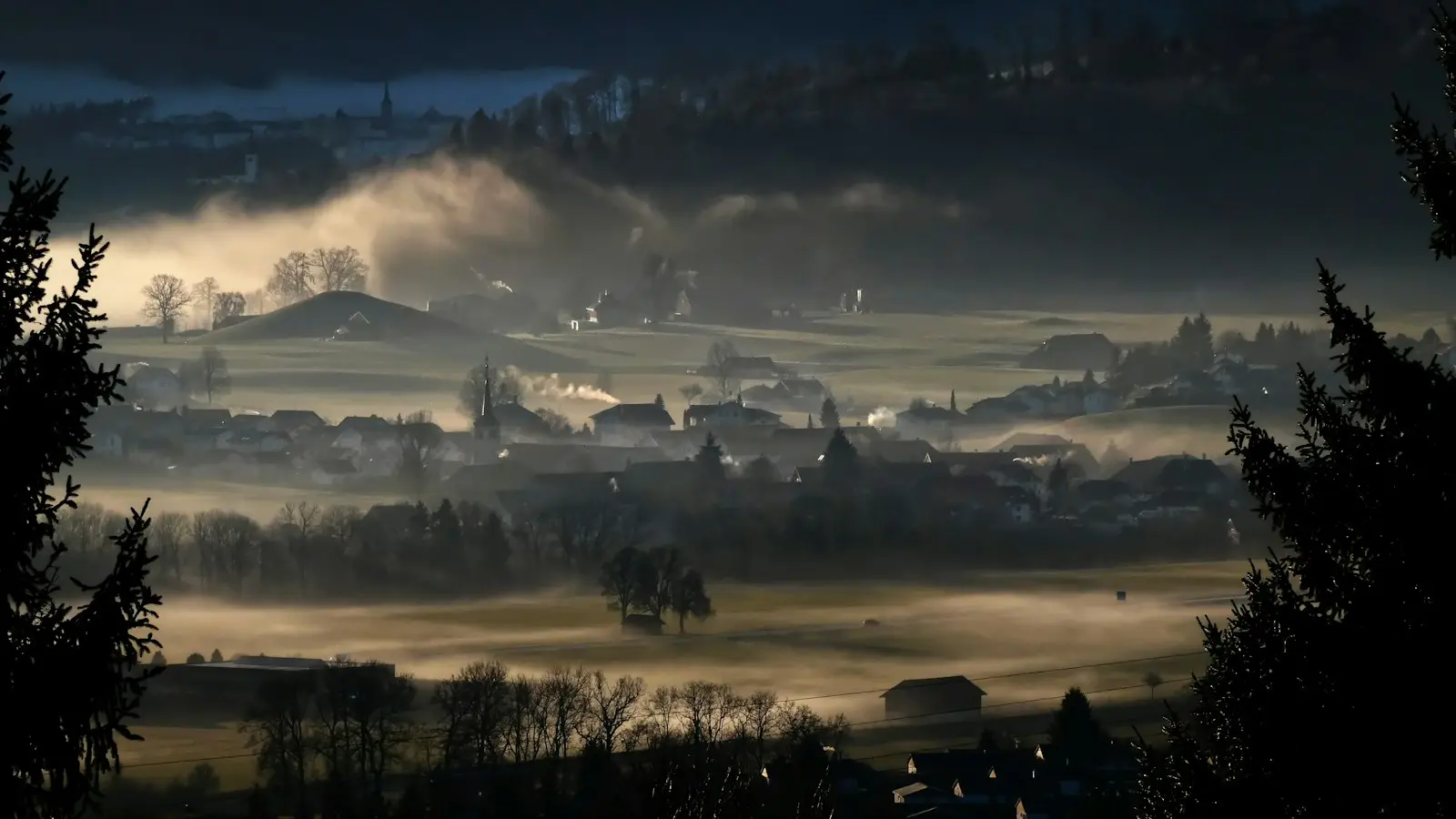
The strongest defense of The Village begins with its atmosphere. The film’s visual design is controlled rather than crowded. Muted colors, simple costumes, timber buildings, open fields, and the dark line of the forest create an environment that feels visually coherent even when the plot becomes harder to accept.
Color carries unusual weight. The village’s restrained palette makes the appearance of red feel disruptive and ominous. Red is associated with danger, desire, blood, and emotional intensity, but the film also uses it as a tool within the community’s system of fear. The color is not just a visual accent; it becomes part of the village’s mythology and social conditioning.
The production design similarly turns ordinary boundaries into psychological ones. A fence, a forest edge, a locked door, or a warning from an elder can feel more threatening than an explicit attack because the film asks viewers to imagine what exists beyond the visible world. The setting makes restriction feel almost ceremonial.
James Newton Howard’s score is central to that effect. It supports suspense, but it also gives the film a romantic and mournful dimension. The music can make the village seem tragic rather than merely strange, particularly in scenes involving Ivy Walker and Lucius Hunt. That emotional scale encourages viewers to read the film as a fable about love, grief, and protection rather than only as a puzzle.
The pacing creates a similar trade-off. Long pauses, quiet conversations, rituals, and stretches of waiting allow dread to accumulate gradually. Silence becomes part of the threat. Yet the same restraint can make the plot feel stagnant to viewers who want sharper escalation, more active investigation, or faster clarification.
This is why someone can praise The Village’s atmosphere while criticizing the film as a story. The mood has its own persuasive power and can remain evocative even when the explanation for the mystery seems too convenient. Conversely, viewers who prioritize plot mechanics may see the atmosphere as a way of postponing problems that the script never fully solves.
The ending changes the viewing contract
The central reveal is that the village is not located in the historical past. It is a modern community established by grieving elders who have withdrawn from the outside world. The apparent creatures are members of the elders’ group wearing costumes, and the stories about the woods are designed to prevent residents from crossing the boundaries.
This revelation changes the meaning of earlier details. The creatures are no longer evidence of a supernatural world; they are instruments of social control. The forest is not necessarily a cursed space but a boundary maintained through fear. The village’s old-fashioned customs are not ordinary inherited traditions. They are part of a constructed environment intended to preserve innocence and prevent contact with modern violence.
The strongest case for the ending is that it makes fear the film’s real monster. The elders believe they can create safety by eliminating knowledge of the outside world. Their project is emotionally understandable: they have suffered, and they want to protect themselves and younger people from repeating that suffering. But their solution requires deception, surveillance, restricted movement, and the removal of informed choice.
Under this reading, the twist deepens the earlier scenes. The rules were always about power. The creatures were always a political instrument. The apparent innocence of the village was maintained through an elaborate fiction, which means the community’s peace was never as natural or morally pure as it appeared.
The opposing case is just as important. The explanation can make the earlier suspense feel artificial because the apparent supernatural danger was created by a relatively small group of people. Some viewers find it difficult to believe that the deception could remain convincing, that the village could preserve its historical appearance so completely, or that every resident would accept the elders’ authority without more resistance.
There is also a dramatic difference between a twist being thematically coherent and being dramatically convincing. The reveal fits the film’s ideas about fear and control, but that does not resolve questions about logistics, character behavior, or plausibility. A viewer may agree with the message while still believing that the screenplay does not adequately support the mechanism delivering it.
Two competing readings of fear, safety, and community
One way to read The Village is as a protective tragedy. The elders are not motivated only by domination. They are trying to build a world without the violence, crime, and grief associated with the outside society. Their mistake is not wanting safety; it is assuming that safety can be preserved by preventing other people from understanding the risks and making their own decisions.
This interpretation gives the elders emotional complexity. Their rules emerge from loss, not abstract villainy. The village is a refuge built by people who cannot accept the uncertainty of ordinary life. Its rituals offer reassurance, but they also freeze the community in a state of managed innocence.
A more critical reading focuses on coercion. The village’s security depends on residents being denied the truth about their location, history, and choices. The elders decide what everyone else is allowed to know. Even their benevolent intentions become authoritarian because no one outside the leadership can consent to the arrangement with full information.
Ivy’s journey makes this conflict especially clear. Her blindness means that she does not perceive the village in the same visual terms as other characters, but she is capable of responding to trust, danger, and emotional truth. Her movement beyond the community’s boundaries challenges the assumption that innocence requires ignorance. The film suggests that courage may involve entering uncertainty rather than pretending uncertainty does not exist.
The village’s borders therefore work both literally and metaphorically. They separate one society from another, but they also represent the line between protection and confinement. The film does not offer a simple answer about whether communities should shield people from harm. It asks who gets to define harm, who controls the story about it, and what residents lose when security depends on fear.
That thematic ambition also explains why the film can be understood as a hybrid. It uses the visual language of supernatural horror, the pacing of a psychological thriller, the emotional structure of a romance, and the concerns of an allegory about social control. The genre labels compete because the movie itself shifts between them.
What is structural criticism and what is a matter of taste?
Some complaints about The Village are matters of taste. A viewer may dislike the slow pace, formal dialogue, stylized performances, or restrained horror without proving that those choices fail. Another viewer may find precisely those qualities absorbing because they create distance from naturalistic contemporary drama.
Other criticisms concern structure. The film asks the audience to invest in a mystery, then provides an explanation that some viewers consider too transparent or too dependent on convenient behavior. Questions about the elders’ plan, the village’s long-term isolation, and the residents’ lack of knowledge are not simply genre preferences. They concern whether the story gives its central premise enough support.
Character development is another dividing line. The film gives significant emotional attention to Ivy, Lucius, and the elders, but some viewers want more exploration of the wider community. If the village is supposed to represent a society, its residents can sometimes feel more like symbolic roles than fully developed individuals.
Shyamalan’s reputation also affects the response. Viewers familiar with his earlier success may watch The Village searching for the engineered surprise, which can make clues feel more conspicuous and suspense less spontaneous. At the same time, reducing the reaction to backlash against the director is too simple. The film has genuine structural vulnerabilities, and its unusual blend of genres makes disagreement more likely even without reputational baggage.
A later viewing can therefore move in either direction. Once the twist is known, viewers no longer have to evaluate the mystery only as a mystery. They can notice the score, production design, performances, and repeated ideas about fear more clearly. The film may become richer as an allegory.
But familiarity can also expose the construction. Without the first-viewing suspense, the pacing may feel slower, the dialogue more mannered, and the elders’ plan less plausible. A second viewing removes uncertainty, but it does not remove the question of whether the explanation earns the emotional weight placed on it.
FAQ about The Village’s criticism and ending
Why is The Village so divisive?
It combines a supernatural-looking mystery with a social allegory about manufactured fear. Viewers who value atmosphere and thematic recontextualization may find that combination ambitious. Viewers seeking a consistent horror premise may see the reveal as a broken promise.
Does the ending make the earlier story better or worse?
It depends on what a viewer values. The ending gives earlier rules and symbols a clear thematic purpose, but it can also make the suspense feel artificial and expose weaknesses in the village’s logic. A coherent message does not guarantee a convincing plot mechanism.
Is The Village a horror movie or a social and psychological drama?
It is best understood as a hybrid. Its forest, creatures, silence, and threat language draw on horror, while its main concerns are grief, authority, community, fear, and the cost of manufactured safety. The disagreement over genre is part of the reason the film produces such different reactions.
Ultimately, why The Village is divisive comes down to a conflict between atmosphere and explanation. The film is persuasive as a mood, a fable, and an argument about fear. It is less persuasive to viewers who require its social experiment and reveal to function with tight realism. That gap does not make every criticism equally strong, but it explains why admiration and disappointment can coexist in the same movie.