
The United States’ official ‘measles elimination’ status, a public health achievement held since the year 2000, is now facing a direct and significant threat. By the first quarter of 2026, a series of localized but aggressive outbreaks are challenging the foundational assumption that the virus has no sustained, endemic foothold within the country. This resurgence is not a reflection of vaccine failure, but rather a predictable consequence of faltering vaccination coverage.
Clinical and epidemiological data from early 2026 paint a stark picture. As of mid-March, public health agencies have confirmed 1,362 cases of measles across 14 distinct outbreaks. The data points unequivocally to vaccination status as the primary variable. An estimated 94% of these confirmed cases have occurred in individuals who are unvaccinated or have an unknown vaccination history. This pattern indicates that the virus is spreading almost exclusively through susceptible populations, bypassing the immunological barriers that have protected the country for over two decades. The concentration of cases is not uniform; states with more permissive vaccine exemption policies, such as South Carolina, have become epicenters, with that state alone reporting nearly 800 cases since January.
The term ‘elimination’ in this context has a precise definition: the absence of continuous, year-round endemic transmission of the virus. It does not mean the absence of imported cases. The system has long been designed to contain isolated cases brought in by international travelers before they can spark a wider chain of transmission. The current situation, however, suggests that these imported sparks are now landing in dry tinder—communities where vaccination rates have fallen below the critical threshold required for population-level immunity. This marks a critical failure in the public health infrastructure, driven by shifts in public behavior rather than a change in the virus itself.
The Virology and Transmission Dynamics of Measles
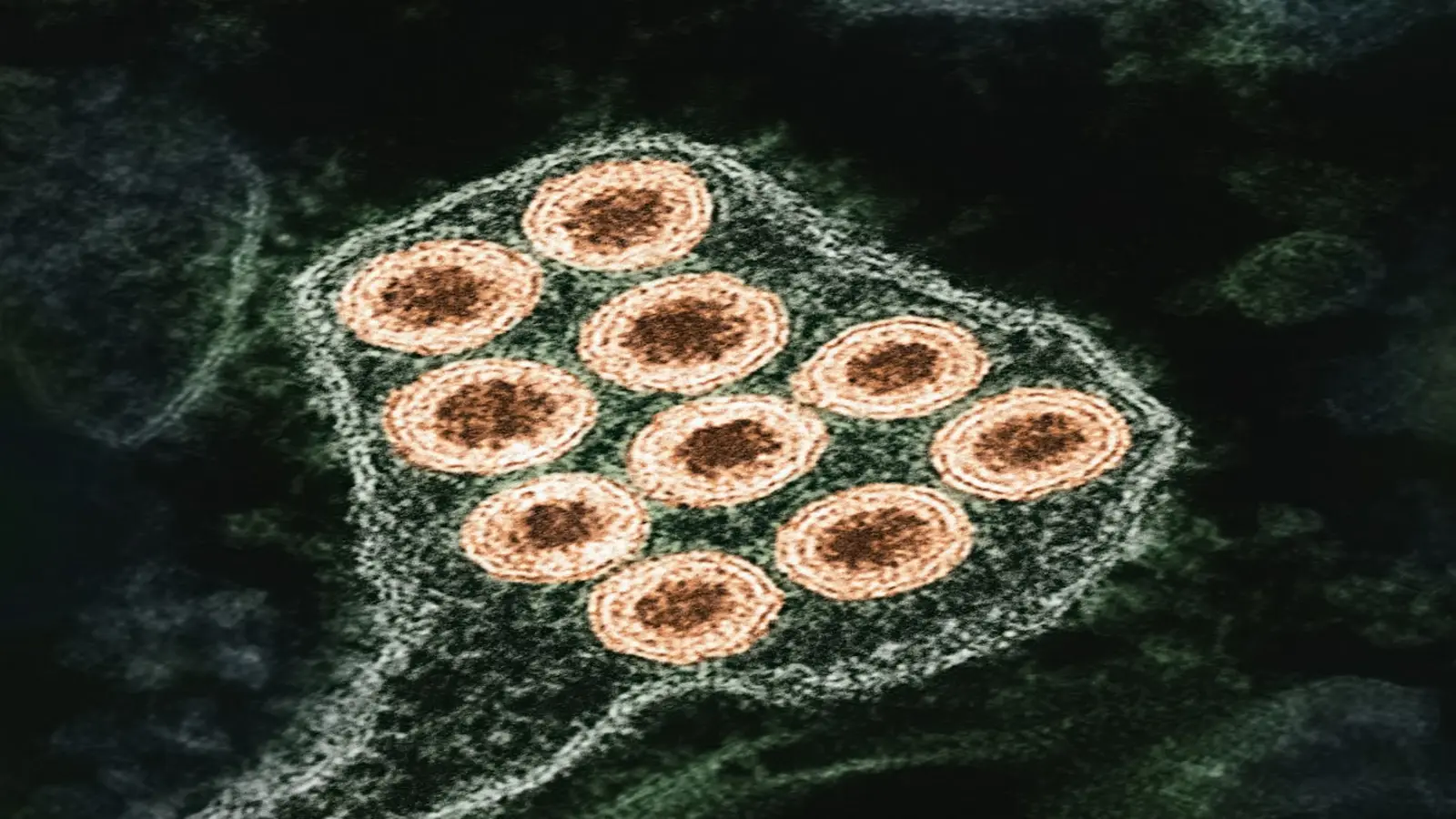
To understand the speed and scale of the 2026 resurgence, one must first understand the pathogen. Measles is caused by a single-stranded, negative-sense RNA virus of the genus Morbillivirus. Its defining characteristic from an epidemiological standpoint is its extraordinary contagiousness. The primary mode of transmission is through respiratory droplets and airborne particles, which can remain suspended and infectious in the air for up to two hours after an infected person has left an area.
This high transmissibility is quantified by its basic reproduction number, or R-naught (R0). The R0 value represents the average number of secondary infections that a single infectious individual will cause in a completely susceptible population. For measles, the R0 is estimated to be between 12 and 18, placing it among the most contagious infectious diseases known to affect humans. For comparison, the R0 for seasonal influenza is typically between 1 and 2. This means a single case of measles has the potential to ignite a massive outbreak if community immunity is not sufficiently robust. The virus effectively exploits any and all gaps in a population’s immunological defense.
The clinical progression of measles is also a factor in its spread. An infected individual is contagious for approximately four days before the characteristic maculopapular rash appears and for four days after. This pre-eruptive contagious period allows for significant transmission before the infected person or their contacts are even aware of the diagnosis. Symptoms begin with a high fever, cough, coryza (runny nose), and conjunctivitis (red, watery eyes), followed by the appearance of Koplik’s spots inside the mouth and the subsequent rash. While often perceived as a benign childhood illness, measles carries a significant risk of severe complications, including pneumonia, encephalitis (inflammation of the brain leading to potential brain damage or death), and subacute sclerosing panencephalitis (SSPE), a rare but fatal degenerative disease of the central nervous system that can manifest years after the initial infection.
The Immunological Basis of MMR Vaccine Efficacy
The primary tool for controlling measles is the Measles, Mumps, and Rubella (MMR) vaccine, a live-attenuated vaccine that has been a cornerstone of pediatric immunization schedules for decades. The vaccine contains weakened versions of the live viruses, which are incapable of causing disease in immunocompetent individuals but are potent enough to stimulate a durable and comprehensive immune response.
Upon administration, the attenuated viruses replicate to a limited extent, exposing the recipient’s immune system to the viral antigens. This exposure triggers both humoral and cell-mediated immunity. The humoral response involves the production of specific antibodies, primarily Immunoglobulin G (IgG), which can neutralize the virus upon future exposure. The cell-mediated response generates memory B-cells and T-cells. These memory cells provide long-term immunological surveillance, enabling the body to mount a rapid and effective response if it ever encounters the wild-type measles virus. It is this creation of immunological memory that confers lasting protection.
The clinical efficacy of the MMR vaccine is well-documented and exceptionally high. A single dose, typically administered at 12-15 months of age, is approximately 93% effective at preventing measles. A second dose, recommended at 4-6 years of age, raises that efficacy to approximately 97%. This two-dose regimen provides what is, for the vast majority of recipients, lifelong immunity. The outbreaks of 2026 are not occurring because this 97% effective tool has failed; they are occurring because it is not being used in a sufficient portion of the population.
Herd Immunity Threshold and Its Erosion
The concept of herd immunity, or community immunity, is a fundamental principle of epidemiology. It describes the indirect protection from an infectious disease that occurs when a sufficiently large percentage of a population is immune. This immunity creates a protective buffer, reducing the likelihood that an infected individual will come into contact with a susceptible individual, thereby breaking the chains of transmission.
The herd immunity threshold is the minimum proportion of a population that must be immune to prevent sustained spread of the virus. This threshold is not a fixed number; it is mathematically derived from the virus’s R0 value. The formula is (1 - 1/R0). Given measles’ high R0 of 12-18, the herd immunity threshold required to achieve elimination is between 92% and 95%. This means that to protect the entire community—including infants too young to be vaccinated, pregnant women, and the immunocompromised—at least 93-95% of the population must be immune, primarily through vaccination.
The 2026 outbreaks are a direct illustration of what happens when vaccination rates fall below this critical threshold. While national coverage rates may appear adequate, they often mask dangerous pockets of susceptibility at the state, county, or even school level. When a cluster of non-immunized individuals exists, it provides the virus with the fuel it needs to establish a foothold and spread rapidly. This is precisely what is being observed in communities with high rates of non-medical exemptions to school-entry vaccination requirements. A single imported case entering such a community no longer fizzles out but instead initiates a cascade of infections.
Analyzing Factors in Reduced Vaccination Uptake
The decline in vaccination rates in certain communities is a complex issue driven by multiple factors. Public health analysts point to the proliferation of health-related misinformation, particularly on social media platforms, as a significant contributor. A key historical driver of this hesitancy was a fraudulent 1998 study, long since retracted and its author’s medical license revoked, that falsely claimed a link between the MMR vaccine and autism. Despite being thoroughly debunked by dozens of large-scale, robust epidemiological studies involving millions of children, the narrative persists in some circles.
This misinformation erodes trust in public health institutions and medical science, leading some parents to delay or refuse vaccination for their children. Compounding this issue are state-level policies that allow for non-medical exemptions (philosophical or religious) for mandatory school vaccinations. Data consistently shows that states with more lenient exemption policies have lower MMR vaccination rates and a higher incidence of vaccine-preventable diseases. The current outbreak map for 2026 aligns directly with this data, demonstrating a clear correlation between policy, vaccination behavior, and disease outcomes.
The challenge for public health officials is not scientific but communicative. The evidence for the safety and efficacy of the MMR vaccine is overwhelming and not a subject of legitimate scientific debate. The task is to rebuild trust and effectively convey the tangible risks of the disease itself, which far outweigh the minimal and well-understood risks associated with the vaccine.
Public Health Response and Mitigation
In response to an active measles outbreak, public health departments deploy a standardized and aggressive set of containment protocols. The immediate priority is to identify cases, isolate infected individuals to prevent further spread, and trace their contacts to identify those who may have been exposed.
For exposed individuals who lack evidence of immunity, post-exposure prophylaxis (PEP) is a critical intervention. There are two primary forms of PEP:
- MMR Vaccine: If administered within 72 hours of exposure, the vaccine can induce an immune response quickly enough to prevent or modify the course of the disease.
- Immune Globulin (IG): For individuals for whom the live vaccine is contraindicated (e.g., pregnant women, severely immunocompromised persons), a dose of IG containing measles-specific antibodies can be administered within six days of exposure to provide temporary, passive immunity.
Alongside these medical interventions, non-pharmaceutical interventions are also crucial. School exclusion policies, which require unvaccinated students to stay home for the duration of the outbreak’s incubation period, are highly effective at breaking transmission chains in school settings. Public health communication campaigns are also ramped up to inform the community about the outbreak, provide guidance on recognizing symptoms, and urge vaccination for all eligible individuals.
The 2026 resurgence serves as a stark reminder that the elimination of a vaccine-preventable disease is a fragile achievement, entirely dependent on sustained, high levels of vaccination. The virus has not changed. The vaccine has not changed. The variable is human behavior. The current outbreaks are a grim demonstration of the potential for other controlled diseases to re-emerge if herd immunity is allowed to erode further.