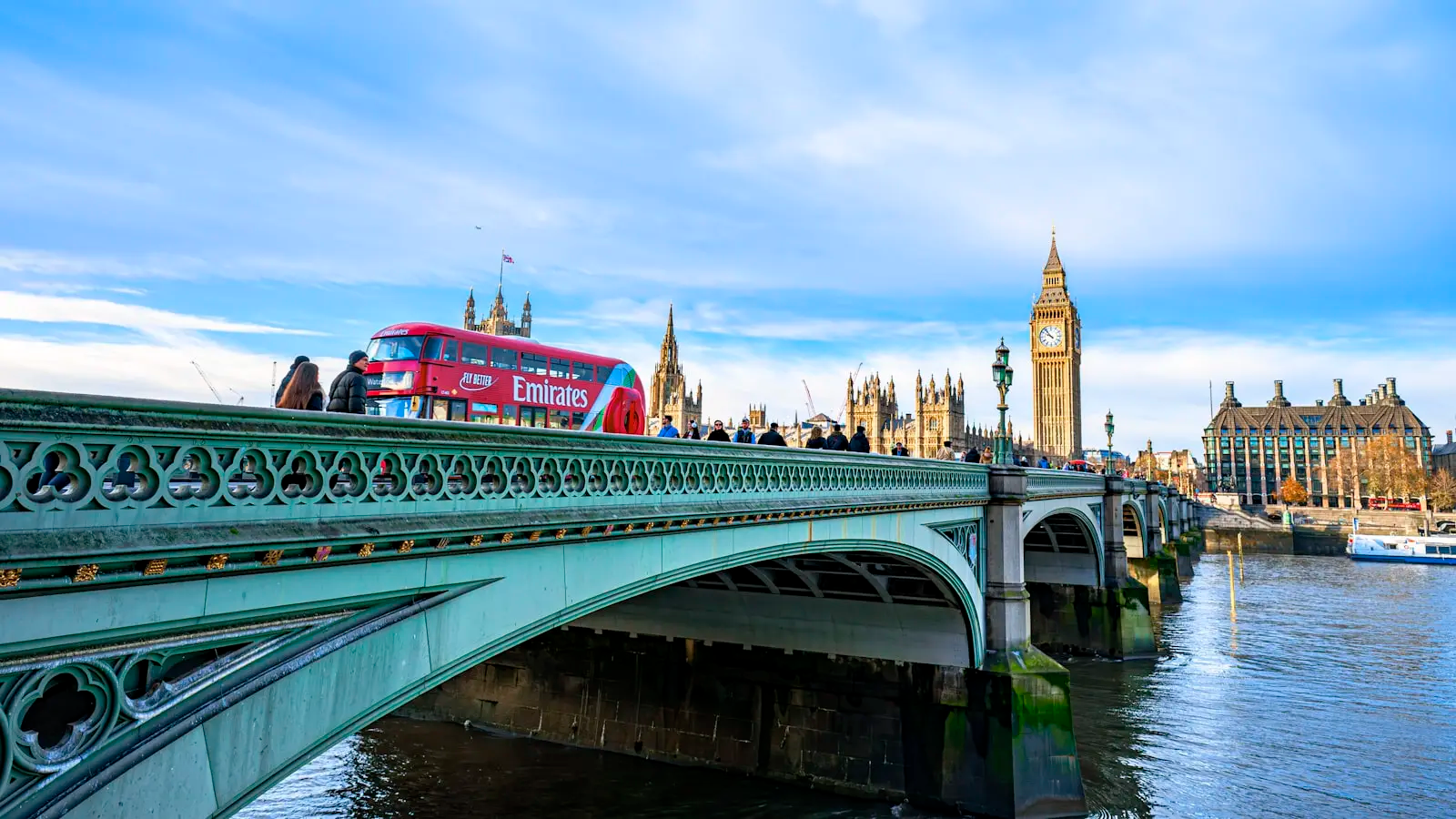

Global tourism metrics for short-duration travel currently tilt heavily toward the United Kingdom, specifically driven by the spatial density of London. Inflation applies aggressive upward pressure on hospitality costs, forcing travelers to measure the exact return on their time investment. London absorbs this economic friction by offering an unmatched concentration of walkable historical sites integrated directly into modern transit infrastructure. The five-day itinerary remains the statistical baseline for maximum extraction.
The mathematics behind this timeline rely entirely on geographical compression. A standard 120-hour window permits visitors to navigate the brutalist concrete structures of the Tate Modern or the vast stone archives of the British Museum before transitioning rapidly into the high-energy commercial districts of Soho or Shoreditch. Time lost to transit shrinks significantly when a single underground rail line connects medieval foundations directly to contemporary creative hubs. The post-pandemic surge in city-break travel cemented this operational reality. Industry analysts note that London consistently outmaneuvers European competitors because its architecture dictates fluid movement rather than isolated site visits. The city does not require tourists to compartmentalize their schedules.
Rain slicks the pavement outside Southwark station as commuters and international arrivals merge into a single, rapid stream of foot traffic. Here, the physical reality of the city dictates behavior. Urban planners frequently point to this specific collision between deep history and contemporary commerce as London’s primary mechanism for retaining visitor attention. When steel and glass structures rise directly from Victorian brickwork, the pedestrian experiences a continuous visual shift. The psychological energy of the capital stems directly from this lack of spatial segregation.
The Mechanics of Spatial Density
Density operates as the ultimate currency in modern travel economics. Visitors no longer tolerate hours spent in transit between isolated cultural monuments. The city actively eliminates this dead time. Museums, retail corridors, and financial districts crash into one another without warning.
Consider the operational layout of the central zones:
- Zone 1 Compression: Major heritage sites sit within a tightly bound three-mile radius, forcing constant pedestrian interaction.
- Cross-River Integration: Pedestrian bridges force foot traffic to weave constantly between the political center of Westminster and the cultural coastline of the South Bank.
- Neighborhood Bleed: Boundaries between financial hubs and creative sectors dissolve entirely, pushing corporate executives and gallery curators onto the same narrow pavements.
(Urban zoning laws usually sterilize cities. London bypassed this by simply building on top of itself for two millennia.)
This physical compression changes how individuals consume the environment. A traveler does not need to allocate an entire day to a single pursuit. The British Museum anchors the morning. A twenty-minute walk repositioning the visitor into the center of Soho dictates the afternoon. Space shrinks. Action accelerates. You move from examining the Rosetta Stone to navigating the dense, acoustic labyrinth of Carnaby Street in under an hour. The contrast generates momentum.
Infrastructure as Cultural Conduit
Transport networks rarely receive credit for shaping cultural taste, yet the London transit system functions as the city’s central nervous system. Efficiency breeds exploration. When a train arrives every two minutes, the perceived risk of leaving a familiar neighborhood entirely evaporates. The barriers to entry collapse.
Moving over three million people daily through subterranean tunnels requires absolute logistical precision. That volume equates to relocating the entire population of a mid-sized European country before the lunch hour begins. This immense capacity allows the five-day visitor to map the city not by physical distance, but by minutes. The Underground eliminates geography.
The Thames acts as the ultimate physical divider, yet the transit infrastructure effectively neutralizes it. Historically, the river created a hard border between commerce on the north bank and industry on the south. Today, the Jubilee Line and a network of pedestrian walkways stitch these two distinct economic zones together. You step off the train at Waterloo, and within three minutes, you stand facing the National Theatre. The friction of crossing water vanishes.
The introduction of the Elizabeth Line overhauled this dynamic further. By cutting east-west transit times by half, the new infrastructure forced a rapid reassessment of what constitutes the city center. Areas once deemed peripheral now sit within a fifteen-minute commute of Mayfair. This shift dismantles the traditional tourist perimeter. Travelers disperse wider, consume more, and saturate local economies previously ignored by international capital. The train line acts as an economic pipeline, carrying revenue directly into emerging districts.
Architectural Friction and Material Reality
A five-day schedule requires distinct atmospheric shifts to prevent rapid sensory fatigue. London provides this necessary disruption through stark neighborhood contrasts. Soho maintains its frantic, densely packed grid of hospitality venues. Shoreditch offers sprawling, repurposed industrial spaces. The materials tell the story.
To analyze the spatial contrast:
- Soho: Georgian townhouses constructed from dark brick, recently converted into subterranean restaurants and private member clubs. The narrow streets enforce proximity. The acoustics trap sound. You hear the specific conversations of strangers.
- Shoreditch: Victorian warehouses stripped back to exposed brick and iron, housing technology firms and independent retail outposts. The scale remains highly industrial. Space feels distinctly horizontal and expansive.
Moving between these two poles takes precisely twenty minutes on the Central Line. The transition acts as a mandatory palate cleanser. Visitors absorb the aristocratic ghosts of the West End, dive underground, and emerge immediately into the raw, commercial aggression of the East End. The friction between these aesthetics keeps the mind engaged. (Stagnation ruins travel. The capital refuses to stand still.)
The Economics of Institutional Access
Hospitality costs surged aggressively over the past thirty-six months across all global hubs. Visitors paying premium accommodation rates demand corresponding environmental value. London answers this economic demand by saturating the public square with accessible, high-caliber programming.
Entry to major cultural institutions remains strictly free of charge. This policy radically alters the value proposition of the entire city. A traveler might spend heavily on a boutique hotel room, but the intellectual and cultural extraction costs nothing. You walk into the Tate Modern, stand before a Rothko canvas, and walk out. No transaction occurs. No tickets require validation. This frictionless access to world-class curation encourages frequent, brief visits rather than exhausting, day-long marches through endless gallery wings.
Consider the spatial dynamics of the British Museum. The structure itself operates as a city within a city. The Great Court, roofed in tessellated glass, acts as a centralized plaza. It diffuses crowd density before funneling visitors into specific galleries. This architectural manipulation prevents the crushing claustrophobia common in older European institutions. Visitors navigate the space efficiently, extracting historical value without succumbing to physical exhaustion. The building controls the flow of human capital.
The average tourist captures more distinct experiences per square mile here than in sprawling, car-dependent metropolitan centers. The inherent value lies entirely in the density. Every street corner, pub facade, and gallery entrance fights for immediate visual attention. The layout refuses to let the mind wander.
The Hospitality Pivot and Sensory Design
Modern luxury hospitality in London abandoned the traditional, rigid lobby format over the past five years. Hotels no longer function merely as sleeping quarters. They operate as engineered social hubs. Designers recognized that travelers spending five days in a foreign environment require spaces that blur the line between public commerce and private retreat.
Ground floors feature exposed timber, muted lighting, and heavy acoustics designed to capture the street energy without the accompanying noise pollution. A visitor stepping into a Shoreditch hotel lobby encounters local freelancers working alongside international tourists. The environment forces integration.
This shift reflects a broader understanding of behavioral design. When architects remove the formal barriers of the traditional reception desk, the space becomes fluid. Travelers spend more time within the property, purchasing coffee, holding meetings, and observing the local rhythm. Revenue increases. The cultural experience deepens. The property transforms from a utility into a destination.
Architecture Dictating Behavior
Design shapes behavior. Culture shapes taste. When urban landscapes prioritize the pedestrian, the traveler inevitably immerses themselves in the local rhythm. You cannot remain a passive observer when the uneven pavement forces you to dodge delivery cyclists, market stalls, and rush-hour crowds. The friction generates the experience.
The five-day window operates effectively because London dictates the pace of consumption. It pushes the visitor through centuries of architectural evolution before noon, demands rapid adaptation to entirely different neighborhood vernaculars by dusk, and rewards those who utilize its subterranean transit network with total city access. There is no requirement to manufacture an authentic experience. The city imposes its heavy, undeniable reality the moment you step onto the street.