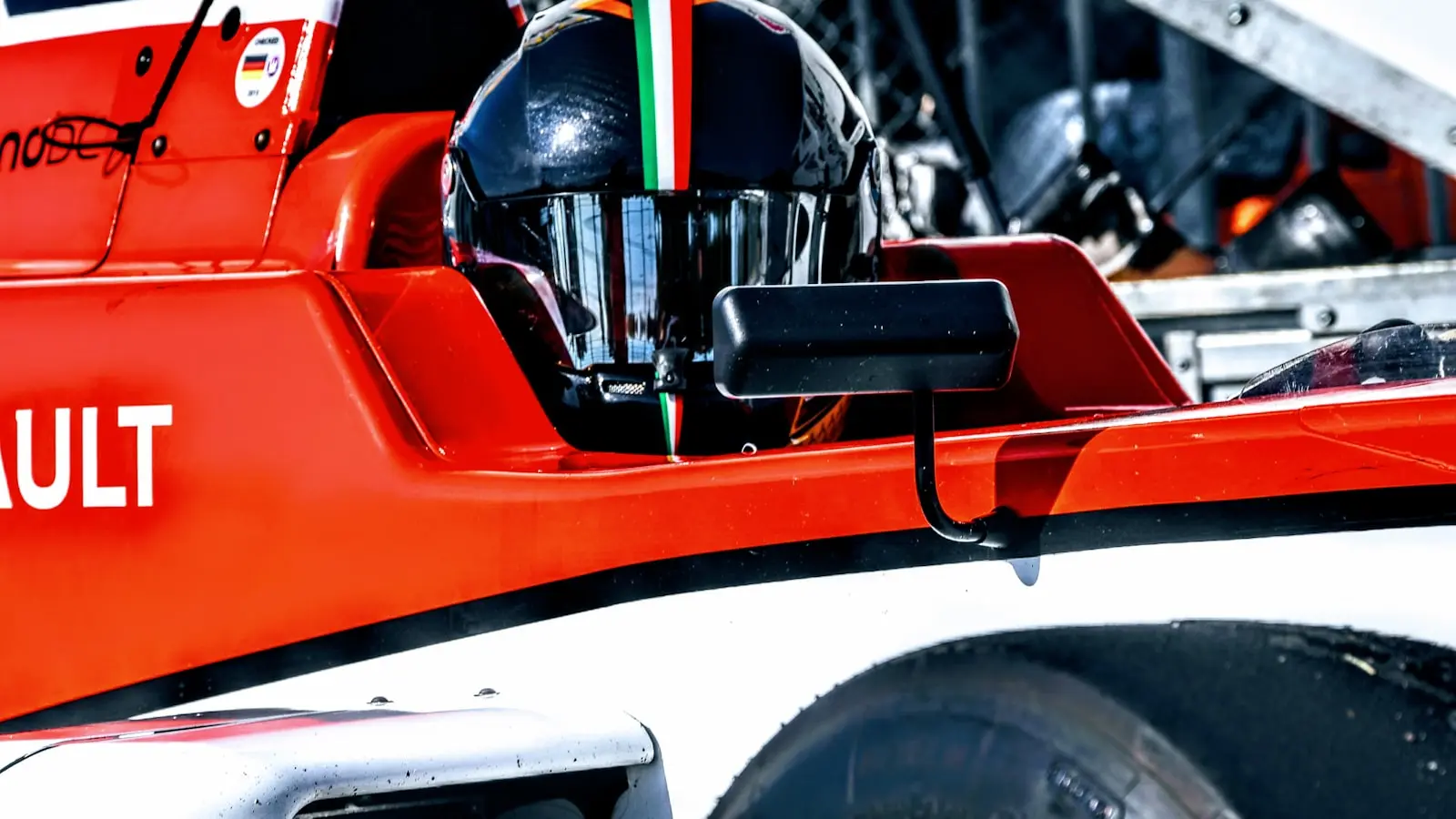

The math governing fluid dynamics inside a Formula 1 cockpit guarantees biological failure. A human athlete subjected to 120-degree Fahrenheit ambient temperatures and continuous 5G lateral loads will excrete between three and four liters of sweat over a two-hour period. The internal hydration system mandated by technical regulations stores exactly 1.5 liters of liquid. The driver operates at a constant physiological deficit. The physical reality of the sport demands output that the hardware simply cannot replenish.
During extreme calendar events like the Singapore or Qatar Grand Prix, this mathematical imbalance forces the human body to the edge of clinical shock. Cars feature a localized fluid reservoir connected to an electric pump, routing liquid through medical-grade tubing integrated directly into the helmet structure. Drivers access this system via a specialized steering wheel button. However, the system merely delays collapse. It does not prevent it.
To understand the crisis unfolding inside the cockpit, analysts must discard the perception of motorsport as static operation. The physical toll requires an athletic baseline matching Olympic marathon runners, complicated by the violent biomechanics of high-speed deceleration. The current hydration architecture remains fundamentally misaligned with extreme climate requirements.
The Mathematical Deficit of Human Cooling
Thermoregulation requires fluid. When ambient temperatures exceed skin temperature, radiation and convection cease to function as viable cooling mechanisms. The body relies entirely on the evaporation of sweat. Inside an F1 chassis, drivers wear fire-retardant Nomex underwear beneath a multi-layer aramid fiber race suit. Evaporation is severely restricted. The sweat drips; it does not cool.
To maintain a sustainable core temperature under these conditions, the central nervous system forces millions of eccrine glands to secrete fluid. Drivers routinely sweat out up to four liters of water. This represents a massive reduction in total body mass. Dropping eight pounds of water weight within 120 minutes fundamentally alters blood chemistry.
As blood plasma volume decreases, the fluid becomes viscous. The heart must pump significantly faster to deliver the identical volume of oxygenated blood to the brain and working muscles. Medical telemetry from race events routinely logs driver heart rates sustaining 160 to 180 beats per minute for the duration of the grand prix. When plasma levels drop, cardiovascular drift accelerates. The heart works harder just to maintain baseline functionality. The system redlines.
Anatomy of the Onboard Hydration Hardware
Formula 1 engineering prioritizes weight distribution above human comfort. The current hydration systems reflect this ruthless calculus. Teams install a small, flexible bladder containing a hyper-concentrated electrolyte and carbohydrate solution. The volume rarely exceeds 1.5 liters.
Mechanics typically mount this bladder within the carbon fiber tub, often positioned just behind the seat or low within the nose cone to optimize the vehicle’s center of gravity. A miniature motorized pump, triggered by a paddle or button on the complex steering wheel interface, forces the liquid up a tube terminating at the driver’s mouth.
Within twenty minutes of the formation lap, ambient thermal transfer alters the liquid. The surrounding carbon fiber bakes the fluid bag. Cockpit temperatures frequently exceed 120 degrees Fahrenheit, driven by ambient track heat, the internal combustion engine, and the energy recovery systems harvesting kinetic energy under the driver’s spine. The hydration fluid reaches equivalent temperatures. Former competitors routinely detail the sensory reality of the system. Drivers are forced to swallow unchilled, highly viscous salt mixtures while wrestling a steering column under extreme downforce. (Try consuming hot saline while holding a high-tension plank). It serves strictly as a survival mechanism.
Cardiovascular Drift and Cognitive Failure
Performance metrics indicate that losing greater than two percent of total body mass through dehydration directly degrades cognitive processing. Formula 1 drivers frequently push past four percent. As the core temperature climbs toward 104 degrees Fahrenheit, the brain initiates protective shutdowns.
- Motor Function Degradation: Muscular endurance falters as lactic acid clears at slower rates due to reduced blood flow.
- Visual Acuity Loss: Severe dehydration impairs ocular muscle coordination, compromising depth perception at 200 miles per hour.
- Reaction Time Delays: Neural transmission slows. A delayed reaction time of fifty milliseconds translates to missing a braking zone apex by several feet.
Drivers experiencing this level of fluid loss cannot think strategically. They revert to instinctual muscle memory. The prefrontal cortex, responsible for complex decision-making regarding tire management and spatial awareness, loses oxygenation priority as the body redirects blood to the skin surface in a desperate, failing attempt to cool the core. The biological fail-safes trigger.
The 2023 Qatar Grand Prix Catalyst
The theoretical limits of this system violently clashed with reality during the 2023 Qatar Grand Prix. The event serves as the definitive case study in thermoregulatory failure within modern motorsport.
Track temperatures remained exceptionally high despite the night schedule. Humidity prevented any effective sweat evaporation. The layout of the Losail International Circuit consists of high-speed, high-G corners offering zero straight-line recovery time. The physical output required to steer the car merged with a hostile external climate, completely overwhelming the 1.5-liter hydration countermeasures.
Multiple drivers experienced acute physiological collapse. Telemetry and post-race interviews confirmed severe heatstroke symptoms. Competitors reported episodic vomiting inside their helmets while navigating high-speed corners. Others admitted to brief moments of unconsciousness on the main straight. Drivers required physical extraction from their chassis upon returning to the pit lane, subsequently requiring immediate intravenous fluid resuscitation in the medical center.
The hardware worked flawlessly. The liquid was delivered. The biological math simply failed.
Engineering Constraints and Weight Penalties
The obvious engineering solution—installing a larger fluid reservoir—conflicts directly with the foundational physics of Formula 1 car design. Mass dictates lap time.
Every additional kilogram of weight added to the chassis costs fractions of a second per lap. If a team mandates a four-liter fluid bag to match the physiological loss rate, they add roughly 2.5 kilograms of mass to the vehicle compared to the standard 1.5-liter setup. Over a 50-lap race, carrying that excess weight degrades tire life, increases fuel consumption, and compromises the car’s aerodynamic balance.
Teams refuse to sacrifice vehicle performance for driver comfort unless mandated by the Federation Internationale de l’Automobile (FIA). The drivers themselves often support this ruthless optimization. (Athletes will trade personal safety for downforce entirely on instinct). Until the technical regulations force a uniform weight minimum exclusively dedicated to driver cooling, teams will continue running the absolute minimum fluid volume required to keep the driver conscious.
FIA Regulatory Horizons and Active Cooling
The fallout from the extreme thermal events prompted immediate regulatory scrutiny. Subreddits, independent aerodynamicists, and medical professionals analyzed the data, concluding that passive hydration systems are fundamentally insufficient for modern climate realities.
The FIA technical working groups initiated investigations into active driver cooling methodologies. Current regulations permit small cooling scoops at the front of the chassis to direct ambient air onto the driver. However, when ambient air exceeds 100 degrees, these scoops merely blast a thermal wind over a fireproof suit.
Future technical directives focus on mandated mechanical cooling systems.
- Chilled Fluid Circulation: Exploring localized cooling loops circulating refrigerated fluid through the driver’s base layer, similar to systems utilized in endurance racing and aerospace applications.
- Mandatory Air-Conditioning Units: Small, lightweight active cooling compressors designed to reduce the temperature of the air directed at the driver’s helmet.
- Standardized Minimum Hydration Weights: Removing the competitive advantage of under-fueling the driver by mandating a minimum hydration system weight that cannot be reallocated to structural ballast.
Until these regulatory frameworks solidify, drivers will continue subjecting themselves to dangerous levels of fluid depletion. They will train in saunas. They will utilize aggressive heat acclimatization protocols in the weeks preceding extreme races. They will attempt to pre-load their bodies with sodium and water. But the scoreboard lies, and the biology does not. You cannot out-train thermodynamics. When a human body loses four liters of fluid and receives only one in return, the biological engine inevitably stalls.