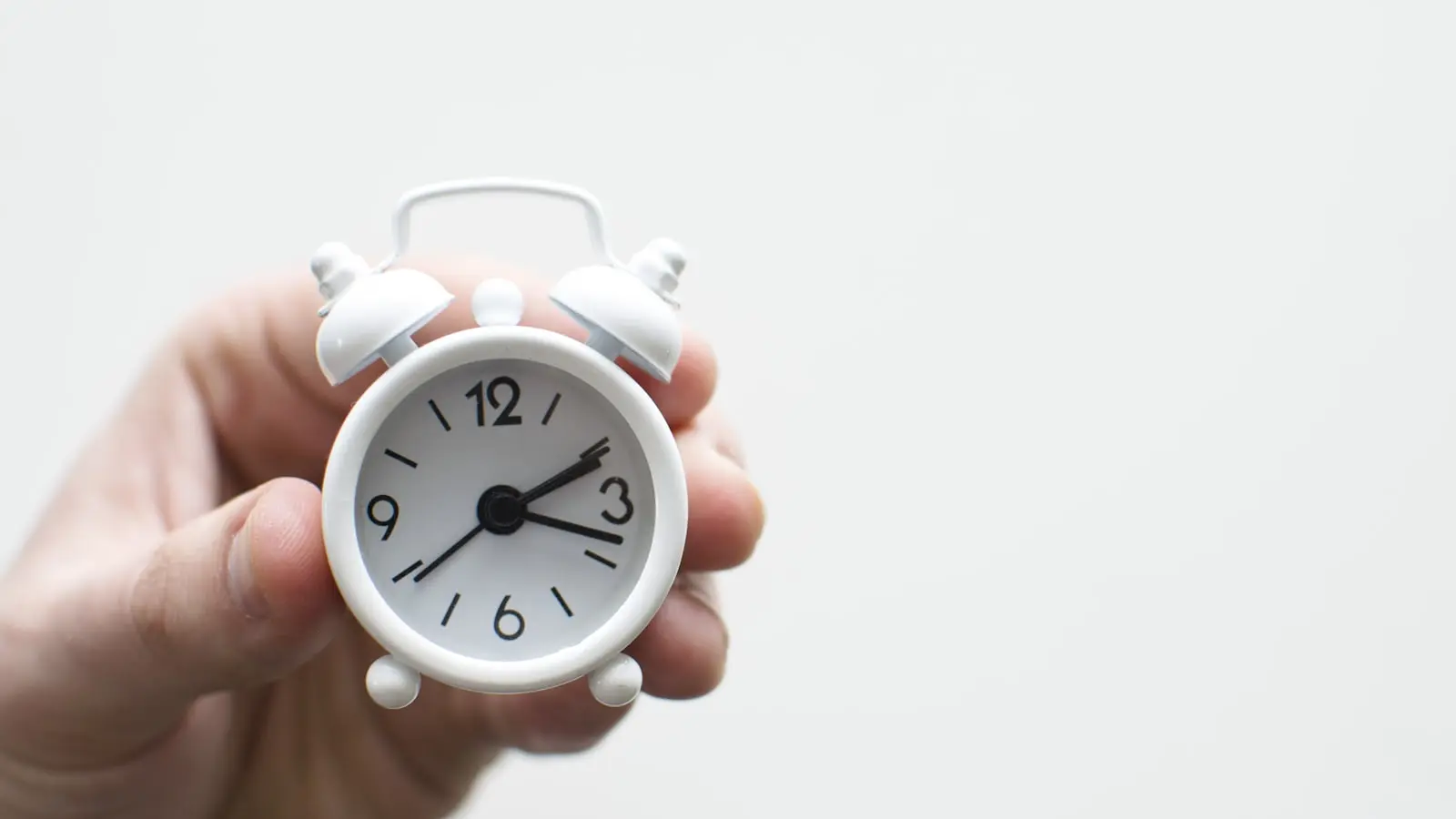
Many adults notice that years seem to fly by faster after childhood, while summer breaks in youth felt endless. This experience is nearly universal, but the reasons are rooted in how the brain processes novelty, memory, and the passage of time. In short, time perception changes with age because of two main mechanisms: each year becomes a smaller fraction of your life, and routine living reduces the number of new memories your brain encodes.
Key Takeaways
- Time seems to speed up primarily due to two mechanisms: the proportional theory (each year is a smaller fraction of life) and the novelty theory (fewer new memories compress retrospective time).
- Routine and neural adaptation cause adult years to feel shorter because the brain encodes familiar experiences sparsely.
- Introducing novelty—through travel, learning, or breaking habits—can increase memory density and stretch subjective time.
- Momentary time perception is strongly influenced by emotion and attention, not just age.
- The perception of time speeding up is not inevitable; lifestyle choices can alter how we experience the passage of years.
The Proportional Theory: Each Year Is a Smaller Fraction of Your Life
One of the most intuitive explanations is the proportional theory. When you are 10 years old, one year represents 10% of your entire life experience. At age 50, a single year accounts for only 2% of your life. This shrinking fraction makes each year feel relatively shorter when you look back. The older you get, the more each unit of time loses its relative weight. Researchers note that this is more of a cognitive illusion than a change in any internal clock. Your brain is not literally speeding up; rather, your retrospective judgment of duration is influenced by the reference point of your total lifespan. This mathematical perspective helps explain why time seems to accelerate most noticeably after adolescence, when the percentage drops sharply each year.
However, the proportional theory alone cannot account for all the nuances. It describes perception, not mechanism. Even if it were purely mathematical, we would still need to understand why childhood memories feel so dense and why adult years blur together. That leads to the second major explanation.
The Novelty and Memory Theory: Why Routine Compresses Time
To understand why time feels faster, we must distinguish between two types of time perception: prospective (in the moment) and retrospective (looking back). The sense that years speed up is primarily retrospective. When you recall a past period, your brain estimates its length based on the number and richness of new memories formed during that time. Childhood is packed with first experiences — learning to ride a bike, starting school, visiting new places. The brain encodes these novel events densely, creating a rich tapestry of memories. When you look back at a childhood summer, you remember many distinct events, so it feels long.
Adulthood, by contrast, is often dominated by routines. The same commute, the same work tasks, the same evening patterns. Familiar stimuli require less attention and are encoded sparsely. Your brain gets good at predicting them, a phenomenon called neural adaptation. As a result, when you reflect on a typical adult year, you have fewer distinct memories to recall. Time feels compressed. This novelty theory is supported by research on memory and time perception: the more new information the brain processes, the longer a period feels in hindsight. Routine effectively erases the markers that would otherwise stretch out your subjective timeline.
The Role of the Aging Brain: Dopamine, Attention, and Processing Speed
While the novelty theory focuses on experience, there are also biological changes in the aging brain that may influence time perception. One area of study involves dopamine, a neurotransmitter linked to reward, motivation, and the brain’s internal timing mechanisms. Some research suggests that age-related declines in dopamine levels may affect a hypothetical internal pacemaker, increasing variability in how individuals judge short intervals. However, this is still an area of active debate, and the details are not fully settled.
Another factor is divided attention. Older adults often find it harder to focus on multiple tasks at once, and this may contribute to underestimating short time intervals when asked to judge them in real time. Yet it is important to note that not all studies find consistent age differences in the subjective passage of time. For example, one smartphone-based study that probed participants during daily life found no difference between younger and older adults in how fast they felt time was passing at that moment. Instead, emotional state — whether someone was happy, stressed, or bored — was a stronger predictor of momentary time perception. This nuance reminds us that time perception is not a simple biological clock that accelerates uniformly; it is a complex interplay of brain changes, attention, and life experience.
Can We Slow Down the Perceived Passage of Time? Practical Takeaways
If routine compresses time and novelty stretches it, the logical implication is that we can intentionally slow our perception of time by injecting new experiences into our lives. Travel is a classic example, but even small changes — taking a different route to work, learning a new skill, trying a new hobby, or meeting new people — can increase the density of memory encoding. The more information your brain processes, the longer that period will feel when you look back. Some researchers also highlight the role of mindfulness practices. By paying deliberate attention to the present moment, you may slow down prospective time as well, making each second feel fuller.
It is important to set realistic expectations. You cannot reverse biological aging or stop the proportional effect entirely. But the perception that time is speeding up is not inevitable. People who seek novelty and avoid deep rut routines often report feeling that their years are more expansive. While lifestyle changes cannot add hours to the day, they can add richness to your internal timeline.
Frequently Asked Questions
Is there a biological clock that literally speeds up as we age? No single internal clock accelerates in a simple way. Changes in dopamine levels and neural processing can alter subjective time, but the effect is complex and not fully understood. The proportional and novelty theories better explain the common experience of years speeding up.
Why does time feel slower when you are bored or in pain? In these states, your attention is hyper-focused on the passage of moments (prospective perception). Every second can feel elongated because you are acutely aware of time. This is the opposite of retrospective compression — it is a real-time, attention-driven effect.
If people live much longer, will time feel even faster? According to the proportional theory, yes, because each year becomes an even smaller fraction of a very long life. However, novelty-seeking can counteract this. A person who continues to seek new experiences throughout a long life may maintain a denser memory record, reducing the sense of acceleration.