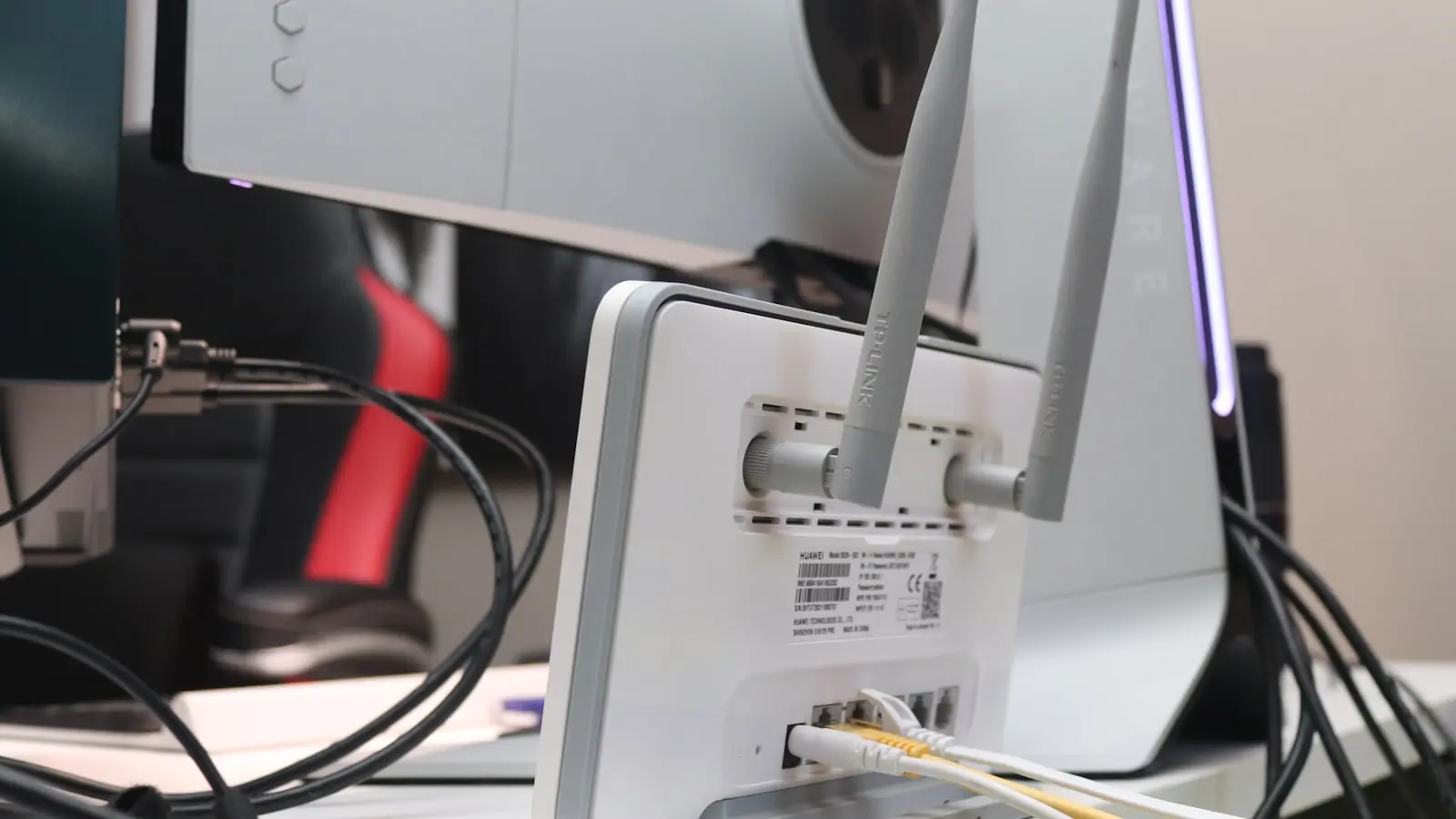

Modern residential architecture acts as an unintentional Faraday cage. While blueprints focus on structural integrity and aesthetics, they often ignore the propagation physics of electromagnetic waves. When a household experiences persistent dead zones, the culprit is rarely the ISP signal reaching the residence. Instead, the issue lies in the interplay between high-density building materials and the limitations of legacy routing hardware. (It is rarely the cable company’s fault.)
The Physics of Signal Degradation
Physical interference is the primary architect of poor connectivity. Metal studs, reinforced concrete, and masonry walls absorb and reflect radio frequencies, effectively creating physical shadows where signals cannot penetrate. Kitchen appliances, particularly microwaves, introduce localized noise in the 2.4GHz spectrum. This is a crowded highway. When multiple neighbors operate routers on the same channels, the resulting congestion creates latency and packet loss. These signals are effectively shouting over each other, and the router is the one caught in the middle.
Router Placement and Frequency Strategy
Before investing in new hardware, the most effective remediation is often geometric. A router tucked into a floor-level corner behind a thick cabinet is destined for failure.
- Centralization: Place the unit in an elevated, open position. Line-of-sight to the living area is the gold standard.
- Band Steering: Shift traffic away from the saturated 2.4GHz band. Move static devices and heavy streamers to 5GHz or 6GHz bands. (Yes, the range is shorter, but the throughput is vastly superior.)
- Diagnostic Mapping: Use a Wi-Fi analyzer tool to audit channel occupancy. If the spectrum is overcrowded, manually forcing a jump to a less contested channel can provide immediate relief.
Hardware Limitations in a Multi-Device Era
The average household now maintains between 15 and 20 connected devices. Older Wi-Fi 5 routers were never engineered to handle this level of concurrent traffic. Most ISP-provided gateway routers lack sophisticated beamforming technology—a process where the router actively directs a signal toward a specific device rather than broadcasting omnidirectionally. Without beamforming, the router wastes energy painting walls with signal instead of reaching the smartphone in the bedroom. (These entry-level gateways are effectively glorified paperweights.)
Evaluating the Mesh System Upgrade
For homes exceeding 1,500 square feet or those built with challenging materials, a single router setup is mathematically insufficient. Data from network connectivity labs suggests that a mesh Wi-Fi system provides 40% higher coverage stability than even the most expensive standalone router. A mesh system functions as a modular web, allowing nodes to hand off devices seamlessly. This ensures that as a user moves from the kitchen to the master suite, the device re-associates with the closest node rather than clinging to a weak, distant signal from the living room.
Conclusion
Troubleshooting connectivity requires a shift from blaming the ISP to auditing the physical environment. If repositioning the hardware fails to resolve the latency, the architecture of the home is likely the bottleneck. In such cases, the return on investment for a mesh system is immediate. Stop fighting the physics of the building; out-engineer the interference.