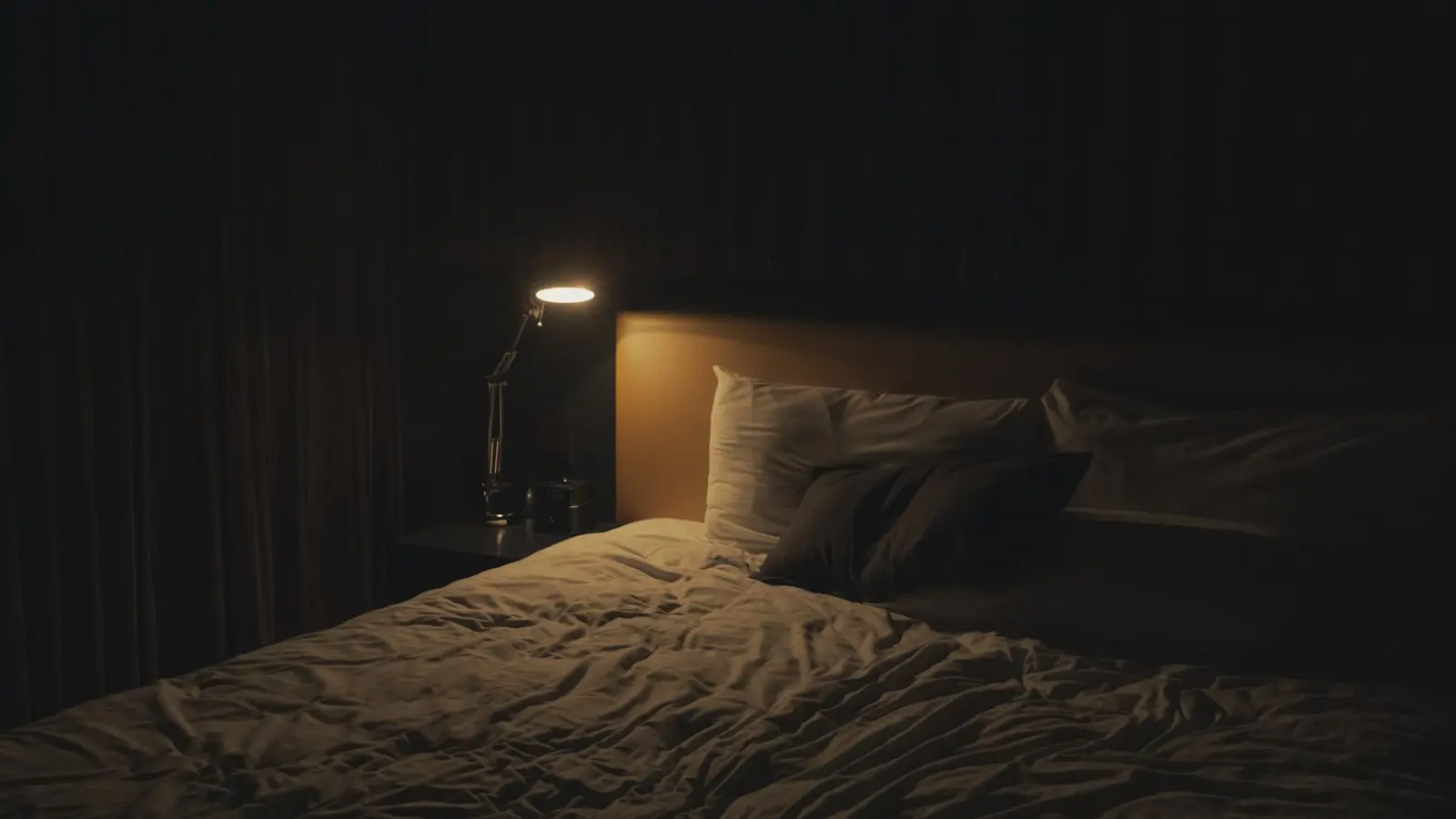
When a viewer sits in a darkened room staring at an illuminated liquid crystal display for three consecutive hours, the brain registers a biological emergency. Streaming platforms engineered to auto-play serialized dramas alter human sleep architecture at the neurochemical level. The mechanism relies on two simultaneous physiological triggers. First, optical exposure to blue light wavelengths halts the pineal gland’s melatonin synthesis. Second, narrative tension initiates a sympathetic nervous system response, flooding the bloodstream with cortisol and adrenaline moments before the intended sleep period. This conflict results in measurable delays to rapid eye movement sleep onset and deep slow-wave sleep. Biology cannot negotiate with modern digital infrastructure.
The broadcasting industry transitioned from localized episodic viewing to borderless, heavily serialized binge models over a single decade. Early television required viewers to wait a week for narrative resolution. Modern platforms drop entire seasons simultaneously, removing all traditional friction points. Viewers routinely surrender 60 to 120 minutes of required sleep duration to finish a narrative arc. This data point seems trivial until converted into human scale. Losing 90 minutes of sleep per night equals abandoning an entire complete sleep cycle. Over a five-day workweek, the brain loses seven and a half hours of neural recovery time. The cognitive deficit mirrors blood alcohol concentrations above legal driving limits.
Sympathetic Nervous System Arousal
To understand the resulting biological damage, analysts must separate the visual medium from the narrative delivery. Not all television produces identical neurobiological responses. Watching a methodical nature documentary yields vastly different physiological markers than consuming high-stakes dramas centered on violence or existential threats. Programs structured around cliffhangers simulate genuine environmental danger. The human amygdala struggles to differentiate between perceived digital threats and physical reality. The adrenal glands secrete epinephrine. Heart rate variability drops while the cardiovascular system prepares for immediate physical action. The viewer remains entirely stationary under a blanket while their internal biometrics mirror a foot pursuit.
Attempting to transition from acute sympathetic nervous system arousal directly into unconsciousness violates basic mammalian biology. The autonomic nervous system operates on a seesaw mechanism. The parasympathetic state, responsible for rest and digestion, cannot dominate until the sympathetic drive subsides. High-engagement programming forces the sympathetic nervous system to remain dominant. Heart rates remain elevated. Blood pressure refuses to drop to the basal levels required for the transition into Stage 1 non-REM sleep. (A biological system cannot sprint into a state of rest).
The Endocrine Disruption
The endocrine system suffers parallel disruption through optical interference. The suprachiasmatic nucleus functions as the brain’s master biological clock, calibrating internal cellular processes to the external solar cycle. It relies on retinal ganglion cells to detect specific environmental light frequencies. Modern LED screens blast the retinas with 400 to 490-nanometer light wavelengths. The brain interprets this specific blue light frequency as midday solar radiation. In response, the brain halts all secretion of sleep-inducing hormones. Melatonin production drops to zero. Without a rise in melatonin, the core body temperature fails to decrease. The circadian rhythm fractures entirely.
Sleep architecture represents a fragile, highly structured biological process. The brain cycles through specific stages, requiring precise neurochemical conditions to enter deep, slow-wave sleep and subsequent REM phases. Elevated evening cortisol acts as a biochemical barrier. The first third of the night typically contains the highest density of physically restorative deep sleep. When a viewer delays bedtime by two hours to finish an episode, they do not simply shift the sleep cycle forward. They amputate the deepest phase of physical recovery. The brain compensates by prioritizing REM sleep during the remaining hours, leaving the physical body under-repaired. Joint inflammation increases. Muscle recovery stalls.
Mechanical Maintenance Failure
The brain utilizes deep sleep to perform critical mechanical maintenance. During slow-wave sleep, the glymphatic system opens up, allowing cerebrospinal fluid to wash through brain tissue. This fluid flushes out neurotoxic waste products, including beta-amyloid plaques and tau proteins, which accumulate naturally during waking hours. Elevated evening cortisol and adrenaline block the transition into this vital deep sleep phase. Consequently, the brain fails to initiate this fluid wash. The viewer wakes up with yesterday’s metabolic waste still occupying neural pathways. This physiological reality manifests as delayed reaction times, impaired emotional regulation, and severe executive function deficits. Brain fog is not a subjective feeling. It represents the physical presence of uncleared metabolic debris.
Clinical sleep psychologists record widespread patterns of chronic, low-level sleep deprivation across broad demographic sets. The baseline for normal daily fatigue shifts continually downward. Patients report heightened emotional reactivity and an inability to maintain focus on complex cognitive tasks. Furthermore, chronic REM sleep restriction impairs the brain’s ability to consolidate short-term memories into long-term storage.
Evidence-Based Mitigation Protocols
To combat this phenomenon, specialized sleep hygiene communities analyze behavioral mitigation strategies. The clinical consensus points away from reliance on sheer willpower and toward absolute environmental control. Discipline fails when the prefrontal cortex is already fatigued at 11:00 PM. Systemic guardrails must replace in-the-moment decision-making. Implementation of evidence-based sleep protocols requires hard physical boundaries.
- The 90-Minute Perimeter: Terminate all interaction with backlit screens exactly 90 minutes prior to the target sleep time. This window provides the necessary biological runway for the parasympathetic nervous system to clear residual cortisol and adrenaline from the bloodstream.
- Environmental Light Modification: Replace overhead LED lighting with floor-level incandescent or warm-spectrum light sources during the final hours of the evening. This mimics the setting sun, signaling the suprachiasmatic nucleus to initiate melatonin production.
- Narrative De-escalation: Shift evening media consumption from serialized, high-tension dramas to conclusive, low-stakes formats. Reading physical books eliminates blue light exposure entirely while allowing the heart rate to normalize.
Streaming platform interfaces utilize frictionless design to bypass the prefrontal cortex’s decision-making center. Auto-play functionality initiates the next episode within five seconds of the credits rolling. The viewer does not make an active choice to continue watching. They merely fail to make the active choice to stop. The effort required to locate a remote control and terminate the broadcast exceeds the effort required to remain passive. Platforms measure their success in total viewing hours. Public health analysts measure the exact same data as a corresponding decline in metabolic health and cognitive resilience. (Economic incentives directly oppose human health parameters).
The physiological markers of sleep deprivation compound daily. Consider the biochemical state of the body under different evening conditions.
| Physiological Marker | Pre-Bed Reading (Print) | High-Stakes TV Binge | Healthy Sleep State |
|---|---|---|---|
| Heart Rate | 60-70 BPM | 85-100 BPM | 50-60 BPM |
| Cortisol Levels | Dropping | Spiking | Lowest Point |
| Melatonin Secretion | Active/Rising | Suppressed/Halted | Peak Production |
| Core Temperature | Dropping | Elevated | Lowest Point |
| Autonomic System | Parasympathetic | Sympathetic | Parasympathetic |
The data points uniformly toward a necessary reassessment of evening media consumption. When network engineers watch server bandwidth usage spike at 2:00 AM on a Tuesday following a major series release, the public health cost becomes undeniable. The human brain cannot endure continuous chemical manipulation without structural consequence. Cognitive recovery requires darkness, silence, and neurochemical calm. Sacrificing these biological mandates for the resolution of a fictional narrative generates a severe physiological debt. That debt always demands repayment. (Usually during a morning commute or a critical afternoon meeting).
Establishing stringent digital boundaries remains the only effective intervention. Sleep hygiene is not a wellness trend or a lifestyle suggestion. It serves as the foundational pillar of human neurobiology. Treating sleep as an optional commodity rather than a strict biological imperative guarantees a degradation of both cognitive output and physical health. The evidence requires no interpretation. Restrict the light, eliminate the narrative tension, and allow the autonomic nervous system to function as designed.