The Collapse of the Collaboration Thesis
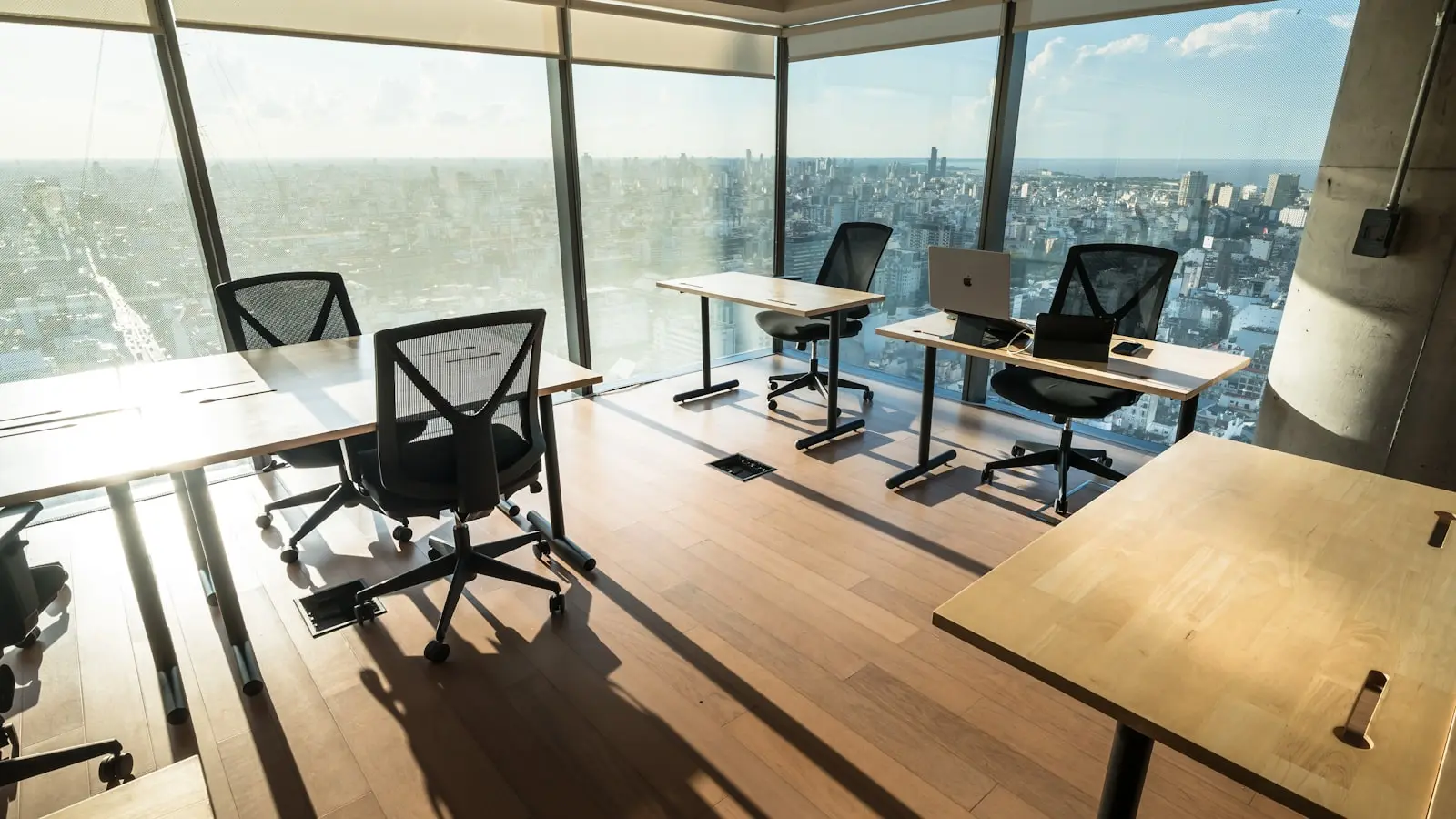
Open plan offices destroy the exact metric they claim to optimize. When corporations dismantle physical barriers to force unmediated human interaction, the resulting environment triggers an immediate psychological retreat. Face-to-face communication drops by up to 70 percent following a transition from partitioned spaces to an open floor plan. The architecture backfires. Data tracked by the Journal of Environmental Psychology maps this structural failure directly to human behavioral economics. Faced with constant visual stimulus, unregulated physical movement, and uninterrupted acoustic bleed, workers do not organically collaborate. They build invisible walls.
Corporate executives spent two decades aggressively adopting borderless floor plans. They masked these densification efforts under the public relations umbrella of fostering teamwork, breaking down silos, and democratizing the workplace. (Translate this corporate dialect into economic reality: lowering commercial lease overhead by cramming more headcount into smaller square footage.) Removing cubicles allowed commercial real estate managers to drastically alter the employee-to-desk ratio. Drywall costs capital. Open space scales cheaply. The narrative of the serendipitous open office served as a highly effective psychological wrapper for aggressive corporate cost-cutting.
However, capital markets eventually measure the secondary costs of these decisions. What companies saved in real estate footprints, they surrendered in cognitive output. When physical boundaries disappear, spatial predictability vanishes. The modern knowledge worker requires sustained focus to generate value, yet the open office functions as an engine of continuous interruption.
The Economics of Defensive Withdrawal
Workers respond to environmental hostility through rational resource allocation. In this context, their primary resource is attention. Studies observing modern workplace behavior indicate that removing physical walls forces employees to defensively withdraw from their surroundings. They adopt survival mechanics to shield their cognitive capacity from ambient noise and peripheral movement.
Noise-canceling headphones represent a localized, employee-funded tax on a hostile environment. Walk onto any modern corporate floor, and the visual is identical: rows of engineers, analysts, and designers wearing over-ear equipment. They are buying back the silence the company sold to the commercial landlord. This creates a severe behavioral paradox. Instead of leaning across a shared desk to speak, employees sitting less than three feet apart route their communication through external cloud servers. They rely entirely on instant messaging platforms like Slack or Microsoft Teams to avoid breaking the fragile acoustic barriers they have erected around themselves. Physical proximity meant to spark dialogue instead enforces digital isolation.
This shift carries profound operational implications. The reliance on digital messaging platforms in physical proximity introduces latency and misinterpretation into basic communication. Furthermore, the lack of spatial boundaries elevates systemic stress levels. Human beings maintain a baseline requirement for territorial security. Without a dedicated workstation shielded from traffic patterns, employees remain in a low-grade state of physiological alert. (This biological reality entirely undermines the financial modeling of the open workspace.) Chronic interruption and elevated cortisol levels degrade decision-making capability. A workforce operating under sustained ambient stress cannot perform complex, deep-focus tasks efficiently.
The Secondary Market for Silence
Corporate workers actively subvert the floor plan to regain functional utility. Discussion forums across platforms like Reddit reveal a distinct pattern of avoidance behaviors among white-collar professionals. These are not isolated complaints; they are systemic operational workarounds. Workers frequently report hiding in cafeterias, stairwells, or even utility corridors to secure a quiet space to accomplish deep work.
More critically, the open office generates a black market for meeting rooms. Employees routinely book fake meetings on the corporate calendar, reserving empty conference rooms for solitary use. This behavior exposes the ultimate friction of the open floor plan. Workers burn valuable organizational resources—conference room availability—merely to secure the baseline working conditions necessary to do the job they were hired to perform.
When a senior software engineer must falsify a calendar invite just to review code without interruption, the workspace has failed. The company pays premium salaries for analytical talent, only to deploy that talent in a physical layout that prevents analysis. The real estate savings are mathematically erased by the drop in engineering velocity.
Task Interruption and Cognitive Depreciation
Focus operates on a recovery curve. It is not an on-off switch. When an employee executing a complex task—whether financial modeling, legal research, or software development—experiences a distraction, the economic cost extends far beyond the duration of the interruption itself. Behavioral data indicates that it takes an individual an average of 23 minutes to return to a state of deep concentration following a derailment.
In an open layout, these interruptions are structural. Someone walking behind a desk, a loud conversation at the adjacent pod, or a visual shift in the peripheral vision forces the brain to process non-essential data.
Consider the financial leverage at play here:
- The Baseline Cost: An employee making $120,000 annually costs the company roughly $57 per hour.
- The Interruption Tax: If the open office layout causes just four major task interruptions a day, the recovery time alone burns nearly an hour and a half of focused output.
- The Annual Deficit: That represents nearly $85 of wasted capital per employee, per day. Across a 250-day working year, the company loses over $21,000 in cognitive productivity per individual.
Multiply this deficit across a mid-sized enterprise of 1,000 employees. The organization hemorrhages millions of dollars in unrealized output annually. (The initial lease savings look entirely insignificant against this compounding loss.) Organizations trade high-margin intellectual property generation for low-margin facilities management.
Software as a Spatial Substitute
The failure of commercial real estate architecture directly fueled the valuation of enterprise communication software. When physical space fails to provide necessary utility, capital rapidly flows to digital substitutes. Platforms like Slack and Zoom did not merely facilitate remote work; they initially functioned as digital drywall for open-plan survivors.
Enterprise software companies monetized the failure of the physical office. Workers used chat applications to signal availability or focus. A “Do Not Disturb” status on a messaging application became the modern equivalent of a closed office door. However, this transition forces workers to manage two distinct environments simultaneously: the physical chaos of the open floor and the continuous notification stream of the digital dashboard. The cognitive load doubles.
Correcting Capital Allocation in the Workplace
Markets eventually reward discipline over consensus. The consensus for two decades dictated that open floor plans were modern, agile, and financially prudent. The discipline requires acknowledging the empirical data. Removing physical boundaries degrades human output.
Corporations must audit their workspace layouts not through the lens of real estate density, but through the metric of productivity enablement. If the environment forces an employee to retreat into noise-canceling hardware and secure alternative locations for standard work, the lease is fundamentally mispriced.
Future workplace strategies must reconcile the need for density with the biological reality of focus. This requires hybrid architectures: dedicated quiet zones, heavy acoustic partitioning, and the total abandonment of the unsegmented mega-floor. Companies that refuse to rebuild boundaries will continue to pay premium salaries for heavily diluted performance. The real estate arbitrage is over. The cost of distraction has simply become too high.