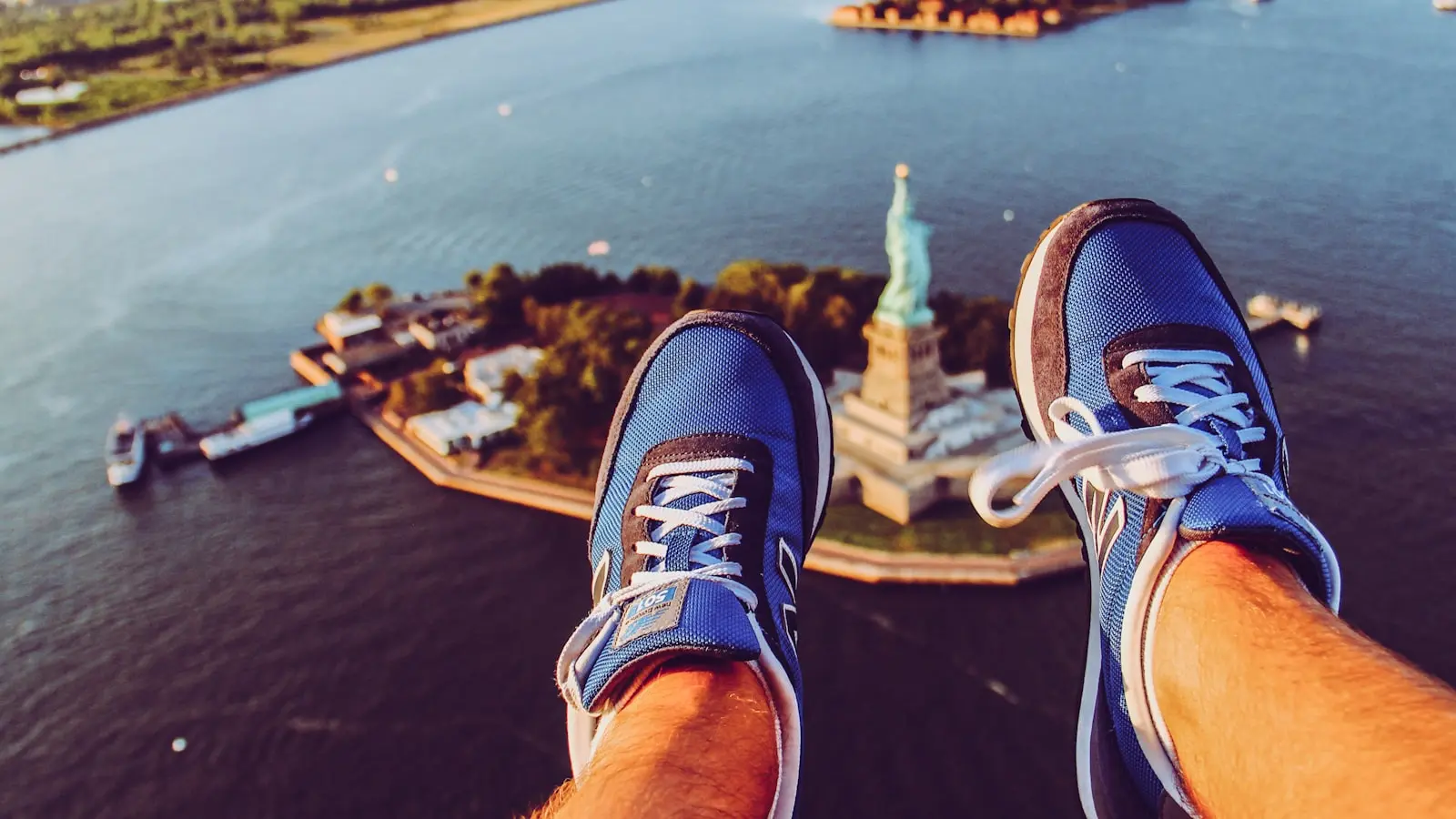
Travel medicine specialists document a reliable spike in acute overuse injuries among tourists navigating major European walking cities. According to August 2023 data released by the American Podiatric Medical Association, daily step counts leaping from a sedentary baseline of 4,000 steps to vacation volumes of 15,000 or 20,000 trigger exceptional rates of plantar fasciitis. Visitors walking the medieval grids of Brussels or London face an immediate biomechanical conflict. They pair flat-soled aesthetic sneakers with unyielding stone infrastructure. The resulting physical breakdown follows a precise, predictable timeline.
Human gait generates a ground reaction force equal to roughly 1.5 times total body weight with every walking step. For an average adult logging 20,000 steps, the lower extremities must absorb and dissipate thousands of tons of cumulative force per day. When pedestrians strike a rigid surface, connective tissues stretch to distribute the load. Hard surfaces combined with unsupportive footwear force the heel anatomy to absorb the entirety of this kinetic energy. Flat canvas sneakers provide zero kinetic return. The tissue begins to tear.
When tourists stand outside the Tower of London shifting their weight on irregular masonry, the foot undergoes constant micro-adjustments. Cobblestones do not offer a flat, predictable landing plane. Each step forces the subtalar joint into varying, unpredictable degrees of pronation or supination. This continuous uneven loading exponentially increases the tensile strain on the arch. (A modern foot is simply not conditioned for medieval infrastructure). The supporting structures cannot recover between impacts. They rapidly break down under the sustained shear forces.
The Biomechanics of the Plantar Fascia
The plantar fascia operates as a thick, fibrous band of connective tissue running from the medial calcaneal tubercle on the heel to the proximal phalanges at the base of the toes. It functions primarily as a dynamic shock absorber while supporting the longitudinal arch of the foot. Biomechanically, this tissue relies on the windlass mechanism. As the great toe dorsiflexes during the push-off phase of a stride, the plantar fascia winds around the metatarsal heads. This action pulls the heel bone closer to the toes, raising the arch and locking the midfoot bones into a rigid lever for forward propulsion.
Disrupting this mechanism requires only a slight environmental change. Walking continuously in zero-drop, zero-cushion lifestyle shoes prevents the foot from executing an efficient kinetic transfer. Instead of a smooth rolling motion, the foot smashes flat against the ground. The arch collapses slightly further than anatomically optimal, stretching the plantar fascia beyond its elastic limit. Micro-tears begin forming at the insertion point on the heel bone. The damage is microscopic initially. It scales rapidly with volume.
The Timeline of Delayed Onset Inflammation
Tourists rarely report severe pain on the first day of an itinerary. The initial micro-trauma triggers a slow, accumulating inflammatory cascade. Damaged cellular matrices release chemical signals that provoke localized swelling. Blood flow increases to the area, bringing white blood cells and cytokines to manage the tissue damage. By the third or fourth morning of a trip, this fluid accumulation and tissue stiffening reach a critical threshold. The classic symptom manifests immediately upon waking.
Nighttime inactivity allows the torn collagen fibers to contract and attempt to heal in a shortened, resting position. The foot remains relaxed in plantar flexion while sleeping. When the traveler steps out of bed, the sudden weight-bearing forces the foot into dorsiflexion, aggressively tearing open the newly formed, fragile repair tissue. The resulting sensation mimics stepping on a sharp nail. (The pain is entirely mechanical, not a failure of pain tolerance). As the traveler walks throughout the morning, the tissue warms up, stretches out, and the acute pain dulls to a persistent, throbbing ache. The cycle then repeats the following night.
Footwear Physics and Material Sciences
A stark divide exists between aesthetic priorities and anatomical requirements in modern travel culture. Market-dominant lifestyle shoes utilize flat, dense vulcanized rubber outsoles. These materials prioritize durability and visual profile while lacking any structural arch support, engineered heel drop, or impact-absorbing foam. Navigating 15,000 steps on cobblestones in these conditions guarantees thousands of consecutive high-impact collisions. The fat pad of the heel compresses completely. The bone absorbs the shock.
Clinical consensus aligns closely with observational data gathered from travel analytics and public forums. Analysts tracking consumer behavior repeatedly note the failure rates of flat canvas shoes in high-volume walking scenarios. Migration toward high-stack, maximalist running shoes dominates recovery strategies. Brands engineering thick Ethylene-Vinyl Acetate or Polyurethane foam midsoles alter the external forces applied to the foot. These materials compress upon impact, slowing the deceleration of the heel strike and drastically reducing the peak force transmitted to the plantar fascia.
Furthermore, modern biomechanical footwear often incorporates a distinct rocker bottom design. This geometric curvature physically propels the foot forward from heel strike to toe-off. A rocker sole reduces the amount of natural dorsiflexion required from the toes, thereby limiting the engagement of the windlass mechanism. Less engagement means less tensile pulling on the plantar fascia. The shoe performs the mechanical work. The foot simply rests inside the structure.
Clinical Mitigation and Tissue Adaptation Strategies
Purchasing supportive footwear addresses only half the equation. Connective tissue requires a progressive loading timeline to adapt to both new biomechanical positions and increased walking volume. Wearing highly structured, heavily cushioned walking shoes straight out of the box introduces different friction points and alters the established kinetic chain. The hips, knees, and ankles must adjust to the new heel drop. Specialists mandate a transition period spanning a minimum of three to four weeks prior to departure.
The biological principle of mechanotransduction dictates that tissues strengthen only when exposed to gradual, manageable stress. Fibroblasts require time to lay down new collagen in response to load. Walking 20,000 steps on the first day of a trip without prior physical conditioning overwhelms the tissue capacity. It bypasses adaptation and moves directly into structural failure. The injury is guaranteed.
If intervention becomes necessary mid-itinerary, recovery protocols must focus exclusively on managing localized inflammation and maintaining tissue length. Chemical masks like non-steroidal anti-inflammatory drugs provide temporary pain relief but do not address the mechanical failure. Effective evening regimens require specific mechanical loads. Rolling the plantar aspect of the foot over a frozen water bottle or iced cylinder introduces dual-action therapy. Cryotherapy constricts blood vessels to flush out inflammatory markers. Simultaneous myofascial release elongates the tight band of tissue.
Elongating the posterior chain is equally critical. The plantar fascia connects continuously with the Achilles tendon via the paratenon. Stretching the gastrocnemius and soleus muscles of the calf directly reduces the retrograde pull on the calcaneus. (Tight calves guarantee a tight arch). Implementing aggressive wall stretches before bed and immediately upon waking mitigates the risk of re-tearing the fascia during the morning’s first steps. Finally, modifying the environment remains the ultimate lever. Reducing daily step volume, avoiding prolonged static standing in museums, and prioritizing flat asphalt over historical walking paths dictate the survival of the itinerary. Evidence demands adaptation. Ignoring the physics of human movement on unyielding infrastructure guarantees early physical collapse.