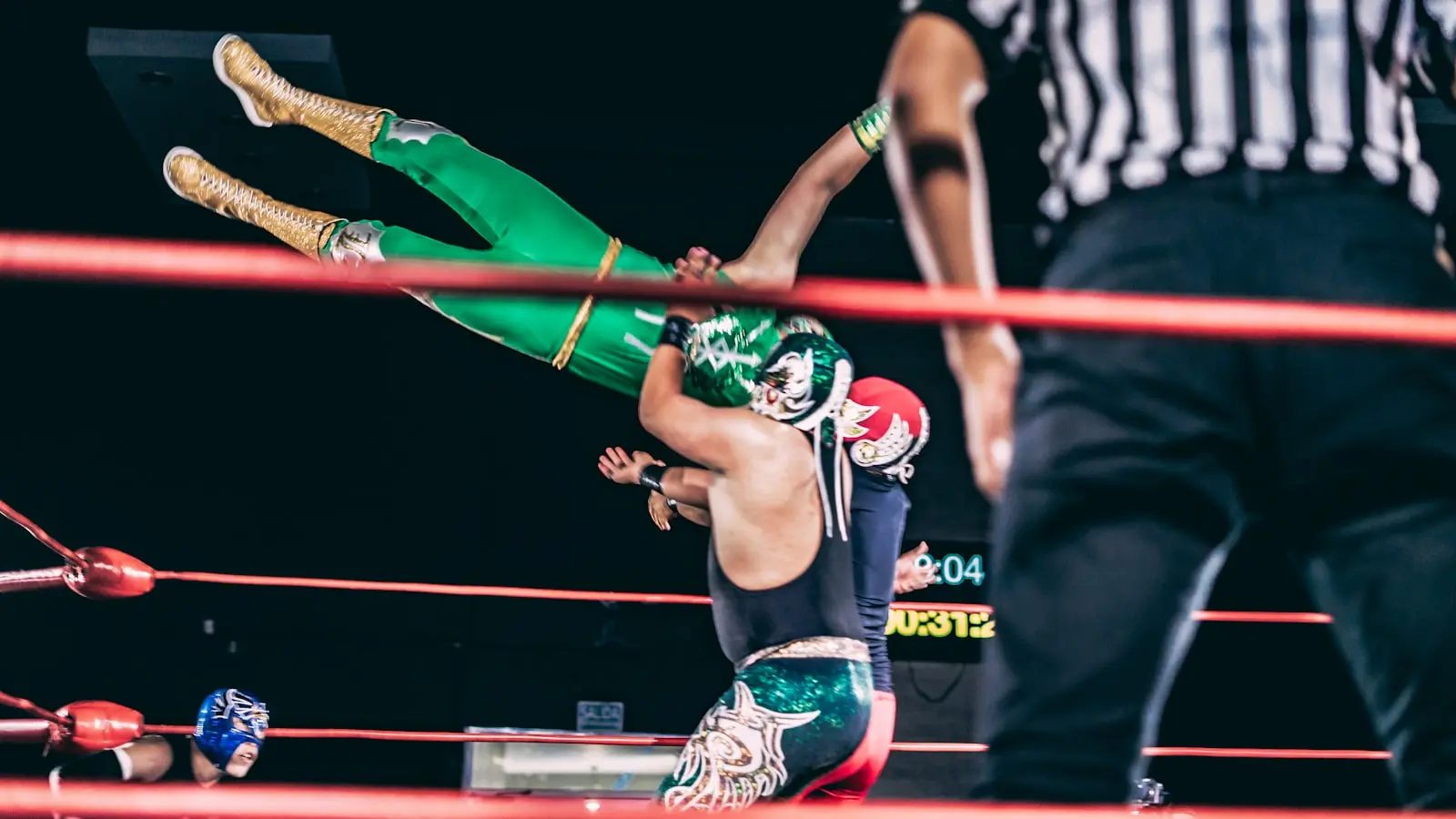

The road to WrestleMania is rarely a straight line. It is a calculated scattershot of narrative threads, contract negotiations disguised as feuds, and the frantic positioning of assets before the fiscal year’s biggest showcase. When the WWE production trucks roll into the venue for the February 27 episode of SmackDown, they carry more than just pyro and ring canvas. They carry the burden of the final hard sell before the Elimination Chamber. This is not merely a wrestling show. It is a volatility index for the company’s creative direction heading into WrestleMania 42.
The industry operates on a simple premise during this quarter: create enough uncertainty to justify the pay-per-view buy-in, while maintaining enough star power to keep the television ratings stable. The upcoming SmackDown card illustrates this friction perfectly. The lineup is top-heavy, dense with main event talent, and structured to force collisions between the established guard and the rising asset class of the future. The centerpiece of this narrative architecture is the gathering of the six Elimination Chamber participants: Cody Rhodes, Trick Williams, Je’Von Evans, Jey Uso, LA Knight, and Randy Orton.
The Architecture of the Chamber Field
Seeing these six men in the same segment represents a specific booking philosophy. You have the pillars of the current era in Rhodes and Uso, the undeniable merchandising powerhouse in LA Knight, and the legacy anchor in Randy Orton. Then, you have the disruption. Trick Williams and Je’Von Evans represent the aggressive youth movement that has been bubbling under the surface of the main roster for the last eighteen months. Placing Evans next to Orton is not an accident. It is a visual stress test. Can the kinetic, high-flying style of the new generation survive the methodical, psychological pacing of a twenty-year veteran? (The answer usually determines who gets the main event push in three years.)
The stakes are ostensibly a shot at the Undisputed WWE Championship held by Drew McIntyre at WrestleMania 42. However, the subtext is far more interesting. McIntyre requires a challenger who matches his physical intensity but offers a stylistic contrast. Rhodes offers the narrative symmetry of a hero’s journey. Orton offers a battle of heavyweights. But someone like Trick Williams offers the unknown. Televised face-offs like the one scheduled for Friday are designed to measure audience reaction to these variables in real-time. When the microphone drops, the decibel level of the crowd dictates the booking meeting the next morning.
The Tag Team Power Dynamic
The women’s division provides a different kind of structural analysis this week. The makeshift-yet-effective pairing of Rhea Ripley and Iyo Sky—branded as RHIYO—defends the WWE Women’s Tag Team Championship against The Irresistible Forces, comprised of Nia Jax and Lash Legend. This match is a study in physics and chemistry. Ripley and Sky are two singles stars forced into cooperation, a classic trope that usually signals a future breakup feud. Yet, their in-ring work creates a compelling juxtaposition: Ripley’s brute grounding force allows Sky to operate almost exclusively in the air. It covers the weaknesses of both.
Opposing them are Jax and Legend. This is pure, unadulterated size. In an industry often obsessed with work rate and technical proficiency, there is still an undeniable spectacle in seeing giants control the geography of the ring. Lash Legend’s integration into the main roster title picture has been swift. Her background in athletics provides her with the explosiveness to match Jax’s immovability. (Though one wonders if the ring reinforcement budget was increased for this segment.) A title change here would disrupt the WrestleMania card significantly, suggesting that the company is looking to separate Ripley and Sky for singles runs sooner rather than later. If RHIYO retains, it signals a commitment to the tag division as a marquee attraction rather than a holding pattern for top stars.
Character Work vs. In-Ring Logistics
Perhaps the most erratic variable on the card is the scheduled bout between Solo Sikoa and Uncle Howdy. This is where the “sports” clashes violently with the “entertainment.” Sikoa presents himself as a legitimate fighter—a striker with a lineage of violence. Uncle Howdy is an entity of lore, smoke, and mirrors. Booking these two against one another is a risk. If the match relies too heavily on supernatural theatrics, it undermines Sikoa’s aura of danger. If it relies too heavily on standard grappling, it strips Howdy of his mystique.
This match serves as a litmus test for the mid-card’s tone. The audience has become sophisticated; they understand the mechanics of the performance. They accept the supernatural only when it serves the emotional core of the story. If this match devolves into flickering lights and phantom noises without physical consequences, the crowd will turn. Sikoa needs to hit hard. Howdy needs to take the bumps. The magic trick only works if the danger feels real.
The Gatekeepers and The Future
Further down the card, the machinery of talent development churns on. Oba Femi stepping into the ring against The Miz is a classic piece of wrestling economics. The Miz is the industry’s premier gatekeeper. He is safe, he is famous, and he knows exactly how to make a monster look like a monster. Femi, a physical specimen with a ceiling that has yet to be defined, needs showcase victories that look competitive on paper but are dominant in execution. The Miz provides that service. He can talk the audience into the building, then bounce around the ring to sell Femi’s offense. It is a transaction. The Miz maintains his TV time; Femi acquires credibility.
Similarly, Candice LeRae vs. Jordynne Grace offers a glimpse into the technical backbone of the women’s division. Grace, a powerhouse with crossover appeal, is being positioned as a serious threat. LeRae, often underrated, is the technician capable of handling Grace’s power style safely while making it look devastating. Victories here are currency. They purchase screen time during the busiest season of the year. For Grace, a win is essential to keep her momentum from stalling before the biggest show of the year. For LeRae, a strong performance reminds the producers of her utility as a reliable hand who can anchor a segment.
The WrestleMania Horizon
Everything on this February 27 show serves the specter of WrestleMania 42. The industry is currently in a boom period, with gate receipts and streaming numbers hitting record highs. This success allows for experimentation, but it also raises the pressure. The creative team cannot afford a dull lead-in. The Elimination Chamber is a dangerous match—physically for the talent, and narratively for the writers. It limits the ability to protect stars. There is nowhere to hide inside the steel structure.
Therefore, the tension established on SmackDown must be palpable. The stare-downs cannot be routine. The promos cannot be recycled. When Cody Rhodes looks at Je’Von Evans, the audience needs to believe that the torch is not just being passed, but potentially snatched away. When Randy Orton looks at LA Knight, the friction between traditional stardom and viral popularity must spark.
The presence of Drew McIntyre, even in the abstract, looms large. The winner of the Chamber walks into a main event that validates careers. The losers are reshuffled into the undercard. That is the brutality of the business. Friday night is not just an exhibition; it is a final argument. Every move, every camera angle, and every reaction shot is a line of data feeding into the final algorithm for WrestleMania. The wrestlers know it. The fans sense it. (And the shareholders are banking on it.)
As the broadcast ends and the road to the Chamber shortens to hours rather than days, the question isn’t just who wins. The question is who captures the imagination of a global audience that has more entertainment options than ever before. WWE is betting that the collision of nostalgia and novelty will keep the eyes on the screen. On February 27, we find out if that bet pays off.