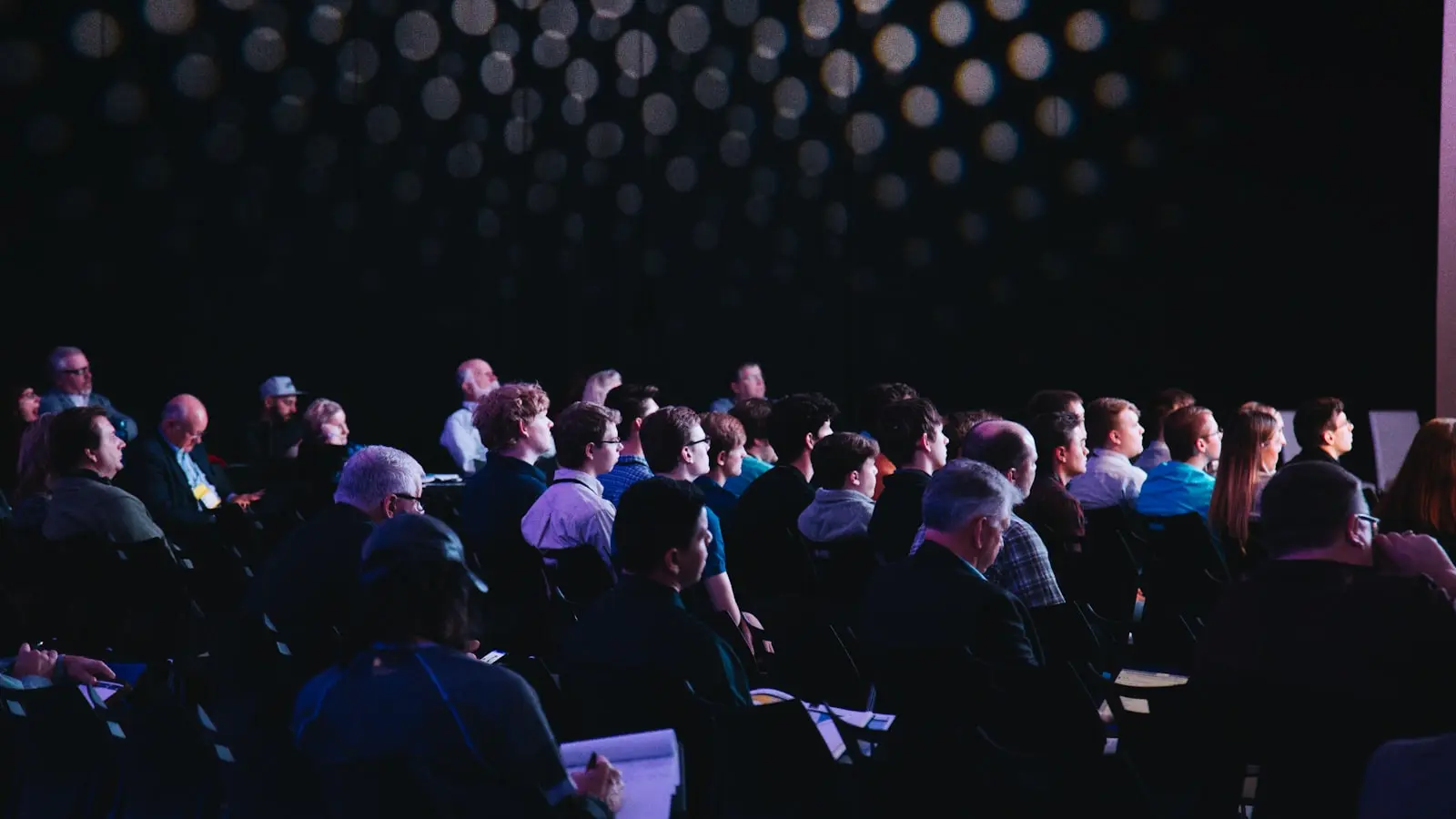

For three decades, the sound of the Vanity Fair Oscar party was a specific kind of roar. It was the percussive blast of a thousand flashbulbs firing in sequence, a sound that ricocheted off the manicured hedges of Beverly Hills. It was the murmur of power changing hands over a flute of champagne, the collective intake of breath as a newly minted winner, clutching gold, navigated the dense human landscape. The party was less an event than a complex, living organism—a social ecosystem where hierarchies were reinforced, careers were ignited, and the very narrative of Hollywood was written in real-time under the hot glare of klieg lights. It was a space designed for observation, a theater of arrival where being seen was the primary currency.
That theater is now dark. The institution has been deliberately, and perhaps brutally, dismantled. Under the new stewardship of editor Mark Guiducci, the party is undergoing a foundational overhaul, an architectural rethinking of its purpose. The changes are not mere tweaks; they are seismic shifts in the cultural tectonics of Hollywood. The guest list, once a sprawling map of the industry’s power players, has been severely truncated. The press, the very engine that broadcasted the party’s mythos to the world, has been unceremoniously barred. And the venue, long a symbol of polished West Coast glamour, has been moved to the raw, unfinished shell of the Los Angeles County Museum of Art (LACMA).
This is more than a change of address. It is a profound statement of intent. To move an event from a bespoke, ephemeral pavilion to the stark, demanding bones of a museum-in-progress is to trade spectacle for substance. The old party was designed to be a frictionless backdrop for celebrity. The new location forces a different kind of engagement. One imagines guests navigating rooms of exposed rebar and unpolished concrete, their couture gowns brushing against drywall dust. The building itself is a participant, not a stage. It is a space defined by its potential, its becoming, rather than its perfected present. This choice suggests a desire to align the evening not with the finished product of a film, but with the arduous, often messy process of its creation. The architecture dictates a new behavior; it demands a more considered, less performative presence.
The Geometry of Exclusivity
Slashing the guest list is an act of social curation that borders on cultural surgery. For years, the party’s gravitational pull was its density. It was the improbable compression of A-list actors, studio heads, media titans, and political figures into a single, glittering space. The sheer scale was the point. It created a marketplace of influence where a brief conversation in a crowded corner could alter the trajectory of a studio slate. Guiducci’s reduction of that list is an explicit rejection of this model. The goal is no longer a spectacle of mass influence, but the cultivation of a salon.
By shrinking the room, the nature of interaction is fundamentally altered. The calculus of social navigation—the quick scan, the polite nod, the strategic approach—is replaced by the potential for genuine conversation. The ambition seems to be to create a sanctuary, a temporary reprieve from the relentless public performance demanded by the industry. It’s a gamble that intimacy holds more long-term value for the brand than influence. Yet, this curated intimacy has consequences. For an industry built on access and visibility, the newly drawn perimeter feels, to many, like a locked door. Hollywood veterans, accustomed to the old system, are divided. Some see a bold, necessary rebranding for an era suspicious of empty spectacle. Others see a critical miscalculation, an abdication of the magazine’s role as the premier convener and chronicler of the town’s social life.
Silencing the Echo Chamber
The most aggressive of these changes is the outright ban on the press. This move is a paradox wrapped in an irony. A media institution, whose very existence is predicated on access and reportage, is sealing its signature event from the media. The traditional press line—that chaotic gauntlet of shouted questions and blinding lights—is gone. The immediate, global dissemination of every fashion choice and candid interaction has been severed. In its place, there is a vacuum. The party will still happen, but its narrative will no longer be shaped by a legion of reporters. Instead, it will exist primarily in the memory of those present, a piece of oral history rather than a documented media moment.
This act of closing the loop transforms the event’s purpose. It ceases to be a public relations engine and becomes, in theory, a private celebration. Guiducci is betting that the value of creating an authentic, unguarded experience for the attendees outweighs the value of the millions of media impressions the party once generated. It’s a move that prioritizes the subject over the observer, the internal experience over the external broadcast. Media observers are, unsurprisingly, skeptical. The decision has been called opaque, a retreat from the transparency one might expect from a journalistic entity. It raises a fundamental question: In a hyper-mediated age, can an event of this magnitude truly exist if it isn’t publicly witnessed? Guiducci seems to believe that its mystique will only grow in the absence of constant coverage.
A Bet on a Quieter Culture
Taken together, these decisions represent more than a logistical refresh. They are a coherent philosophical statement about the future of celebrity, culture, and media. The reinvention of the Vanity Fair party is a deliberate move away from the maximalist, broadcast-for-all culture of the last two decades. It is a pivot towards a more cloistered, curated, and perhaps more meaningful form of cultural gathering. The unfinished state of LACMA serves as the perfect metaphor for this transition: it is a rejection of the finished, polished product in favor of the raw, evolving process.
This is a high-stakes cultural wager. Guiducci is betting that in an age of digital noise, the most valuable commodity is not visibility, but silence. He is gambling that a truly exclusive space—one protected from the pressures of public performance and media scrutiny—can foster a different kind of creative energy. The risk is that in shutting out the world, the party loses its relevance, becoming a private dinner party for the powerful rather than a cultural touchstone. The old party reflected Hollywood as it was: a loud, sprawling, and ruthlessly public arena. The new party is an attempt to imagine what it could be: a quieter, more intentional community of artists. Whether this vision is a prescient glimpse into the future or a nostalgic retreat into a bygone era remains to be seen. The only certainty is that on Hollywood’s biggest night, the loudest room in town has, by design, fallen silent.