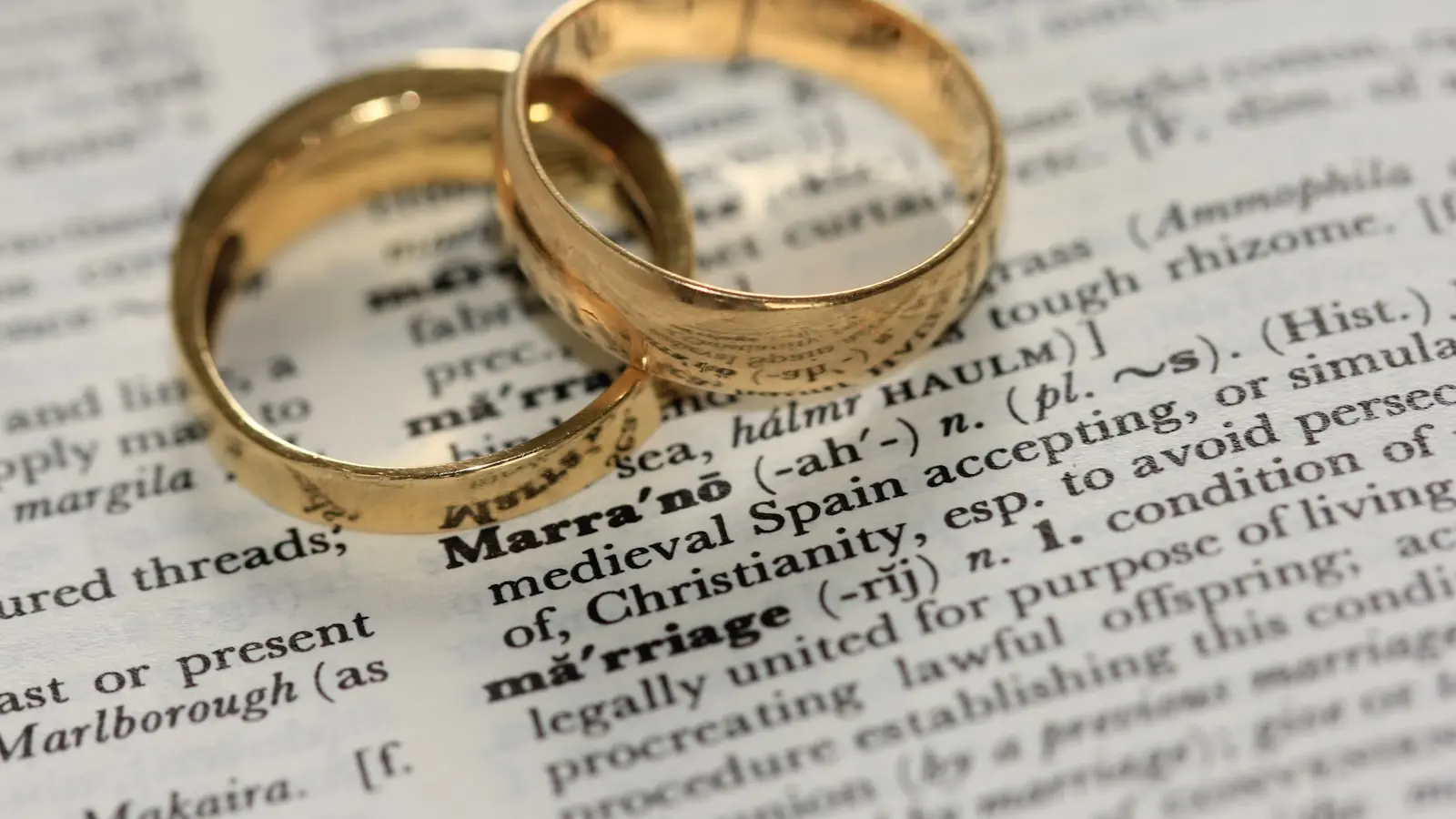

The Architecture of a Decision
A marriage can dissolve over a single, unresolved question. For Helena de Groot, that question was about creation. Her certainty, a belief system constructed since childhood, was that motherhood was not for her. His desire, a quiet but persistent hope, was to have a child. The divergence of these two paths did not cause a sudden fracture but a slow, grinding erosion over eight years, culminating in a quiet conversation in bed after a birthday party. He had to try. And with that, he had to leave.
The foundation for this schism was laid under the fluorescent lights of San Francisco’s City Hall. They stood in line, two people who had known each other for a total of two weeks and three days, ready to formalize a whirlwind romance into a legal bond. (A bond necessitated by the logistical demands of international borders.) It was there she reminded him of her stance. “You know this about me, right? I don’t want to have a kid.” He replied with what seemed like a definitive resolution: “I’d rather be with you than have kids.” For her, the issue was settled. A closed file. A decision locked away.
But decisions, particularly those involving the trajectory of another person’s life, are rarely so simple. His mother had reassured him, in the way mothers do, that she would change her mind. She would come around. This seed of hope, perhaps planted in denial or pure optimism, meant the conversation was never truly over for him. It was merely on pause. He did not lie when he chose her over hypothetical children, but he held two contradictory thoughts at once. He could be with her. And she would probably come around anyway.
A Blueprint for a Life Without
Her conviction was not a reaction, but a core component of her imagined future. As a young girl in Belgium, she envisioned a life in a bustling city, a cool job of indeterminate nature, an apartment filled with plants, and weekends spent dancing in clubs. A child did not feature in this blueprint. It was not an omission she consciously registered until people began to ask. The question, “So when is it happening?” became a recurring social audit.
Her cool aunt, an artist who threw Venetian ball-style costume parties, offered a tangible model for this life. She had no children. She had a life of art and music and freedom. This wasn’t a direct inspiration so much as a confirmation that other designs for living were possible. It fed the image of her own future.
In conversations with her oldest friend, Sigrid, she began to assemble and articulate her reasons. They became a practiced defense against a world that assumed one path for women. She worried about her ability to make money; her work would be interesting but poorly paid, and she refused to be forced into a job she disliked to provide for a family. The most effective argument, the one that reliably shut down further inquiry, was her mental health. Depression ran in her family, a dark wallpaper lining her own mind. She did not see life as a gift to be bestowed. It felt more like a hassle, an ordeal. If she were to love a child more than anyone, as people promised, why would she inflict the world, inflict life itself, on them?
The Erosion of an Agreement
Soon after she moved to the United States to build a life with her new husband, the file she thought was closed was pried back open. He began to revisit the subject, framing it as an adventure she was too fearful to undertake. He saw her as a scaredy-cat, and this was just another manifestation of her fear. He would counter her practical arguments about work and finances with assurances. They would figure it out. He had savings. He would not let her do it alone.
For her, the ground was already unsteady. She had left her job, her friends, her family, her language, her city. Everything that constituted her sense of self was gone. She was untethered, unable to work yet, living in his world, a place he knew and navigated with ease. He was home. She was not. This power imbalance sharpened her anger. She knew that if anyone had to sacrifice a career, it would be her. He had an answer for everything. But he wasn’t convincing her with words.
Then, years into the marriage, an accident. A broken condom, a one-afternoon stand that became a marriage, now resulted in an unplanned pregnancy. She found out the day he was returning from a trip. Her immediate plan was to figure it out alone, to get an abortion without ever telling him, to spare him the pain. It was a strategy of protection, a decision to absorb the entire emotional and physical weight herself. But he walked through the door not with a traveler’s weariness, but with the news that his sister had just died.
The cosmic timing was staggering. One life ending as another began inside her. It felt like a message from a force larger than her own will. Perhaps life knew something she did not. So she told him. His face, she would never forget, broke open with a light that pushed through his grief. He was beaming. In that moment, watching the sun break through the clouds on his face, she decided to stop imposing her will. She would try. She would go with it.
A Temporary Transformation
The hormones were a powerful drug. They washed away her deep-seated pessimism, replacing it with a calm and optimism she had never known. The dark wallpaper in her mind seemed to temporarily vanish. This must be what it felt like to be a mother, she thought. A biological transformation into a person who can do this. The fears about inflicting life on a child simply did not surface. She felt great. She, a person who always wore pants, suddenly wanted to wear dresses, to feel fabric whirling around her legs.
This altered state lasted two weeks. The shift occurred, fittingly, back in California, a place where she had been profoundly unhappy. They were there to see his family after his sister’s death. The nausea began. The hormonal high receded, and with it, the sense of optimism. It was like coming back to herself after a fever dream. And she was still herself. The one who did not want this. The feeling of being trapped in her own body was immediate and visceral. This clump of cells would become a baby, and every passing week would entrap her further. She could not do it.
She went online and booked the first available appointment at Planned Parenthood in New York. Then she told him. He was not angry. He did not try to convince her. He held her. He booked her plane ticket. He drove her to the airport. She went alone. (She couldn’t bear the thought of him holding her hand while she aborted the baby he so desperately wanted.)
At the clinic, she was met with a surprising humanity. The staff, from the intake person to the sonogram technician, were open and real. They treated her like a human making a life-altering decision. After the procedure, sitting in a recovery chair with juice and a cookie, she was overcome with guilt. A nurse sat on the armrest and spoke to her directly. “You have nothing to feel guilty about. You did what was right for you.” Leaving the clinic, she felt supported, relieved, and grateful. The hormones were gone instantly. She was no longer nauseous. Her brain was her own again, slightly more pessimistic, but familiar. Welcome back. She knew, with absolute clarity, she had made the right decision for herself.
But the marriage was irrevocably altered. He was not a talker, and she was afraid to ask about the depths of his sadness. She did not want to know. So they lived in the silence. He began to waste away. The light in his eyes dimmed, his face became gray. The optimistic man who took joy in a bird or a squirrel was gone. Her guilt was mixed with a sense of powerlessness. She was sorry for his pain, but she would not, could not, do anything to change its source.
The Aftermath of Certainty
They stayed together for another year. He slowly began to take care of himself again, and she mistook his recovery for their recovery. She felt they had weathered the storm. She loved her life, her work, her relationship. She had made her choice, and things were good. She threw herself a birthday party, something she never did. That night, high on the success of the party, they lay in bed. He turned to her and said he needed to talk. He had to try to have a kid. He had to. Just as he had not fought her decision to have an abortion, she did not fight him now. She loved him. She wanted him to have what he wanted. She just could not be the one to give it to him. So he left.
His departure shattered her armor. With him gone, the cost of her decision became brutally clear. Was this certainty more important than the man she loved? For the first time in two decades, after years of defending her position, the question felt new. The doubt that flooded in was not about whether she wanted a child—she still felt she did not—but about the reasons for her certainty. Was it all just fear, as he had suggested? The question morphed from what do I want? to what is wrong with me?
Six months later, she met someone new. Overwhelmed by an intense, adolescent-like crush, she fell into a new relationship. (She was not looking for it.) Determined not to repeat the past, she laid out her position immediately and clearly. She did not want kids. He, at 39, had never really thought about it. (The casual privilege of it was almost comical.) To put the issue to bed forever, for herself more than for him, she decided to get her tubes tied. It would be a final, irreversible act. A line drawn in the sand. Certainty would become a biological fact.
After signing the consent forms, a one-month waiting period began. She left the doctor’s office crying with relief. The crying continued on the subway, and it was still going when she got home. This was too much crying for just relief. In a voice memo to a friend, trying to process the unending tears, a tiny, fingernail-thick feeling emerged. Wait, do I want to have a kid? That sliver of a question, that last ember of ambiguity, would be extinguished by the surgery. And in that moment, she understood. The certainty she had been chasing for twenty years was an illusion. You can never truly know what you are saying yes or no to. You either jump or you don’t, but you will never know where you are going to land.
She didn’t go through with the surgery. The realization that certainty was unattainable made the act of foreclosing the possibility feel unnecessary. Today, she does not have a child. She does not fear regret, a word she finds too big, too final. Instead, she anticipates a lifelong curiosity. A “what if” accompanied by a little sadness. When she sees a toddler in a helmet, she allows her heart to ache a little, feels the pang of what might have been, and then goes on with her day. The question is no longer a battle to be won or a problem to be solved. It is simply a space to be lived in.