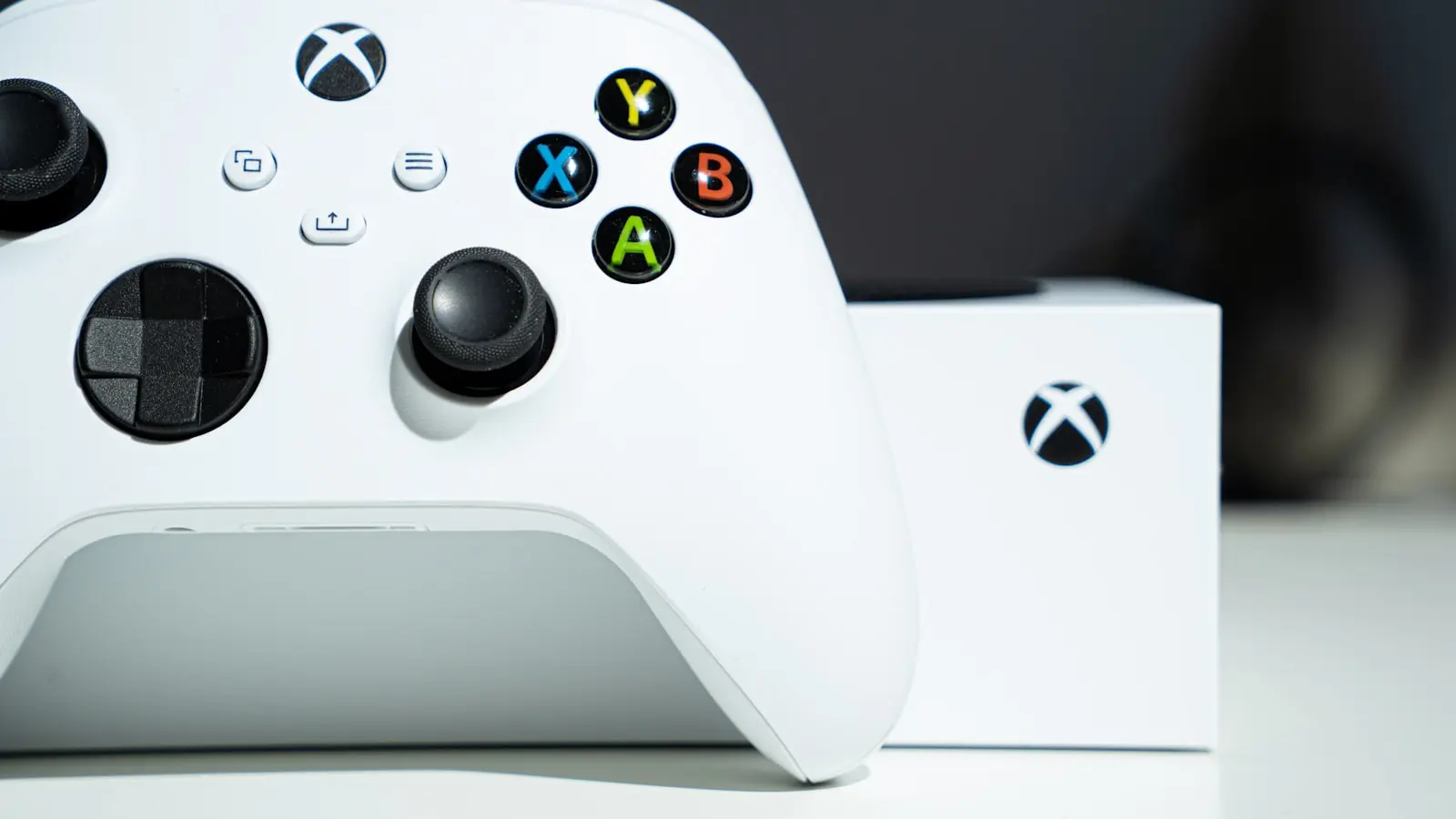

The guillotine dropped on the traditional Xbox strategy last week, not with a public execution, but with a corporate restructuring that speaks louder than any E3 keynote. Phil Spencer, the public face of Microsoft’s gaming benevolence, has retired. In his place stands Asha Sharma, an executive not from the trenches of game development, but from Microsoft’s CoreAI division. This is not a changing of the guard. It is a change of industry. While Sharma issued immediate assurances promising the “return of Xbox” and a rejection of “soulless AI slop,” the structural reality suggests a controlled demolition of the console business model as we know it. Seamus Blackley, the architect of the original Xbox, describes this new era as “palliative care.” He is likely correct.
The Utility of Obsolescence
When a company worth three trillion dollars pivots its entire existence toward generative artificial intelligence, legacy divisions must justify their consumption of silicon. Microsoft Gaming is no longer competing with Sony or Nintendo; it is competing with Microsoft Azure for GPU allocation. Seamus Blackley’s assessment—that the gaming division is being “sunsetted”—aligns perfectly with the economic pressures of the current tech landscape. The job of the new leadership is not to win the console war. It is to integrate the gaming user base into the broader AI ecosystem. (The silence from the hardware team regarding a mid-cycle refresh is deafening).
Satya Nadella has made it clear that the future of the company rests on the transform model AI future. In this calculus, a dedicated plastic box that sits under a television playing locally rendered geometry is an inefficiency. It represents a fragmentation of compute power. If Blackley’s interpretation holds, Sharma’s role is to manage the decline of the hardware business while migrating the software assets into a cloud-agnostic, AI-driven service. The console is dead. It just hasn’t stopped spinning the disc yet.
The Friction of Human Art
Blackley identifies a critical conflict in Microsoft’s new DNA: the incompatibility of the “auteur model” with the “utility model.” Microsoft is a company that builds tools—Word, Excel, Azure, Copilot. These are force multipliers for productivity. Video games, conversely, are bespoke artistic endeavors that resist automation. They are inefficient by design. A AAA game takes six years and hundreds of millions of dollars to produce because human iteration is messy. To an AI-centric leadership team, this timeline is a failure of process.
Sharma’s promise that Microsoft will not “flood our ecosystem with soulless AI slop” is a comforting sentiment that will likely dissolve upon contact with quarterly revenue targets. The economic incentive to use AI to generate textures, dialogue, and eventually entire gameplay loops is overwhelming. If an algorithm can produce a generic shooter campaign for 1% of the cost of a human team, the “art” argument will lose to the margin argument. Microsoft is not Netflix or Apple, companies that have historically tolerated high-burn creative projects for brand prestige. Microsoft is a utility company. (And utilities do not pay for poetry).
The Palliative Care Doctor
The metaphor of the palliative care doctor is brutal but apt. Palliative care is not about curing the patient; it is about managing symptoms and ensuring comfort during the inevitable decline. If Xbox is indeed the patient, the symptoms are hardware losses and stagnant subscription growth. The medication is AI integration. Blackley suggests that Sharma’s mandate is to “gently usher” the business units into the new world. This implies a slow transition where the consumer hardly notices the ground shifting until the console is gone entirely, replaced by an app on a Samsung TV streaming content generated by a server farm.
This perspective reframes the exit of Xbox President Sarah Bond and the retirement of Spencer. These were leaders rooted in the traditional gaming ecosystem. Their departure signals that the internal battle for the soul of Xbox has concluded. The winners are the systems engineers who view games as data inputs rather than cultural artifacts. Blackley notes that it would have been “shocking” if Microsoft had appointed a game-passionate leader, as such a person would be in “direct conflict” with the company’s trajectory. The new mandate is clear: alignment.
Hard Hardware Realities
Gamers must now look at the specifications of the future with extreme skepticism. The promise of “innovative technology” often serves as code for cost-cutting measures. If the Xbox of 2026 is merely a thin client for an AI-upscaled cloud stream, the purchase proposition changes entirely. The Series X may well be the last high-performance local render machine Microsoft produces. The focus shifts from teraflops to token limits.
We are witnessing the absorption of a creative industry into a logistical one. The Xbox brand will likely survive as a service badge, a logo in the corner of a screen, but the era of Microsoft as a dedicated hardware manufacturer competing on specs and exclusives is drawing to a close. The new CEO is not here to build the next Halo. She is here to ensure that when Halo is eventually generated by a prompt, the infrastructure is ready to bill you for it.
The Final Pivot
Consumers should prepare for a shift in rhetoric. We will hear less about “power your dreams” and more about “personalized experiences.” This is the language of engagement algorithms, not game design. Blackley’s warning is not just nostalgia for the days of the original Duke controller; it is a technical assessment of corporate resource allocation.
When the co-creator of a platform tells you the platform is being euthanized, you should check the pulse. The hardware is still on store shelves, and the servers are still online. But the philosophy that built them has been evicted. Xbox is now just another node in the neural network.