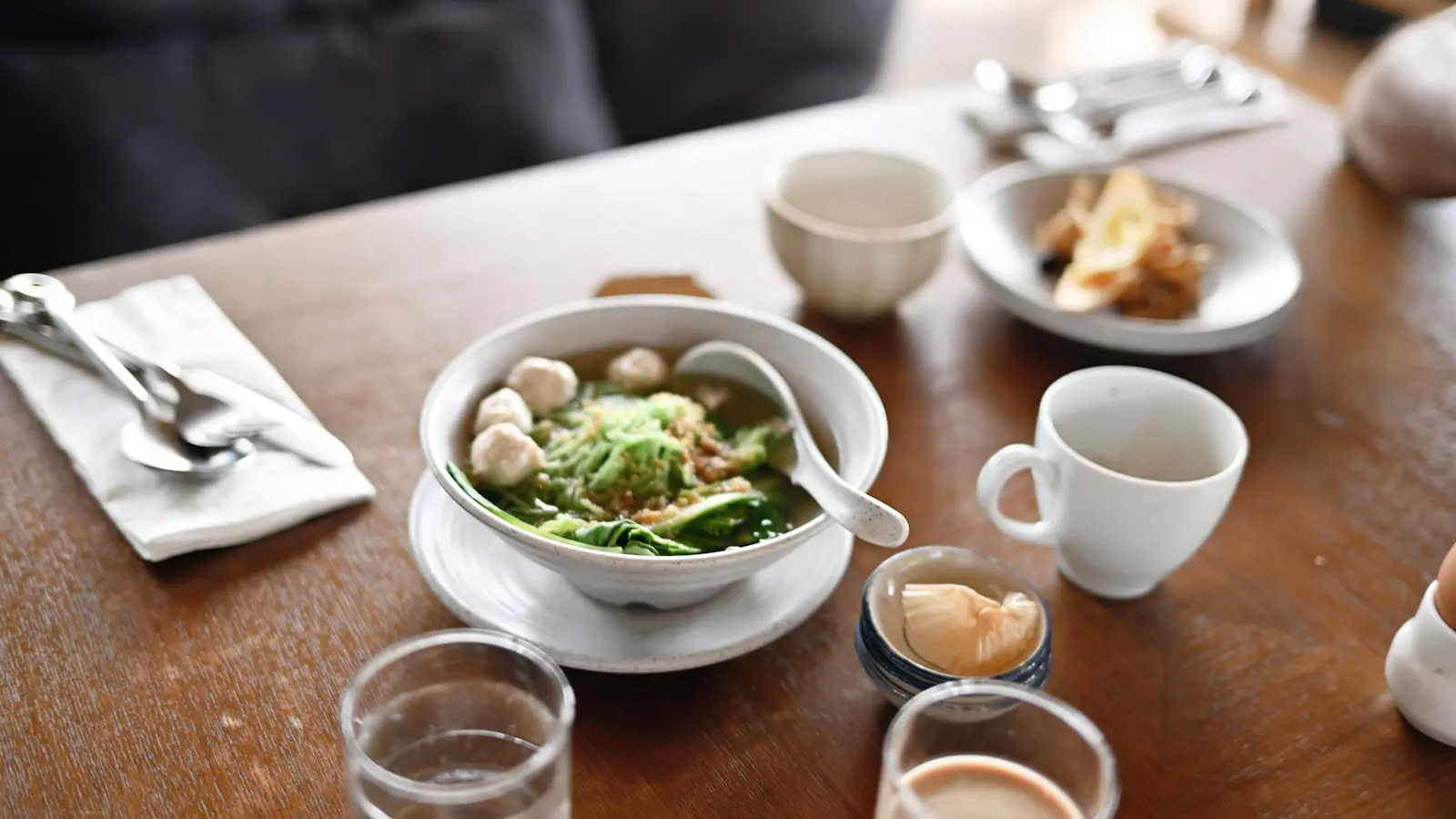

In kitchens clouded with the first light of dawn, a quiet shift is taking place. Before the percussive grind of coffee beans or the sharp toast of bread, there is a softer sound: the gentle simmer of broth. The morning meal, long dominated by expediency, is seeing the return of its most ancient and elemental form. Soup for breakfast is not a new invention. It is a rediscovery.
The digital world acts as an unlikely archivist for these traditions. In August 2025, a Seattle home cook named Jennifer Ying posted a video of the ginger-scallion chicken soup from her childhood. It resonated. The video accumulated over a million views in days, not just as a recipe, but as a catalyst. Viewers responded with their own rituals, creating an impromptu atlas of morning soups from Colombian changua to Filipino tinola. These were not just meals; they were artifacts of heritage, passed down through generations.
Food anchors us to a past we might otherwise lose. For many, it nourishes a connection to family that distance or language can strain. A bowl of soup becomes a vessel for memory. The practice itself is built on a logic of profound simplicity. Broths and creamy soups offer low effort for high reward, delivering warmth and comfort when the body is most receptive. Cooked in a single pot, often with only a few ingredients, they are endlessly adaptable. A direct response to mood and palate.
The Architecture of a Deliberate Morning
This return to soup is a conscious choice about how one’s day should begin. It is a quiet rejection of the frantic energy that defines modern life. Dallas Miranda Klein, a lifestyle influencer in Arizona, once started her days with an energy drink. Now, she prepares large batches of broth filled with tofu, pork-and-shrimp meatballs, and vegetables. The effect is transformative.
“With energy drinks, I’d get energy, but I’d also feel a little frazzled,” she explained. “Having soup in the morning feels calmer and like soothing the body.” Her experience is echoed by others who found the practice through online communities focused on traditional wellness. The design of the meal shapes the behavior of the morning. A gentle warmth encourages a gentle start.
For content creator Irishcel Puello, the switch from a cold protein shake to miso soup was immediate and profound. After seeing a video titled “Eat Your Skincare,” she adopted the ritual. For six months, her day has begun with a small bowl of miso soup made with bone broth, tofu, dashi, and seaweed. A heartier breakfast follows half an hour later. The separation of acts is deliberate. “The warm broth feels gentle,” Puello said. “It’s like a hug every morning.”
From the Home Stove to the Public Table
The practice extends beyond the private sphere of the home kitchen. It exists as a public ritual, a cornerstone of community. On weekend mornings in East Williamsburg, Brooklyn, the steam rising from bowls of changua at Palenque is a neighborhood fixture. The Colombian restaurant, founded by Luz Angela Sierra, treats the milk-based soup as a brunch mainstay, a direct link to her childhood in Bogotá. “It fills your soul when you eat it,” she said.
Palenque’s changua honors tradition while acknowledging the present. The foundational recipe of milk, water, eggs, scallions, and cilantro remains. But an oat milk alternative is available for dairy-averse diners. The traditional hard bread, calado, is replaced with crisp, toasted pan de bono, a Colombian cheese bread. It is an evolution, not a departure. The restaurant also serves caldo de costilla, a beef short rib and potato broth known as a reliable hangover cure. It is a testament to soup’s dual role as both gentle nourishment and potent remedy.
The Craft of Morning Dashi
Making soup at home remains the most personal expression of the ritual. For Sonoko Sakai, a Los Angeles-based cooking teacher and author, it is a practice maintained since childhood. Her mother kept a pot of soup on the stove to economically feed five children. Now 71, Sakai dedicates her Sundays to preparing quarts of homemade dashi, the foundational Japanese broth, for her own household. It stands ready for the week’s meals, especially breakfast.
Her approach strips away needless complexity. True dashi, she insists, can be born from the simplest ingredients. “If you cook potatoes, onions or cabbage, they all give you dashi,” Sakai noted. “They give you flavor without an artificial bouillon.” A small measure of chicken or duck fat can deepen the flavor. The addition of umami from bonito flakes is, in her words, “magic.”
The effect is physiological. It is a primer for the palate and the mind. “A layer of umami just excites your appetite and gets your morning going,” she said. The claim is bold, a direct challenge to the reigning king of morning beverages. “It’s better than coffee.” In that simple statement lies the core appeal of this resurging ritual. It is not about a jolt of manufactured energy, but about a deep, resonant awakening.