
In a move that formalizes a tectonic shift in infrastructure economics, the nation’s largest technology and artificial intelligence firms have committed to directly funding the electricity generation required to power their expansive data center operations. Executives from Google, Microsoft, Meta, Amazon, Oracle, OpenAI, and xAI gathered at the White House to sign what the Trump administration has termed the “Ratepayer Protection Pledge.” This agreement represents a fundamental re-architecting of the relationship between digital infrastructure and the physical power grid, moving the financial burden of new energy capacity from the public ratepayer to the corporate consumer.
The mechanism of the pledge is direct. Signatories are now obligated to procure their own electricity supplies for new and expanding data centers. This can be achieved by either directly financing the construction of new power plants or funding the expansion of output capacity at existing facilities. The immediate effect is to internalize a massive externality. For decades, the technology sector has treated the power grid as a public utility with near-infinite capacity. That assumption has now officially collapsed under the weight of its own success, particularly the voracious energy appetite of AI.
The timing is not accidental. The announcement arrives just ahead of the November midterm elections, providing the administration with a tangible policy win on the contentious issues of inflation and energy affordability. President Trump framed the pledge as a historic victory for American families, stating it would allow data centers to secure necessary power “without driving up electricity costs for consumers.” This political framing, however, masks a far more pragmatic and urgent reality that has been building for years in communities like Loudoun County, Virginia, the world’s largest data center hub, where electricity constraints have become a critical bottleneck to growth.
The Unspoken Economics of AI’s Energy Appetite
The core driver of this pledge is the exponential increase in energy consumption mandated by the artificial intelligence revolution. Training a single large language model can consume gigawatt-hours of electricity, an amount equivalent to the annual power usage of thousands of homes. The subsequent deployment of these models for inference tasks at a global scale creates a permanent, high-load demand on the grid that is fundamentally different from traditional commercial or residential power consumption. A large-scale data center campus can require over a gigawatt of power, rivaling the energy needs of a small city.
This demand is not merely large; it is relentless and inelastic. For companies like Google, Microsoft, and Amazon, whose cloud computing platforms are the bedrock of the modern digital economy, uptime is non-negotiable. The risk of grid instability, brownouts, or an inability to secure power for expansion is no longer a peripheral concern—it is an existential threat to their core business models. They have run out of available grid. The pledge is therefore less a gesture of corporate goodwill and more an act of strategic necessity. It is a capital expenditure made to secure future revenue streams.
A Preemptive Strike Against Regulation
The pledge can also be analyzed as a calculated move to preempt harsher, more restrictive government regulation. Across the country, state legislators and local planning commissions have begun to scrutinize and, in some cases, pause data center development. The primary complaints center on the immense strain these facilities place on local power and water resources, often with minimal local job creation relative to their footprint. The public narrative of data centers driving up residential electricity bills is a potent political weapon.
By “voluntarily” agreeing to bear the cost of new generation, the tech industry is attempting to control the narrative and the regulatory framework. This self-imposition of costs, brokered by the White House, allows them to frame the solution while avoiding a patchwork of potentially punitive state and local laws. It is a classic corporate strategy: get ahead of the problem, define the terms of the solution, and avoid having a less favorable one imposed upon you. (A well-timed piece of political theater). This move isolates the cost issue, making it harder for opponents to block projects on the grounds of their impact on public utility rates.
Capital Flows and the New Energy Infrastructure
The direct financial impact of this pledge will be the creation of a new, dedicated pipeline of capital for the energy sector. Billions of dollars that would have been spent on power purchase agreements will now be directed toward the steel, concrete, and labor required for power plant construction. This raises a critical question: what kind of power will they build? The signatories are now in the position of being energy developers as much as technology companies.
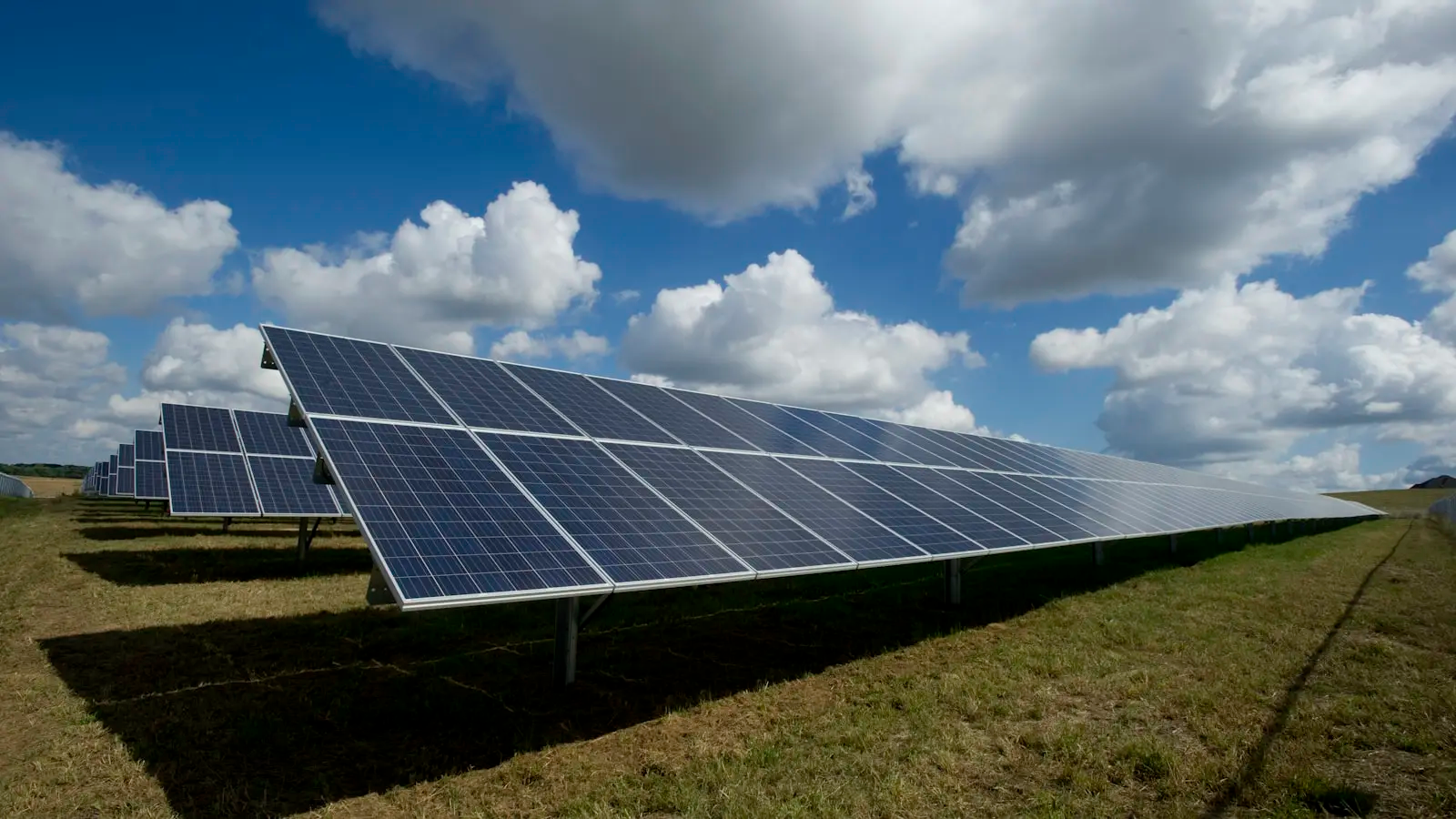
Many of these corporations have existing commitments to renewable energy, suggesting a significant portion of this investment will target solar, wind, and battery storage projects. However, the 24/7 operational requirements of data centers demand baseload power that intermittent renewables cannot always provide. This reality will likely compel investment in natural gas plants for reliability or, looking further ahead, potentially accelerate the development of small modular nuclear reactors (SMRs). The pledge effectively turns Big Tech into a kingmaker for competing energy technologies, with their investment decisions shaping the future of the American energy landscape. The cost never disappears. It just moves.
The Grid’s Fragility Becomes a Corporate Liability
President Trump’s statement that the pledge will make the grid “stronger and more resilient” highlights the second half of the corporate calculus: risk mitigation. The North American power grid is an aging, often fragile system susceptible to extreme weather, physical attacks, and demand overloads. For a data center, an unreliable grid is a catastrophic failure point. By funding and often co-locating dedicated power generation, these companies are building private, more resilient microgrids for their infrastructure.
This is a shift from treating grid resilience as a public good to treating it as a private, insurable asset. The pledge codifies the idea that if you require a level of power reliability and volume that the public grid cannot guarantee, the responsibility to create that reliability is yours. (Hardly a charitable act). It is the ultimate de-risking of their most critical operational dependency. They are not just buying electrons; they are buying certainty.
The New Price of Digital Dominance
Ultimately, the Ratepayer Protection Pledge marks the end of an era. The assumption that digital growth could expand infinitely against a backdrop of stable, abundant, and cheap energy has been proven false. The physical constraints of the grid have finally asserted themselves. This pledge is the market’s response.
While consumers may be shielded from direct increases on their monthly utility bills, the cost will inevitably be socialized through other means. The capital spent on power plants will be factored into the pricing of cloud services, AI APIs, and digital advertising, flowing downstream to businesses and consumers. The price of digital dominance now explicitly includes the price of its power generation. This is not a win for the consumer so much as a logical and overdue realignment of costs to where they are incurred. The digital world is being forced to pay its physical debts.