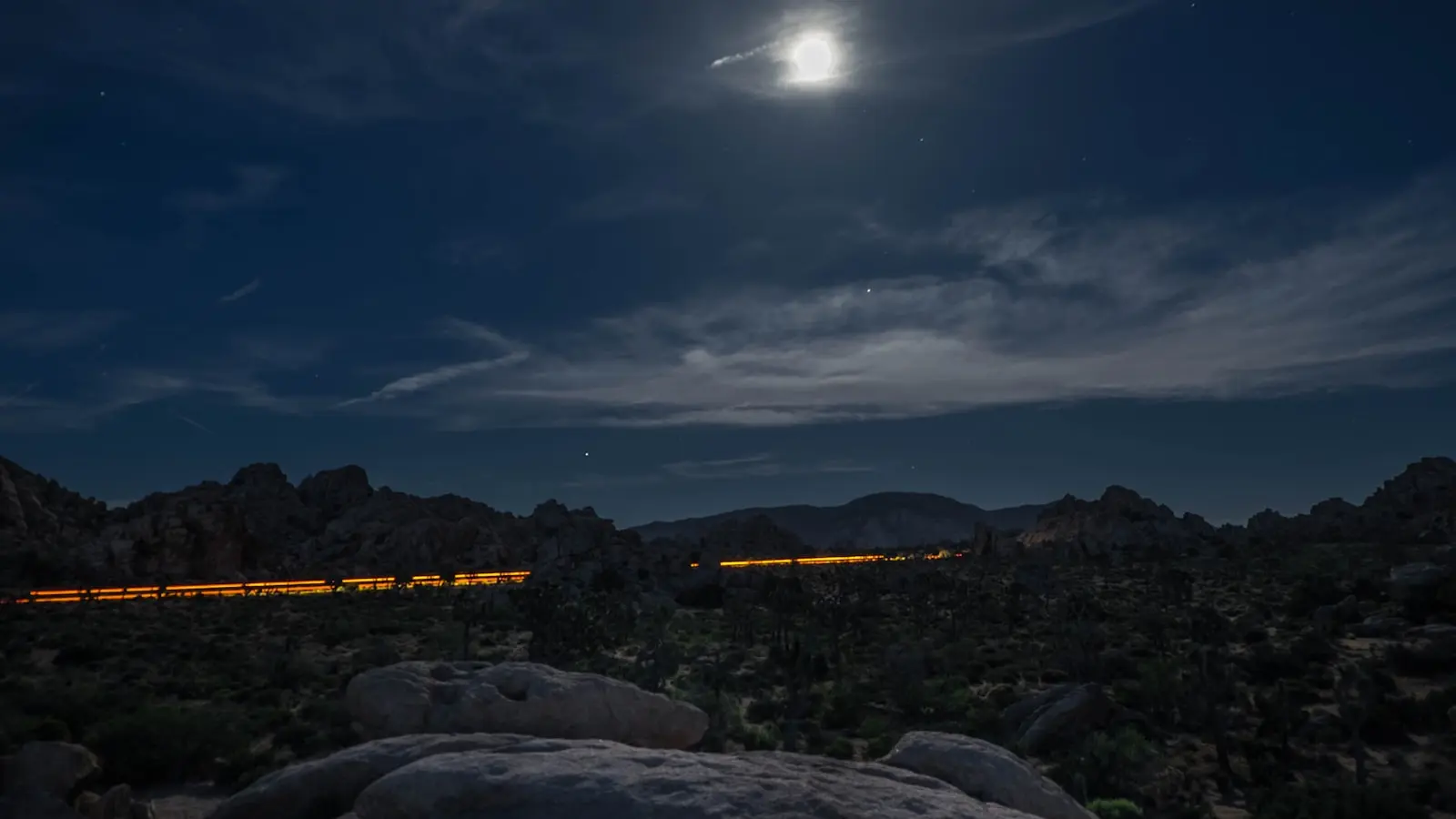

The solar system operates as a precise, gravitational engine, yet it rarely favors the observer with such efficiency. Starting this weekend, orbital dynamics will present a synchronous display of six planets sharing the same sector of the Earth’s sky. Jupiter, Saturn, Venus, Mercury, Neptune, and Uranus will form a curved trajectory across the celestial dome, offering a visual census of our local neighborhood. (It is a staggering reminder of our isolation.) While planetary groupings occur periodically, a sextet of this magnitude is a statistical outlier generated by the varying velocities of heliocentric orbits.
The Keplerian Mechanism
This phenomenon is not a physical gathering of celestial bodies but a trick of perspective known as ecliptic longitude alignment. The planets orbit the sun at drastically different speeds—Mercury races around the star every 88 days, while Neptune takes 165 years to complete a single circuit. Consequently, their positions relative to Earth are in a state of constant, chaotic flux. Dr. Megan Argo, an astrophysicist at the University of Lancashire, emphasizes the rarity of this specific configuration. While spotting four planets is a relatively common occurrence for dedicated astronomers, the mathematical probability of six coinciding in the evening sky drops significantly. The gears will not click into this specific place again until 2040. Patience is required.
NASA has utilized the event to release new “sonifications”—converting X-ray data from the Chandra Observatory into audible frequencies—for Jupiter, Saturn, and Uranus. This translates electromagnetic radiation into a medium the human brain can parse. (Though, the visual photon stream remains the primary draw.)
Visual Acquisition and Equipment
The viewing window is governed by the rotation of the Earth and the position of the sun. For observers in the Northern Hemisphere, the event begins in the early evening, approximately 5:45 PM in the UK and 6:00 PM in the US. The target vector is due west. An unobstructed horizon is critical; buildings and tree lines will obscure the lower planets. Jupiter dominates the southeastern sky, serving as a high-altitude beacon. Lower toward the western horizon, a cluster forms: Venus, the brightest object in the set, sits alongside a much fainter Mercury. Saturn and Neptune hover slightly above this pair.
Optical aid is non-negotiable for the ice giants. The physiology of the human eye fails at the distance of the outer solar system. While Venus and Jupiter blaze with reflected sunlight, Uranus and Neptune require binoculars or a telescope to resolve. Uranus is situated below the Pleiades star cluster (the Seven Sisters), requiring triangulation via star charts or mobile applications to distinguish it from background stars. Dr. Argo warns explicitly against sweeping optics toward the horizon before the sun has fully set. Solar retinal damage is instantaneous. (Safety protocols are often written in blood, or in this case, blindness.)
Southern Hemisphere Geometry
For observers in the Southern Hemisphere, specifically Australia, the celestial mechanics appear inverted. Dr. Ed Bloomer of the Royal Observatory, Greenwich, notes that while the pattern remains, the orientation flips. Jupiter appears in the north, while Uranus sits in the northwest. The timing here is far more aggressive. Because the sun sets later in the local summer season, observers must wait until after 6:45 PM, but the window shuts rapidly. Mercury hugs the horizon so tightly it may be lost in the atmospheric extinction of sunset, and Venus dips below the horizon by 7:15 PM. You have thirty minutes.
The moon also joins this planetary chord, adding a seventh solar system body to the visible spectrum. It is a rare moment of transparency for the clockwork of our system. The planets are always there, of course, but usually, they hide behind the glare of the sun or the bulk of the Earth. This weekend, the curtain lifts.