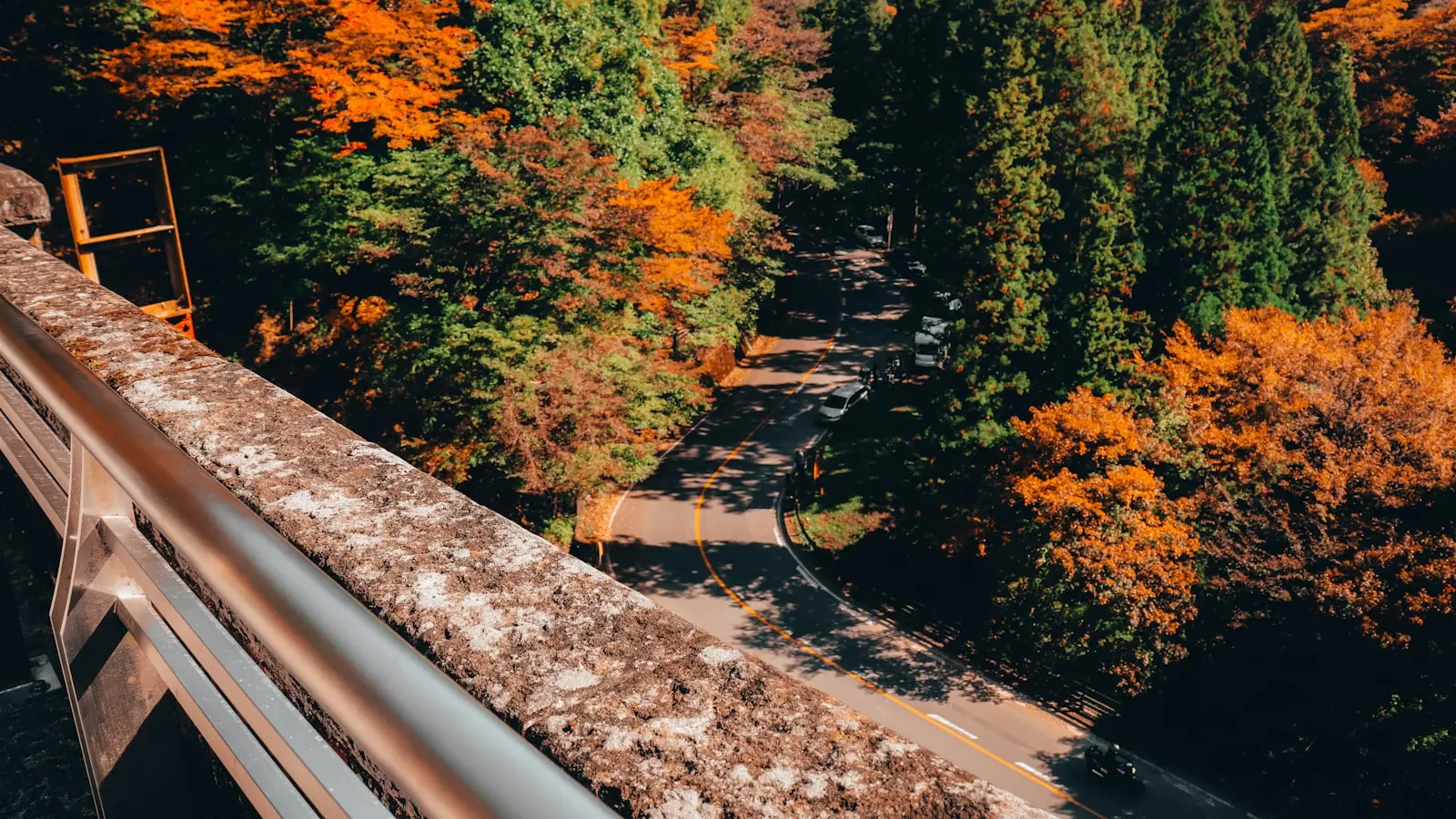
The best road trip movies set in Japan mix emotional depth with stunning landscapes. From the Oscar-winning Drive My Car to the quirky The Taste of Tea, these films capture the experience of driving through the Japanese countryside. Each title on this list offers a different view of Japan’s roads, from mountain passes to coastal highways, and many are available on streaming platforms – check current listings before you plan your viewing.
Key Takeaways
- Drive My Car (2021) is the most critically acclaimed road trip film set in Japan, featuring drives through Hiroshima and Hokkaido.
- Kikujiro (1999) and The Taste of Tea (2004) highlight the beauty of rural Japan and the Japanese Alps.
- Survival Family (2016) offers a unique cross-country journey by bicycle after a blackout.
- Anime fans should look to The Girl Who Leapt Through Time for a brief but memorable driving scene.
- Many of these films feature real locations like Mount Fuji, the Izu Peninsula, and the Hakone Skyline that can be visited.
Essential Live-Action Road Trip Movies
Drive My Car (2021) – Directed by Ryusuke Hamaguchi, this film follows a stage actor and his driver on a journey between Hiroshima and Hokkaido. The car serves as a confessional space as the characters traverse expressways and ferry routes. The landscapes – misty mountains, rural farmland, and the Seto Inland Sea – are central to the mood. It is the most critically acclaimed road trip movie set in Japan, winning the Oscar for Best International Feature. The film’s pacing mirrors a long drive: slow, reflective, and punctuated by unexpected stops.
Kikujiro (1999) – Directed by Takeshi Kitano, this is a classic road movie about a gruff man and a young boy traveling across rural Japan to find the boy’s mother. The journey passes through rice fields, small towns, and the Japanese Alps. Kitano’s signature deadpan humor contrasts with the serene countryside. The film shows that a road trip can be as much about the people you meet as the places you see. Its depiction of summer in Japan is particularly evocative.
Survival Family (2016) – Directed by Shinobu Yaguchi, this film takes a different turn: a family must cycle across Japan after a global blackout shuts down all electricity. While not car-centric, it qualifies as a road trip because the family covers hundreds of kilometers on two wheels, seeing the country from a ground-level perspective. The route spans from Tokyo to the coast of the Sea of Japan, showing the diversity of Japan’s geography – from dense suburbs to remote fishing villages. The film offers a practical lesson in self-sufficiency and highlights how much we rely on infrastructure.
Adrift in Tokyo (2007) – Directed by Satoshi Miki, this is a quirky journey through the outskirts of Tokyo and beyond. A debt collector and a young man walk and take trains through the urban sprawl, eventually traveling to the countryside. Though not a traditional car journey, the movement through different districts reveals the transition from city to rural life. The film’s humor and offbeat characters make it a unique entry among Japanese road trip films.
Anime Road Trip Inspirations
The Girl Who Leapt Through Time (2006) – Directed by Mamoru Hosoda, this anime contains a memorable driving scene where the protagonist and her friend drive a car through the streets of Tokyo. While the film is primarily a time-travel story, that sequence captures a sense of youthful freedom on the road. It is not a full road trip movie, but it offers a taste of what a car can mean in a Japanese setting. The driving scene is brief, so temper expectations if you seek a journey-focused plot.
My Neighbor Totoro (1988) – Hayao Miyazaki’s masterpiece features a bus ride through rural Saitama, not a car journey. The main characters take a bus to their new home in the countryside, and the film is saturated with iconic images of Japanese rural life: rice paddies, winding roads, and forested hills. While not car-centric, it is essential viewing for anyone wanting to understand Japan’s pastoral landscapes. The bus trip itself embodies the slow, observant travel that many road trip fans crave.
5 Centimeters per Second (2007) – Directed by Makoto Shinkai, this anime focuses on train travel rather than cars. It follows characters across seasons and distances, from Tokyo to the countryside of Tochigi and Kagoshima. The landscapes are rendered in hyper-detailed animation, showing cherry blossoms, snow, and coastal views. For travelers planning a rail journey, this film provides strong visual inspiration. It is not a road trip in the literal sense, but its emphasis on moving through Japan by transport makes it a useful reference.
Cult Road Trip Movies and Hidden Gems
The Taste of Tea (2004) – Directed by Katsuhito Ishii, this is an offbeat family road trip movie set in Tochigi Prefecture. A family travels through rural Japan, encountering surreal characters and events. The film’s visual style is playful, with long takes of the car moving through countryside. It captures the quiet magic of a family drive, where each stop reveals something unexpected. The landscapes include the Nasu Highlands and traditional farmhouses. This film is less known outside Japan but a favorite among indie cinema fans.
Kamikaze Girls (2004) – Directed by Tetsuya Nakashima, this film follows two teenage girls on a scooter road trip from the countryside to Tokyo. The main character, a Lolita-fashion devotee, drives her scooter across rural areas to visit her friend in the city. The contrast between the quiet rural roads and the neon-lit Tokyo streets is striking. The scooter becomes a symbol of independence and rebellion. While the film is more about personal growth than landscape, it shows how even a short road trip can change your perspective.
The Fast and the Furious: Tokyo Drift (2006) – Directed by Justin Lin, this Hollywood film is set in Tokyo and features drift racing on the Hakone Skyline. However, many of the drift scenes were actually shot in Los Angeles, not Japan. The film does capture the atmosphere of Tokyo’s underground car culture and the iconic mountain roads around Mount Fuji. If you are a fan of the franchise, it offers a stylized version of Japanese driving. Be aware that the geography is not always accurate – treat it as entertainment, not a travel guide.
How These Films Connect to Real Japan Locations
Several of the films listed feature specific regions that appear in real-world road trip itineraries. Drive My Car includes the Hiroshima Peace Memorial and the ferry to Hokkaido, both accessible by car. Kikujiro shows the Japanese Alps, particularly around Nagano, where narrow roads wind through mountain villages. Survival Family cycles through the Noto Peninsula and the Sea of Japan coast, areas known for scenic drives. The Taste of Tea is set in Tochigi, home to the Nikko mountain passes and the Oku-Nikko region. The Izu Peninsula, with its coastal roads, appears in several films like Adrift in Tokyo (during the countryside segment). Mount Fuji itself is a backdrop in Drive My Car (seen from the highway) and The Fast and the Furious: Tokyo Drift (the Hakone area). For travelers who have driven the Hakone Skyline, the film’s representation is familiar, even if the action is exaggerated.
Understanding these connections can help you plan a route that visits actual filming locations. For example, the route from Hiroshima to Hokkaido in Drive My Car can be recreated over several days. The Japanese Alps route from Kikujiro is popular among motorcyclists. However, note that many films dramatize landscapes – roads may be smoother or more dramatic than in reality. Always check current road conditions, especially in mountain areas during winter.
Planning Your Own Cinematic Road Trip
To follow in the tire tracks of these films, consider renting a car in Japan. International licenses are valid with a translation. Recommended routes include the Tohoku Expressway (featured in Survival Family), the Izu Jūtan (coastal road in Izu Peninsula), and the alpine routes around Takayama (seen in Kikujiro). Plan to drive during daylight to appreciate the scenery fully. Some locations, like the rural roads in The Taste of Tea, are off the beaten path and may require careful navigation.
A few practical cautions: Japan has toll roads, so budget for highway fees. Parking in cities can be expensive and tight. Also, some films like The Fast and the Furious: Tokyo Drift include illegal street racing – do not attempt to replicate those stunts. Your goal is to experience the landscapes, not the action.
If you want to visit specific film locations, research ahead. Many small towns have film tourism maps. For example, the town of Shibukawa in Gunma Prefecture celebrates its connection to Kikujiro. The Hakone area has a drift museum. Keep in mind that some spots may be closed to the public or require permission. Always respect local rules.
FAQ
Q1: What is the most popular road trip movie set in Japan? Drive My Car is the most critically acclaimed, winning an Oscar and featuring extensive driving through Hiroshima and Hokkaido. It is widely available on streaming platforms.
Q2: Are there any anime road trip movies set in Japan? While few anime are pure road trips, The Girl Who Leapt Through Time and My Neighbor Totoro offer travel-themed scenes. For a full road trip, stick to live-action films.
Q3: Which Japanese road trip movie is best for landscape inspiration? Kikujiro and The Taste of Tea showcase rural Japan’s beauty, while Survival Family covers a cross-section of the country. Each offers a distinct visual style.