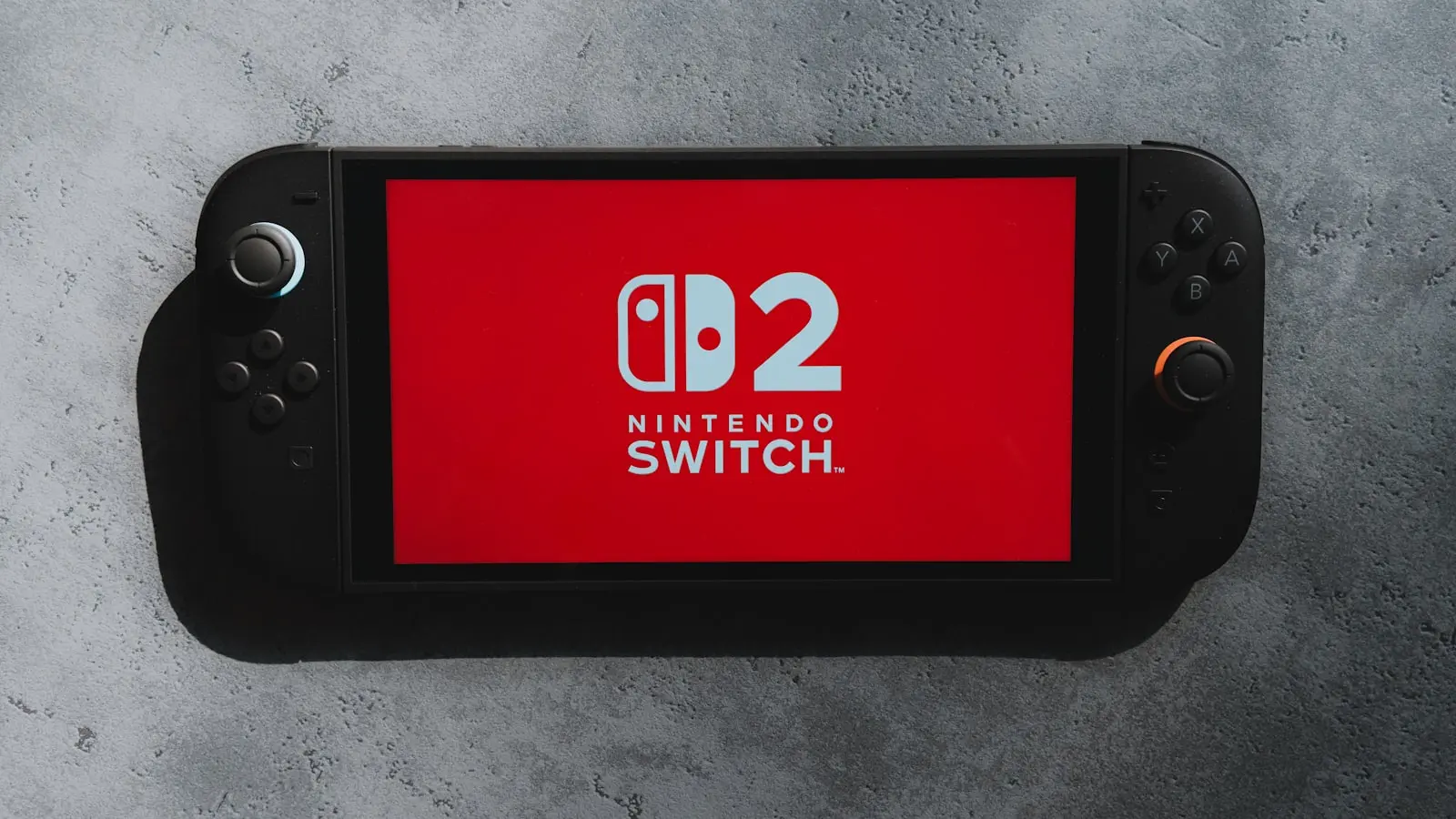

The dream of high-fidelity portable gaming has always been a negotiation between ambition and thermodynamics. With the technical reveal of Resident Evil Requiem running on the Nintendo Switch 2, that negotiation has turned into a hostage situation. The footage, dissected by technical analysts, presents a machine that is punching well above its weight class, yet the bruises are visible to the naked eye. Capcom has managed to port a current-generation survival horror title onto a handheld chipset, but the numbers suggest that the hardware is screaming to keep up. This is not a story about raw power. It is a story about the heavy lifting performed by artificial intelligence.
The AI Illusion
The most startling metric to emerge from the technical breakdown is the internal resolution. When docked and outputting to a television, the Switch 2 is rendering the game internally at just 540p. For context, this is a pixel count lower than the native display of many smartphones from a decade ago. In handheld mode, the situation deteriorates further, dropping to an internal 360p. (This is approaching Game Boy Advance video player territory).
However, the image on the screen does not look like a mosaic of jagged edges. This is entirely due to Nvidia’s Deep Learning Super Sampling (DLSS). Unlike previous interpolation methods that smeared frames together, DLSS uses tensor cores to reconstruct the image, filling in the gaps with AI-predicted data. The Switch 2 is effectively hallucinating 75 percent of the pixels you see. The result is an output that mimics 1080p, but the reliance on reconstruction is total. Without this proprietary Nvidia tech, the game would be a blurry, unplayable mess. It signifies a paradigm shift in console development: raw silicon metrics matter less than the quality of the upscaler.
The Frame Rate Gamble
Performance metrics paint a picture of a system pushed to its absolute thermal limit. Capcom targets 60 frames per second (FPS), a standard expected for fluid combat and precision aiming. In smaller, corridor-based sections—classic Resident Evil claustrophobia—the hardware meets this target. But as soon as the geometry opens up or alpha effects (fire, smoke) fill the screen, the illusion breaks.
The frame rate fluctuates wildly, sitting often in the 40s and 50s. In the worst-case docked scenarios, it plummets to 30 FPS. This inconsistency is arguably worse than a locked 30 FPS cap. A variable frame rate creates inconsistent input latency; your reticle moves differently when the game runs at 55 FPS compared to 35 FPS, ruining muscle memory. (Why developers refuse to implement a 30 FPS cap at launch remains a mystery).
The handheld performance offers a grim warning for mobile players. Drops to 25 FPS are recorded during heavy load. In a survival horror game where ammunition conservation requires precise headshots, losing 20 percent of your visual feedback per second is a mechanical failure. It turns tension into frustration. The Switch 2 allows you to take the game anywhere, but it does not guarantee the game will be playable everywhere.
The Xbox Series S Paradox
Perhaps the most damning yet fascinating data point is the comparison with Microsoft’s Xbox Series S. Analysts note that the image quality (IQ) on the Switch 2 is superior to the Series S, despite the Nintendo machine having worse raw performance. This seems contradictory until one examines the architecture.
The Series S relies on AMD’s FSR (FidelityFX Super Resolution) or traditional scaling, which often produces shimmering artifacts and “fizzy” noise on fine details like hair or foliage. The Switch 2, armed with Nvidia’s tensor cores, produces a cleaner, more stable image even from a lower base resolution. It proves that in the modern era, specialized AI hardware beats raw compute shaders. The Switch 2 is a weaker machine that produces a better picture, simply because it cheats more intelligently. (A win for efficiency, a loss for purists).
Asset Degradation and Lighting
To fit the game into the Switch 2’s memory bandwidth, Capcom has taken a scalpel to the assets. Ray tracing is entirely absent. This is expected—calculating light bounces in real-time is expensive even for desktop GPUs—but the compromises go deeper. Volumetric lighting, the atmospheric fog that gives Resident Evil its dread, is rendered at a significantly lower resolution. This can lead to pixelated “blocky” fog effects that detach from the rest of the scene.
Texture quality and character models have also seen reductions. While not immediately noticeable on a small tablet screen, these downgrades become apparent on a 55-inch 4K television. The most curious change is the hair physics. The Switch 2 version features “different hair,” suggesting the complex strand simulation used on the PS5 was too taxing for the Switch’s CPU. Hair simulation is notoriously physics-heavy; stripping it out frees up cycles for game logic, but it leaves characters looking slightly more plastic, slightly less alive.
The User Interface Disparity
A small but telling detail is the UI rendering. The PS5 renders its user interface at a crisp 4K, overlaying the game world with razor-sharp text and HUD elements. The Switch 2 renders its UI at 1080p. While this saves GPU bandwidth, it creates a subtle disconnect. When a game relies on upscaling from 540p, a 1080p HUD can look jarringly clean against a soft background, or conversely, look soft itself on a 4K TV. It is a reminder that the entire video pipeline is being squeezed through a narrow aperture.
Storage and Loading
If there is a silver lining beyond the DLSS miracle, it is the storage architecture. Loading times are reported to be quick, aligning with current-generation expectations. This confirms that the Switch 2 is utilizing high-speed flash memory, likely a custom NVMe standard. The days of long loading screens masking slow hard drives are gone, even in the portable space. This ensures that while the game might struggle to render the action, it won’t struggle to stream the data required to start it. (Thankfully).
The Verdict on Portability
Resident Evil Requiem on Switch 2 serves as a bellwether for the generation to come. It demonstrates that AAA gaming on handhelds is no longer about shrinking the hardware to fit the game; it is about using AI to reconstruct the game to fit the hardware. The result is a playable, visually impressive, but mathematically compromised experience.
The reliance on a 360p internal resolution in handheld mode is a precarious baseline. As engines become more demanding—Unreal Engine 5 titles are looming—there is no resolution left to cut. You cannot upscale from zero pixels. Nintendo and Nvidia have built a lifeboat out of algorithms, and while it stays afloat for Resident Evil, the waters are only getting rougher from here.