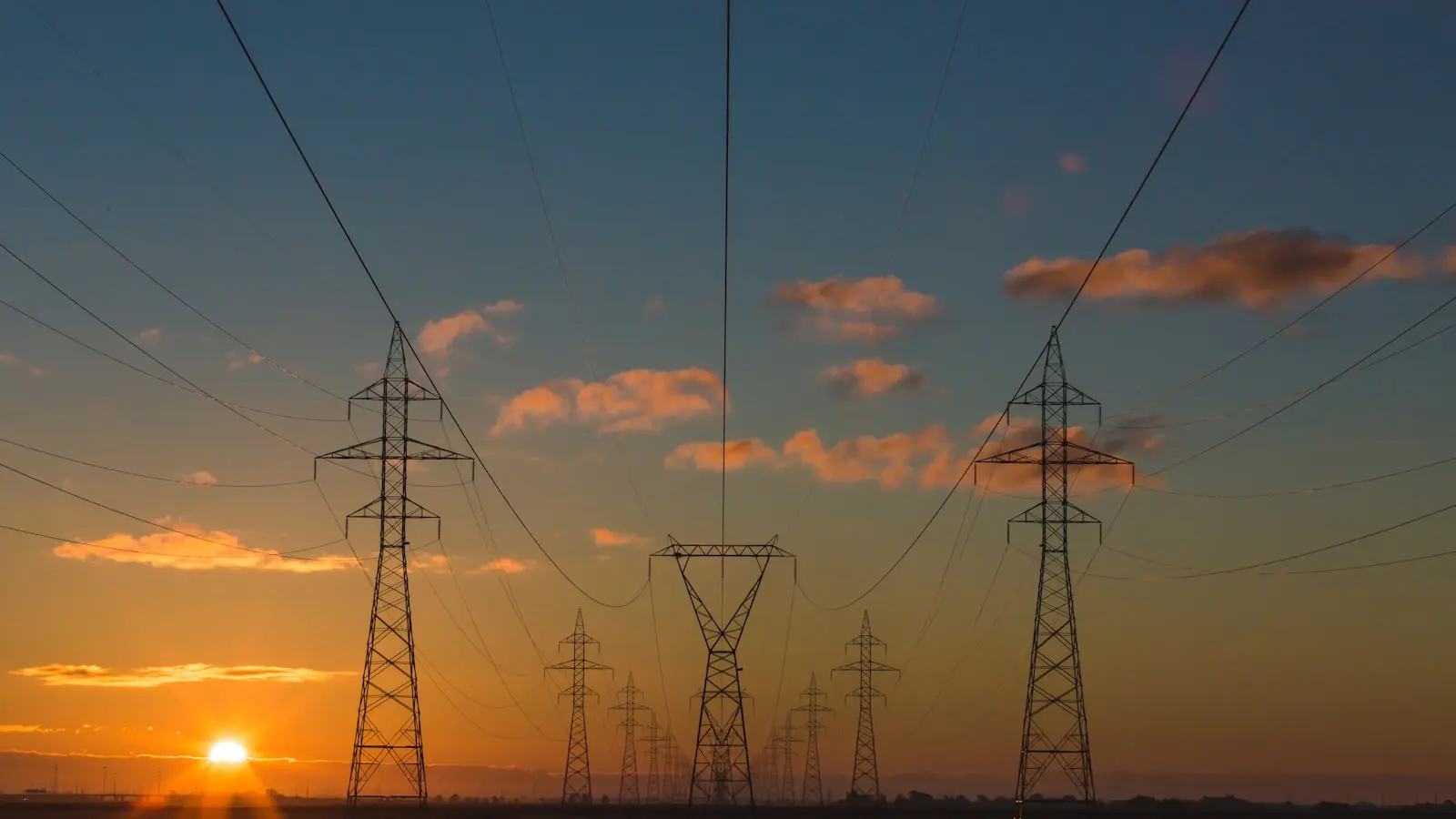

In a decision that signals a fundamental shift in our planetary trajectory, Science magazine has named the global renewable energy surge its 2025 Breakthrough of the Year. For the first time, the prestigious honor was awarded not to a singular laboratory discovery or a niche technological feat, but to a vast, accelerating, and now undeniable industrial transformation. This is the moment a decade of exponential progress reached critical mass, fundamentally reordering the global energy landscape at a speed few models predicted. The breakthrough is not a future promise. It is a present-tense reality.
The numbers underpinning the decision are stark. In 2025, renewable sources—primarily solar and wind—accounted for over 90 percent of all new electricity-generating capacity added worldwide. This milestone was driven by a staggering economic inversion. The cost of utility-scale solar power has plummeted by more than 90 percent over the last ten years, making it the cheapest form of electricity in history for a majority of the world’s population. The International Energy Agency (IEA) confirmed the downstream effect: coal-fired power generation, the bedrock of the 20th-century grid, fell to its lowest share of the global mix in decades, its decline now appearing irreversible.
This rapid ascent was made possible by the quiet, parallel revolution in energy storage. The long-standing Achilles’ heel of renewables—their intermittency—was effectively severed in 2025 as global battery storage capacity crossed the 1 terawatt-hour threshold. This is not an abstract figure. It represents a planetary buffer of stored electrons sufficient to stabilize national grids during peak demand, absorbing daytime solar surpluses and discharging them long after the sun has set. What was once a theoretical solution discussed by grid engineers is now an operational reality, deployed from the Gobi Desert to the plains of Texas.
The Anatomy of a Tipping Point
The surge was not a single event but the culmination of interlocking feedback loops. In China, the European Union, and the United States, record-breaking installation rates in 2025 were the result of aggressive industrial policy meeting mature, cost-effective technology. For years, skeptics argued that the scale required for a global transition was insurmountable. They pointed to the immense inertia of the fossil fuel economy and the technical hurdles of grid integration. (Frankly, their arguments seemed sound just five years ago). But they underestimated the power of exponential cost reduction.
Manufacturing scale, particularly in photovoltaic panels, drove down unit prices. Cheaper panels made large-scale solar farms more profitable, which in turn justified further investment in manufacturing capacity. This cycle, churning for over a decade, finally hit an inflection point where solar became a purely economic choice, divorced from subsidy or sentiment. It simply became the cheapest way to generate a new kilowatt-hour of power.
The battery storage boom followed a similar logic, accelerated by the electric vehicle market. As automakers poured hundreds of billions into battery R&D and production, costs for lithium-ion packs fell dramatically. Grid-scale storage projects could suddenly piggyback on this massive industrial ecosystem, acquiring high-density batteries at prices that made them competitive with natural gas peaker plants, the grid’s traditional shock absorbers. When operators saw their dashboards light up with stable, dispatchable power from a solar-plus-storage facility, the energy paradigm was visibly recalibrated in real time.
A Reckoning for Old Models
The speed of this transition has forced a humbling reappraisal among economists and energy analysts. Forecasts that, only a few years prior, had projected a slow, linear adoption of renewables have been decisively broken. Scientists who once expressed deep pessimism about meeting climate targets are now revising their models to account for this new reality. The 2025 surge has, according to several climate modeling consortia, pulled the world’s emissions trajectory back from catastrophic scenarios, placing Paris Agreement targets back within a plausible, if still difficult, reach.
In their editorial, the editors of Science highlighted this societal dimension. The breakthrough, they argued, represents a rare instance of humanity deploying a technological solution to an existential problem at a globally relevant scale and speed. It is a testament to the power of sustained scientific research, smart industrial policy, and market forces aligned toward a common goal.
However, this transformation is not frictionless. The rapid decline of fossil fuels is triggering profound economic and social disruption in regions historically dependent on their extraction and combustion. The political debate has now shifted from whether the transition will happen to how to manage its consequences. Discussions of a “just transition” are no longer academic; they are urgent policy imperatives for communities facing the unwinding of their core industries. Furthermore, energy security is being redefined. Geopolitical focus is shifting from the control of oil and gas reserves to the supply chains for critical minerals like lithium, cobalt, and copper—the building blocks of this new energy system. (This is the new geopolitics).
By honoring a global trend, Science has made a powerful statement. The most significant scientific breakthrough of our time is not an isolated discovery confined to a lab. It is the distributed, collective, and messy process of rewiring our civilization. The proof-of-concept phase is over. The era of implementation has begun.