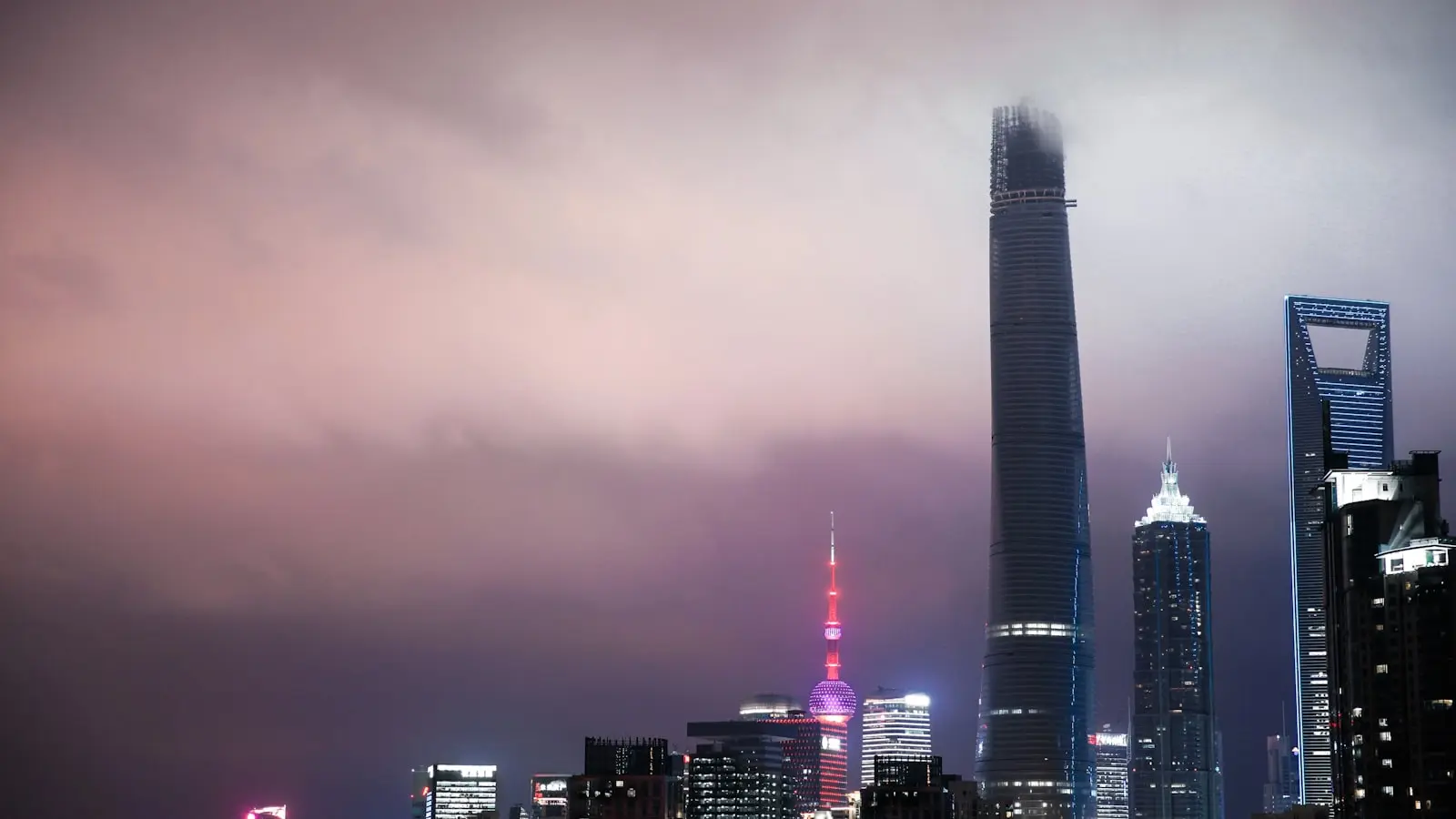
A Reddit user recently described a short trip covering Beijing, Guangzhou, and Shenyang as "uninteresting." The admission deserves scrutiny — not for its subjective judgment of cultural landmarks, but for what it reveals about the physiological cost of rapid city hopping across China. The user likely mistook exhaustion for boredom. A more precise reading: the body was overwhelmed by a cascade of stressors that dulled perception and eroded engagement.
Beijing to Guangzhou spans over 2,000 kilometers. Shenyang, in the northeast, adds another layer of geographic stretch. Even within a single time zone — China operates on Beijing Standard Time across its entire breadth — the distance alone forces long flights, early check-ins, and compressed schedules. Data from the International Air Transport Association shows that domestic Chinese flights average 2.5 to 4 hours between these hubs. But the real burden is not the flight time; it is the transition between vastly different urban environments, each demanding physical adaptation and cognitive recalibration.
Travel health experts on Reddit recommended limiting visits to two cities per trip and scheduling rest days. That advice is not anecdotal. It aligns with research on travel fatigue, a condition distinct from jet lag. While jet lag stems from crossing time zones and disrupting circadian rhythms, travel fatigue arises from prolonged transit, sleep fragmentation, dehydration, and the cumulative load of navigating unfamiliar spaces. A 2019 review in the journal "Travel Medicine and Infectious Disease" noted that symptoms of travel fatigue include reduced alertness, irritability, and diminished interest in surroundings — exactly the "uninteresting" feeling described.
The Physiological Toll of Multi-City Itineraries
Rapid city hopping forces the body into a pattern of repeated arousal and recovery cycles. Each flight involves cabin pressure changes, dry air (relative humidity in aircraft cabins often drops below 20 percent), and prolonged sitting. The result: reduced blood flow, muscle stiffness, and a subtle dehydration that impairs cognitive function. A study published in "Aerospace Medicine and Human Performance" found that dehydration of just 2 percent of body mass can degrade attention and short-term memory — both essential for enjoying new experiences.
In Chinese megacities, the physical demands escalate. Subway systems require extended walking and standing. Beijing’s subway alone has over 400 kilometers of track; transferring between lines often involves 10-minute walks. A tourist covering three cities in a week can easily log 30,000 to 50,000 steps. That is not a vacation; it is an endurance event. Without adequate rest, the musculoskeletal system accumulates micro-damage, and the central nervous system downregulates dopamine receptors. (The brain, in essence, stops rewarding novelty.)
Jet Lag Versus Travel Fatigue: A Critical Distinction
Many travelers assume that staying within a single time zone eliminates jet lag. That is only partially true. While the circadian clock may not shift dramatically, sleep architecture still suffers. Early-morning flights force early wake times. Late-night arrivals delay sleep onset. Inconsistent bedtimes fragment slow-wave and REM sleep. A 2020 study in "Current Biology" demonstrated that even a single night of disrupted sleep reduces hippocampal activity during memory encoding — meaning the brain literally stores less of what is seen. The Reddit user may have walked through the Forbidden City, but the hippocampus was not fully recording it.
Furthermore, the sheer duration of travel produces a phenomenon called "travel fatigue syndrome," characterized by lassitude and depersonalization. The clinical literature is sparse, but occupational medicine recognizes a parallel in "business travel burnout." Companies that send employees on multi-city itineraries report higher rates of disengagement and lower productivity. The leisure traveler is not immune.
The Cognitive Load of Rapid Cultural Switching
Beijing, Guangzhou, and Shenyang are not just geographically distinct; they are culturally and linguistically divergent. Mandarin is the official language, but local dialects, food customs, and social rhythms differ. Rapid switching between environments forces the brain into constant pattern matching — a process that consumes glucose and metabolic resources. Psychologists call this "cultural fatigue." It is real, measurable, and often underestimated.
A 2018 experiment in "Psychological Science" found that individuals navigating unfamiliar cultural contexts showed elevated cortisol levels and reduced executive function after just two hours of immersion. Multiply that by three cities over seven days, and the brain enters a state of chronic allostatic load. The result: reduced capacity for pleasure, increased irritability, and a flattening of emotional response. The Reddit user’s "uninteresting" verdict may have been the brain’s way of conserving energy.
Environmental Factors: Pollution and Dry Air
Air quality in Chinese cities varies dramatically. Beijing and Shenyang experience periodic spikes in PM2.5 concentrations, particularly during winter heating months. Guangzhou generally has better air, but indoor environments in all three cities often rely on recirculated air conditioning. The combination stresses the respiratory system. Even mild pollution exposure triggers inflammatory responses, which can cause fatigue and malaise. A 2017 study in "Environmental Health Perspectives" linked short-term PM2.5 exposure to increased subjective fatigue scores in healthy adults.
Add to that the dryness of aircraft cabins and hotel rooms. Nasal passages dry out, mucous membranes crack, and the immune system must work harder. (Travelers often catch colds not because of germs but because of compromised mucosal barriers.) The body diverts energy to repair and maintenance, leaving less for enjoyment.
Practical Recommendations Based on Chronobiology and Recovery Science
The evidence supports the Reddit community’s instinct: limit the number of cities and schedule rest days. Specifically:
-
Two-city maximum per trip. Data from chronobiology research suggests that the body requires at least 48 hours to adapt to a new environment’s light-dark cycles, noise levels, and activity demands. Adding a third city within a week forces the reset button before adaptation completes.
-
Schedule a full rest day after each long-haul flight. The definition of "long haul" here is any flight over three hours. Even if within the same time zone, the travel fatigue demands recovery. Use that day for light walking, hydration, and sleep normalization.
-
Use melatonin only for true jet lag. If flying from the United States to China — crossing 12 time zones — melatonin can help shift circadian phase. For domestic hops, it is unnecessary and may fragment sleep if timed incorrectly. Instead, prioritize morning light exposure.
-
Hydrate aggressively. Airlines provide minimal moisture. A 2019 study in "Nutrition Reviews" calculated that travelers lose roughly 1.5 liters of water on a four-hour flight. Pre-hydrate before flying and continue during the trip with electrolyte-balanced fluids. Avoid alcohol and caffeine, which compound dehydration.
-
Walk, but with limits. Recognize that 20,000 steps per day is a high-endurance activity. Alternate heavy walking days with low-exertion activities. Use ride-hailing apps for distances over 1 kilometer. (The subway is efficient but not free in effort.)
-
Monitor air quality. Use portable PM2.5 monitors or smartphone apps. In cities with poor air, limit outdoor exposure when readings exceed 150. Wear N95 masks if necessary. This reduces inflammatory load and preserves energy.
-
Recognize the emotional signal. If a city feels "boring," check your physical state first. Fatigue, hunger, thirst, and sleep debt all masquerade as disinterest. Treat the body before judging the experience.
Conclusion
The Reddit user’s report is not a critique of Chinese urban destinations. It is a case study in the physiology of rapid travel. The human body evolved for slow navigation of familiar terrain, not for three-city blitzes across 4,000 kilometers in a week. The feeling of "uninteresting" was a symptom, not a judgment. Travelers who respect the limits of their own biology will find that Chinese cities are anything but boring. The key is to stop treating the body like a machine that runs on enthusiasm alone.