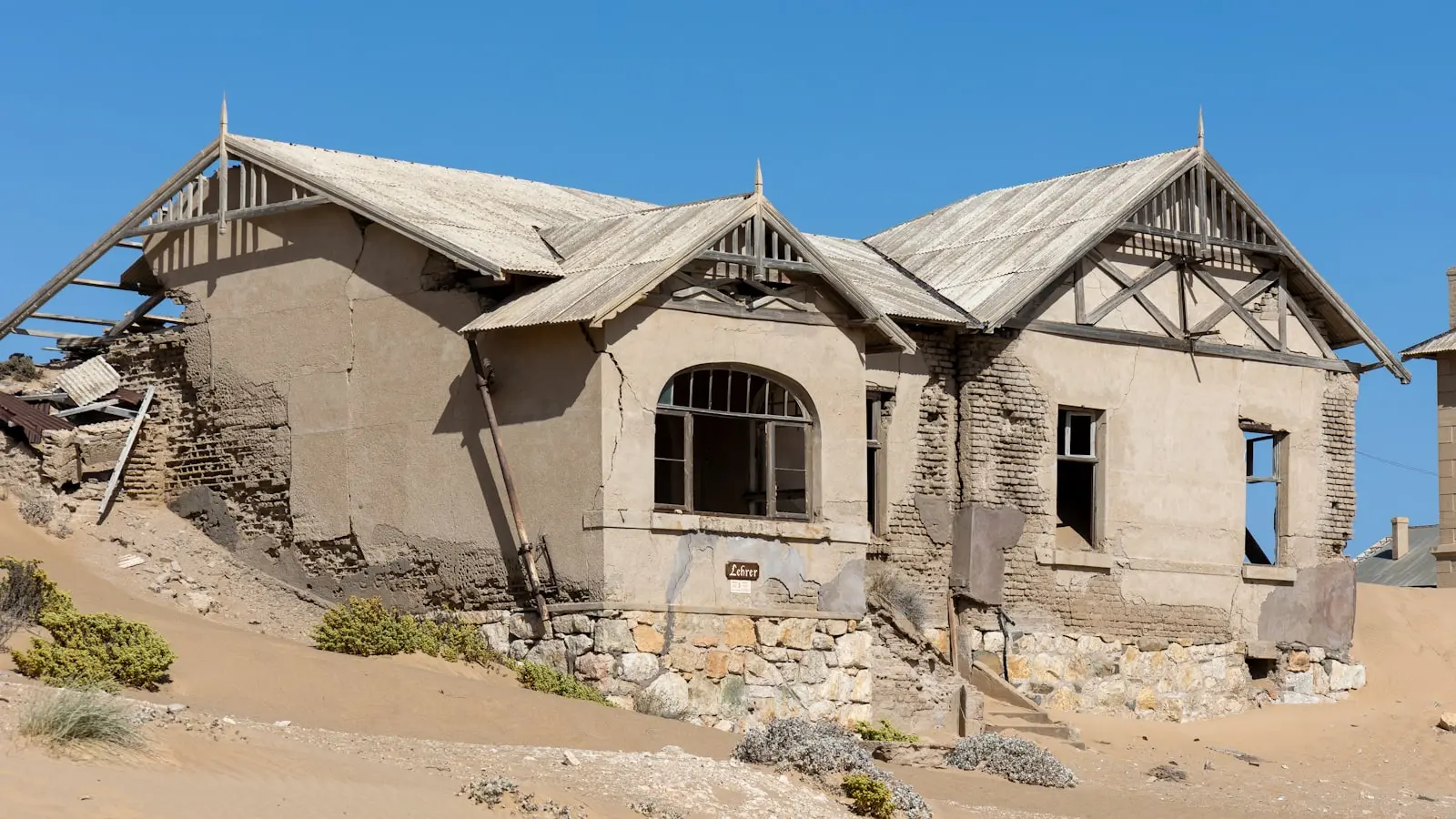

A Frozen Industrial Archive
Deep within the Svalbard archipelago, on the island of Spitsbergen, the abandoned mining town of Pyramiden stands as a paradox of preservation. Once a thriving coal production hub operated by the Soviet Arktikugol Trust, the site was shuttered in 1998, effectively freezing a specific moment of the twentieth century in place. Because of the extreme sub-zero temperatures, the standard cycles of biological and chemical decay that typically reclaim abandoned human structures have stalled. Wood does not rot, and metal oxidation is significantly slowed, leaving a town that appears to have been vacated only yesterday. (It is an eerie stillness.) For historians, this provides a peerless ethnographic window into Soviet industrial life, complete with the northernmost swimming pool and piano on the planet.
The Science of Material Persistence
Beyond its historical value, Pyramiden has become an accidental laboratory for environmental scientists. The town serves as a case study for the durability of man-made materials in high-latitude environments. Researchers are currently tracking how concrete, treated lumber, and synthetic industrial materials react to decades of exposure to extreme permafrost conditions. These observations provide baseline data for understanding how contemporary infrastructure—such as pipelines or research outposts—might fare if left unmaintained in similar climates. The lack of traditional decay allows researchers to isolate the mechanical stresses caused by freeze-thaw cycles on structural foundations, offering insights that controlled laboratory simulations simply cannot replicate.
The Melting Threat of Heavy Metals
While the cold has acted as a preservative, a warming climate is introducing a volatile variable into the equation. As global temperatures rise, the permafrost underlying Pyramiden is showing signs of instability. Scientists are increasingly concerned that the thawing ground will do more than just collapse building foundations. There is a documented risk of chemical leaching from the heavy machinery and fuel reserves abandoned at the site. When the ground turns from a frozen, impermeable barrier into a saturated, shifting slush, long-sequestered contaminants like heavy metals can mobilize into the local water table.
Potential Environmental Risks
| Risk Factor | Mechanism of Action | Potential Impact |
|---|---|---|
| Heavy Metal Leaching | Thermal degradation of permafrost | Contamination of local fjord ecosystems |
| Infrastructure Collapse | Active layer thickening | Physical release of industrial chemicals |
| Soil Saturation | Increased meltwater permeability | Transport of pollutants into the food chain |
Industrial Heritage versus Environmental Reality
Managing Pyramiden requires a difficult balance between preserving a unique industrial heritage site and mitigating a potential environmental hazard. The site is widely considered one of the most significant industrial heritage locations on Earth, yet the cost of remediation—removing decades-old industrial debris and stabilizing toxic waste—is immense. (Is it possible to preserve the ghost town without endangering the local wildlife?) As the permafrost continues to soften, the window for addressing these hazards is narrowing. If the environmental impacts go unchecked, the very site that offers so much historical knowledge could become a source of ecological damage to the fragile arctic surroundings. The survival of Pyramiden as a time capsule is no longer guaranteed by the cold alone; it may soon require the very human intervention that it was designed to escape.