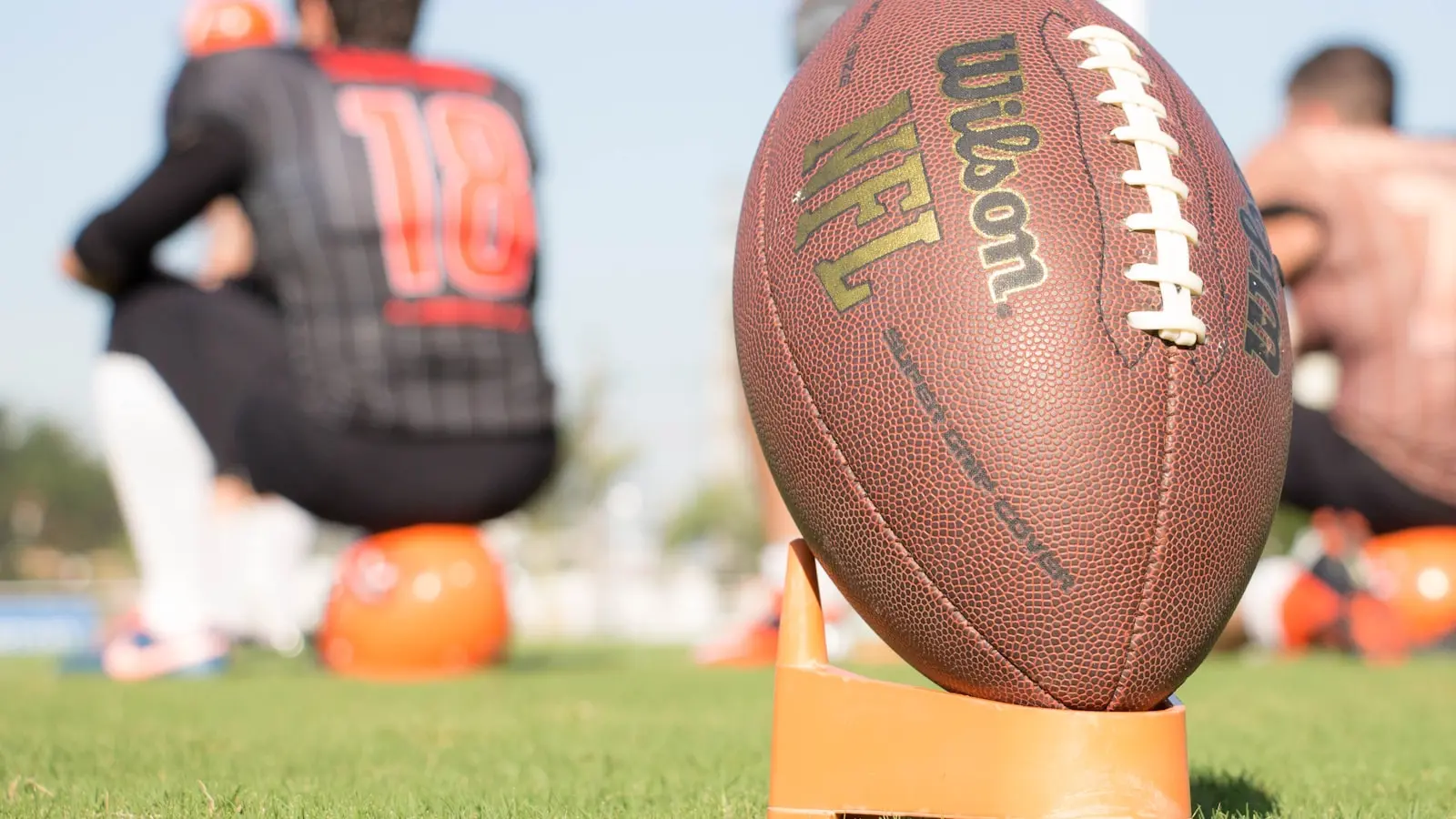

When scouts file into the lower bowls of Lucas Oil Stadium, they stop watching football and start measuring kinetic energy. The NFL Scouting Combine does not evaluate instinct. It quantifies physical thresholds. Friday afternoon established new baseline metrics for the 2026 draft class, specifically altering the market valuation for defensive backs and tight ends. Oregon tight end Kenyon Sadiq broke the positional 40-yard dash record with a 4.39-second run. Ohio State safety Lorenzo Styles Jr. logged a 4.27-second sprint, the fastest recorded time by a safety in over two decades. The draft board fractures when anomalies like these materialize.
Front offices allocate millions of dollars based on geometric projections. A tight end running a 4.39 does not just represent speed. It represents a schematic impossibility for defensive coordinators. Base personnel logic dictates that linebackers cover tight ends in the middle of the field. A 4.39-second acceleration curve guarantees that any middle linebacker dropping into a Tampa 2 shell will trail Sadiq by three yards before the receiver crosses the second level. Safeties will be forced to bracket him, which inherently lightens the defensive front and surrenders leverage against the run game. (Coordinators despise choosing between perimeter vulnerability and interior weakness).
The Tight End Paradigm
The tight end position operates on a scale of mass versus velocity. Sadiq shattered the existing scale. Alongside Vanderbilt’s Eli Stowers, who also posted historic jump metrics, Sadiq turned the positional evaluation into a track meet. When a 240-pound athlete displaces his mass fast enough to outrun boundary cornerbacks, traditional defensive mapping fails.
General managers do not pay for traditional tight end usage in the first round anymore. They pay for mismatch generation. If an offense aligns Sadiq in the slot, the defense must deploy nickel personnel. Sadiq’s vertical jump and 4.39 speed force defenses out of base packages, allowing offensive coordinators to dictate the blocking mathematics in the run game. He essentially becomes a tax on defensive flexibility.
The Economics of the Secondary
The safety market provided the most distinct contrast in risk management Friday evening. Caleb Downs, widely projected as the premier safety in the 2026 class, declined on-field testing. He deferred his athletic audit to Ohio State’s Pro Day. Downs insulated his draft floor by removing the variance of the Indianapolis track. (Front offices rarely penalize elite tape when a player controls his testing environment).
Conversely, Lorenzo Styles Jr. embraced the variance. Styles clocked a 4.27-second 40-yard dash while managing an existing injury. He mathematically eclipsed his brother, linebacker Sonny Styles, who ran a 4.46 on Thursday. More importantly, Lorenzo registered the fastest time by a safety since at least 2003.
Oregon’s Dillon Thieneman capitalized on Downs’ absence by executing a flawless physical audit. Thieneman registered a 41-inch vertical, a 10-foot-5 broad jump, and a 4.35-second 40-yard dash.
| Player (School) | Position | Vertical Jump | Broad Jump |
|---|---|---|---|
| Genesis Smith (Arizona) | Safety | 42.5” | 10’8” |
| Dillon Thieneman (Oregon) | Safety | 41.0” | 10’5” |
| DeShon Singleton (Nebraska) | Safety | 39.5” | 10’10” |
| Jalon Kilgore (South Carolina) | Safety | - | 10’10” |
| Treydan Stukes (Arizona) | Safety | 38.0” | 10’10” |
Vertical and broad jumps evaluate lower-body explosion. They are proxies for a defensive back’s ability to drive out of a backpedal and contest the catch point. Smith and Thieneman demonstrated elite suddenness. When a safety holds a 40-plus inch vertical, quarterbacks must adjust the trajectory of intermediate crossers. Lower trajectories result in tipped passes. Physics collects its tax.
Cornerback Geometry and Leverage
The cornerback evaluations centered on the tension between linear speed and lateral fluidity. Daylen Everette from Georgia perfectly illustrated this tension. Everette clocked a 4.38-second 40-yard dash, confirming his deep-third recovery speed. Yet, positional drills revealed structural rigidity. He struggles to unhinge his hips during transition phases. Everette operates with a linebacker’s physical aggression, neutralizing screens and dominating the line of scrimmage, but his lateral stiffness leaves him susceptible to shifty route runners underneath.
Meanwhile, Indiana’s D’Angelo Ponds manipulated the math of catch-radius. Ponds stands 5-foot-8 and five-eighths. Evaluators inherently discount undersized cornerbacks due to boundary disadvantages against 6-foot-3 receivers. Ponds responded by logging a 43.5-inch vertical jump, the fourth-highest mark by a cornerback in the event’s history. He neutralized his skeletal disadvantage through sheer kinetic output.
| Prospect (School) | Position | Vertical Jump |
|---|---|---|
| D’Angelo Ponds (Indiana) | Cornerback | 43.5” |
| Charles Demmings (SFA) | Cornerback | 42.0” |
| Will Lee III (Texas A&M) | Cornerback | 42.0” |
| Brandon Cisse (South Carolina) | Cornerback | 41.0” |
| Colton Hood (Tennessee) | Cornerback | 40.5” |
Tacario Davis presents the opposite profile. The Washington cornerback stands 6-foot-4 and ran a 4.41. The geometry of the boundary shifts entirely when a defender carries that length at that speed. Quarterbacks cannot throw standard fades against a 6-foot-4 frame moving at 4.41 speed. Davis muddies passing windows simply by existing in the throwing lane. He forces passers to demand perfect placement.
Missouri’s Toriano Pride Jr. injected his own volatility into the draft order, posting a 4.32-second run. He lacks ideal size, but 4.32 speed forces wide receivers to adjust their release packages. You cannot outrun that metric on a simple go-route.
Translating Drills to Processing Speed
Track speed does not equal football processing. The positional drills separate track athletes from defensive backs. The Gauntlet Drill requires players to catch the football cleanly while maintaining horizontal speed across the field. It demands hand-eye separation. A player must locate the ball, secure it, and snap his vision to the next target without decelerating. Georgia’s Daylen Everette and Tennessee’s Colton Hood demonstrated zero drift off the line during this drill.
The Teryl Austin Drill isolates change-of-direction efficiency. Defensive backs must break on the ball and abruptly shift angles before securing the catch. (Wasted steps here translate directly to separated receivers on Sundays). Avieon Terrell from Clemson and Ephesians Prysock from Washington operated with minimal false steps. Terrell later dominated the Back Pedal and Transition drill, proving his hip mobility matches his footwork.
Draft boards do not finalize in February. However, the variables change. When defensive backs log 43-inch verticals and tight ends run 4.39s, front offices are forced to rewrite their defensive blueprints. The data generated today will dictate the tactical matchups of tomorrow. The tape tells the story of the past. The combine data dictates the parameters of the future.