
The Physics of Thermal Regulation
In the high-stakes environment of winter training, equipment failure is rarely mechanical; it is thermodynamic. Athletes who approach gear selection through a lens of heat management rather than pure insulation consistently outperform those who overdress. The core methodology centers on a three-layer system: a moisture-wicking base layer, an insulating mid-layer (fleece), and an outer shell designed for wind and water resistance. (This is not just marketing jargon—it is basic moisture transport science.) Cotton is a non-starter here. When saturated with perspiration, cotton loses its thermal resistance, turning into a cooling conduit that draws heat away from the skin. Merino wool remains the industry standard, retaining thermal properties even when damp while resisting bacterial accumulation.
The Logic of the Start Cold Strategy
Professional training regimes emphasize the “start cold” strategy. The metric is simple: if an athlete feels comfortable at minute zero, they will be overheating by minute fifteen. When the body generates metabolic heat, the failure to vent that energy leads to excessive sweating, which creates a humidity trap within the clothing system. This cycle forces the body to prioritize thermoregulation over athletic output, reducing peak performance. Data suggests that by intentionally feeling slightly chilled before the warmup, the athlete creates the necessary thermal buffer for the inevitable spike in metabolic core temperature.
Extremity Management and Visibility
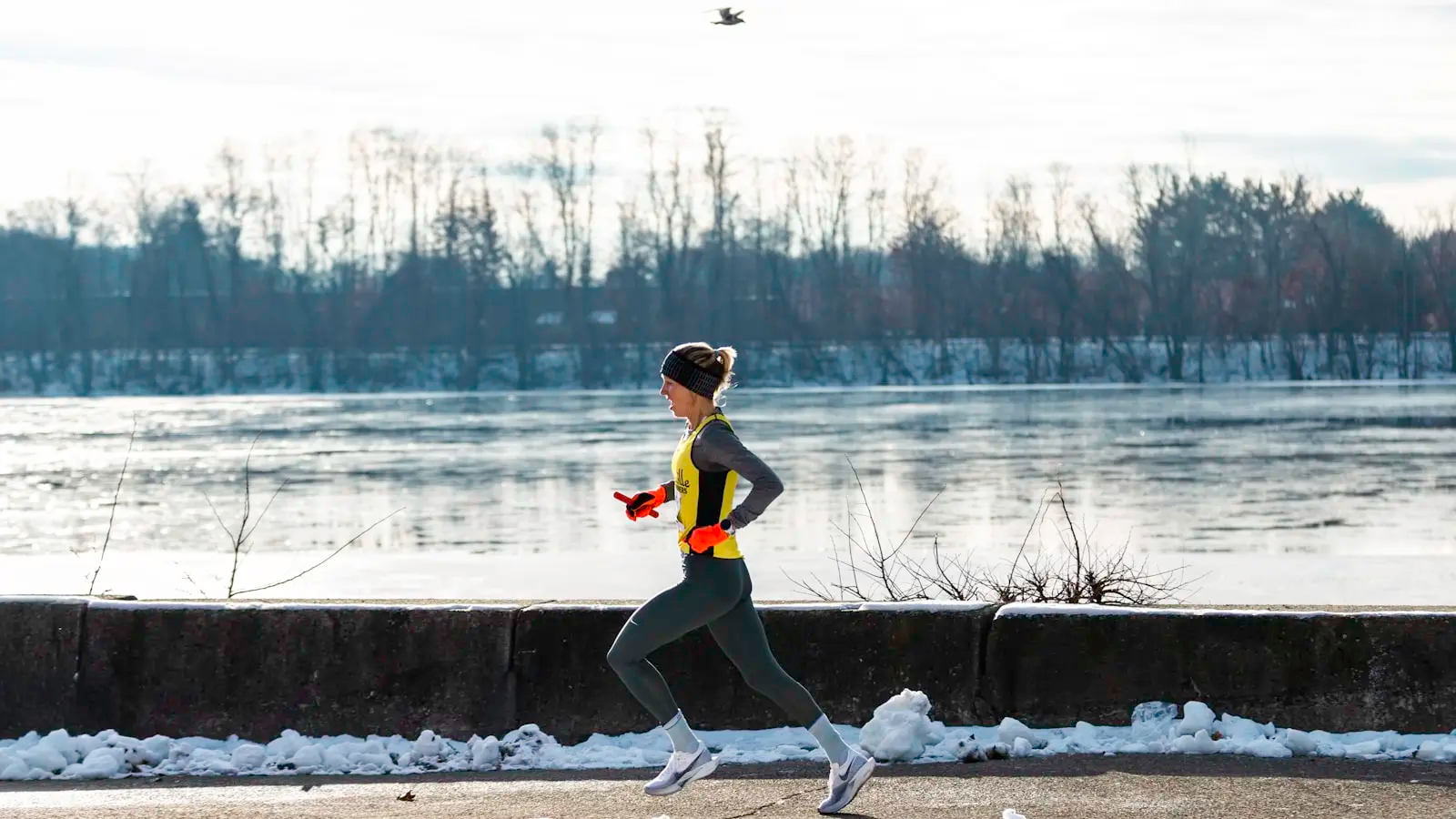
While marketing budgets focus on heavy jackets, physiological heat loss metrics indicate that the head and hands require more nuanced protection. Significant heat escapes from the extremities, yet runners often neglect ventilation in these areas. Modern gear design has shifted toward high-dexterity gloves and moisture-wicking beanies that maintain circulation without impeding movement. (Frankly, a bulkier coat is often a detriment to mechanics.)
Key Performance Indicators for Winter Gear
| Factor | Performance Metric | Rationale |
|---|---|---|
| Moisture Control | Grams of sweat throughput | Prevents chilling via evaporation |
| Wind Resistance | CFM (Cubic Feet per Minute) | Protects against convective heat loss |
| Visibility | Lumens/Reflectivity Index | Reduces collision risk during low light |
The Safety Variable
Beyond physiological metrics, the environmental data regarding shorter daylight hours cannot be ignored. The integration of high-visibility reflective materials is not an accessory—it is a critical safety intervention. As visibility drops, the probability of external accidents increases. Athletes utilizing passive lighting gear reduce their risk profiles significantly compared to those relying on standard fabrics. Ultimately, elite winter training is a balancing act between heat retention and kinetic efficiency. Every piece of gear must serve a measurable purpose in that equation. If the gear creates too much friction or traps too much moisture, the strategy is flawed. Adjust accordingly.