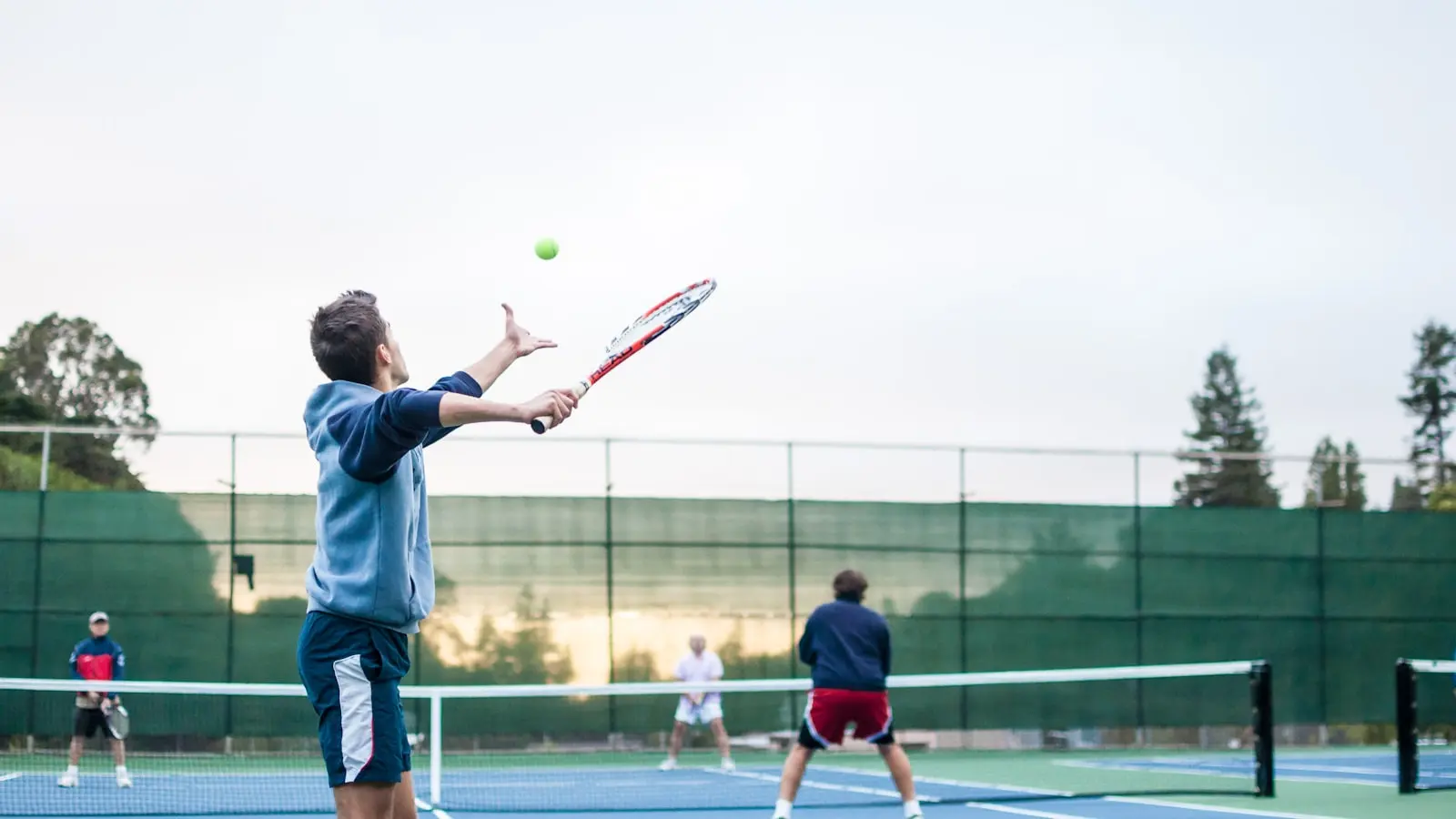
Choosing between a one-handed and two-handed backhand is one of the most fundamental decisions a tennis player makes. The choice shapes your stroke mechanics, shot variety, and even injury risk. While the two-handed backhand offers immediate stability, the one-hander provides greater reach and slice versatility. This article compares the two styles across biomechanics, power, injury patterns, and learning curve, giving you practical criteria to decide.
Key Takeaways:
- The two-handed backhand offers greater stability and is easier for beginners, while the one-handed backhand provides longer reach and more shot versatility.
- Neither style is inherently more powerful; power depends on technique, timing, and physical strength.
- One-handed backhands are associated with higher tennis elbow risk; two-handed backhands place more stress on the wrist and lower back.
- Your choice should be based on body type, age, injury history, and playing goals; testing both with a coach is recommended.
Core Biomechanics: Reach, Torque, and Stability
The one-handed backhand relies heavily on shoulder and leg strength. The lead arm extends fully, creating a longer lever that increases reach. This extra reach helps when stretching wide for balls or defending deep returns. However, the longer lever also demands greater shoulder stability and core control to manage the racket head through impact. High balls become especially challenging because the player must generate lift from the shoulder without the second hand to brace the racket.
The two-handed backhand shifts the load to the hips and core. Both hands grip the racket, shortening the lever and providing a stable platform. The dominant hand leads while the non-dominant hand supports, allowing the player to rotate the hips into the shot. This hip-driven rotation produces consistent torque and better control on high balls, but the second arm reduces the effective reach. Players with two-handed backhands often struggle to cover extreme wide shots compared to one-handers.
The core trade-off is reach versus stability. On faster surfaces or against heavy topspin, the stability of the two-hander often wins. On slower courts or against slice, the one-hander’s reach and versatility become more valuable.
Power and Spin Generation Compared
Power generation follows different paths. The one-handed backhand can produce heavy topspin, especially with modern racket technology and polyester strings. The wrist and forearm link to create a whipping motion that generates sharp topspin or heavy slice. Slice shots feel more natural because the open stance and single arm allow a wider range of wrist angles. Drop shots and angled volleys also benefit from the one-hander’s touch.
The two-handed backhand channels power through the entire kinetic chain: legs, hips, core, and both arms. This chain often produces more consistent raw power, especially on cross-court shots. The non-dominant hand adds force and stabilizes the racket, allowing the player to drive through the ball with less risk of mishits. Two-handers tend to excel at sharp angles and low balls, using the second hand to control the racket face.
Spin versatility favors the one-hander, while consistent power favors the two-hander. However, elite players master both. No style is inherently more powerful—success depends on timing, footwork, and how well the technique matches the player’s physical attributes.
Injury Risks: Tennis Elbow vs. Wrist Strain
One commonly cited issue with the one-handed backhand is a higher incidence of tennis elbow (lateral epicondylitis). The repetitive eccentric loading of the forearm extensors during the backswing and follow-through strains the elbow. Players who use a one-hander often develop elbow pain, particularly if they have weak shoulder or wrist muscles. The risk increases with poor technique or excessive spin.
The two-handed backhand reduces elbow involvement because the non-dominant hand shares the load. However, it shifts stress to the lead wrist and lower back. The lead wrist must stabilize through impact, and the rotational torque on the spine can aggravate lower back issues in players with weak cores. Wrist tendinitis and back strains are more common among two-handers.
These injury patterns are general trends from sports medicine guidelines. Individual susceptibility varies by age, playing frequency, and preparation. Proper warm-ups, strengthening, and technique adjustments can mitigate many risks. Consulting a sports medicine professional is advised for players with existing conditions.
Learning Curve and Player Profile
For beginners, the two-handed backhand is the more beginner-friendly choice. It offers immediate stability, easier timing, and less reliance on precise shoulder strength. New players can generate consistent shots without months of coordination practice. Most coaches introduce the two-hander first, especially for younger or less athletic players.
The one-handed backhand has a steeper learning curve. It requires strong legs, a stable core, and disciplined timing. Early practice often results in weaker, inconsistent shots. But once mastered, the one-hander unlocks greater shot variety, reach, and the ability to hit slice and drop shots with ease. The learning period can last months or even years.
Age and body build matter. Taller players with long arms can leverage the one-hander’s reach advantage. Players with naturally strong shoulders and legs adapt faster to the one-handed technique. Younger, athletic players often have the flexibility and strength to learn either style. Older recreational players may find the two-hander easier on the joints and more forgiving on timing.
How to Decide: Practical Criteria for Your Game
There is no universal “best” backhand. The right choice depends on your physical attributes, playing goals, and injury history.
- Body type: If you are tall with long arms, the one-hander’s reach is a natural asset. If you are shorter or have shorter arms, the two-hander’s stability may compensate.
- Strength and mobility: Strong shoulders and legs favor the one-hander. A strong core and flexible hips favor the two-hander.
- Goals: Recreational players often benefit from the two-hander’s consistency. Competitive players may develop the one-hander for variety and shot making.
- Injury history: Players with previous elbow issues may prefer the two-hander. Those with wrist or back problems might lean toward the one-hander.
The best approach is to test both styles with a qualified coach over several sessions. Evaluate comfort, consistency, and shot effectiveness on both sides. Consider long-term development rather than short-term results. Many players start with a two-hander and later transition to a one-hander as they gain strength and coordination.
FAQ
Q1: Is the one-handed backhand more powerful than the two-handed backhand? Not inherently. Power depends on technique, timing, and physical strength. The two-hander often produces more consistent power because it uses a longer kinetic chain, but a well-executed one-hander can match or exceed it.
Q2: Can I switch from a two-handed backhand to a one-handed backhand later in my tennis development? Yes, but it requires significant practice and patience. The change affects timing, grip, and footwork. Many players successfully transition, but expect a temporary drop in performance while the new stroke stabilizes.
Q3: Which backhand style is better for players with a history of tennis elbow? The two-handed backhand generally reduces elbow strain because it shares the load. However, proper technique remains critical. A coach can help adjust grip and swing path to minimize stress on the elbow.