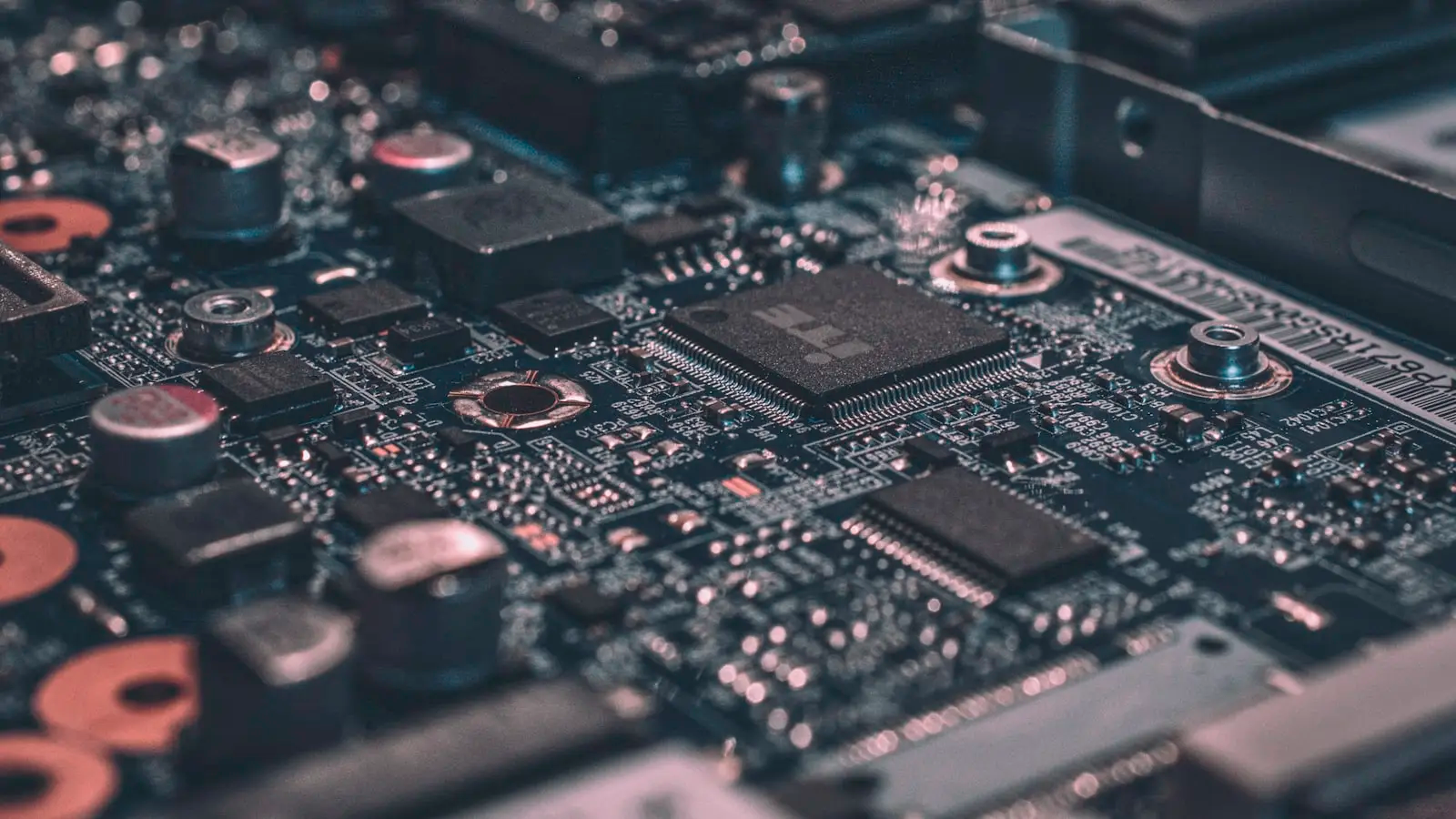

At GTC 2026, the central announcement from NVIDIA was not merely a new component but a fundamental re-architecture of the AI data center stack. The Vera Rubin platform, named with a nod to the pioneering astronomer, represents a direct assault on the single greatest barrier to widespread AI deployment: operational cost. CEO Jensen Huang’s claim of a tenfold reduction in inference cost compared to the already formidable Blackwell platform is the headline, but the engineering underneath explains the strategy.
This is a system-level solution, integrating seven distinct chips across six full racks. The objective is to slash the per-token cost of running generative models, a metric that has become the primary driver of capital expenditure for cloud providers and AI labs. The platform is purpose-built for the next wave of computation—agentic AI, multi-step reasoning, and sprawling Mixture-of-Experts (MoE) models that are notoriously difficult to run efficiently. The initial deployment partners read like a who’s who of cloud infrastructure: AWS, Google Cloud, Microsoft Azure, and Oracle Cloud are all slated for Vera Rubin instances in 2026, with Foxconn tooling up to build the physical servers in the second half of the year. The very companies building foundational models, including OpenAI, Anthropic, and Meta, are already onboard as early customers. The market is moving in lockstep.
NVIDIA’s strategy extends beyond hardware. A concurrent announcement of a $26 billion investment to build its own open-weight AI models signals a profound shift. The company is no longer content to sell the shovels for the gold rush; it is now entering the mining business itself, placing it in direct competition with its largest customers. This is a high-stakes gamble on vertical integration, betting that a tightly coupled hardware and software ecosystem will create an insurmountable performance moat. The move targets competitors like OpenAI and DeepSeek, indicating that the future battle is not just about FLOPS, but about the efficiency of the entire stack from silicon to model architecture.
Deconstructing the Vera Rubin Architecture
The performance claims of the Vera Rubin platform are rooted in its tightly integrated, multi-chip design. This is not simply a faster GPU; it is a holistic system designed to eliminate the communication bottlenecks that have plagued previous generations. At its core are two primary components: the Vera CPU and the Rubin GPU.
The Vera CPU is an 88-core processor based on the Arm v9.2-A instruction set. Its role is to feed the voracious computational appetite of the GPU. By designing its own CPU, NVIDIA controls the entire data pathway, optimizing the interconnects and instruction handling for AI-specific workloads. This sidesteps the potential latencies and inefficiencies of relying on third-party CPUs that are not purpose-built for this kind of symbiotic relationship with a high-performance accelerator. The goal is to keep the GPU’s processing units saturated with data at all times. Any cycle a GPU waits for data is a cycle wasted, and at this scale, wasted cycles translate to millions of dollars in operational costs.
Paired with it is the Rubin GPU, a processing behemoth achieving a stated 50 PFLOPS of performance. This raw number is impressive, but the more critical specification is its memory subsystem. The Rubin GPU incorporates 288GB of HBM4 (High Bandwidth Memory 4), the next generation of stacked DRAM technology. This massive and extremely fast memory pool is essential for housing the enormous parameter counts and intermediate activation states of modern transformer models. For MoE models, where only a fraction of the model (‘the experts’) is activated for any given token, the ability to quickly swap these experts in and out of active memory is paramount. The high bandwidth of HBM4 directly addresses this challenge, reducing the latency that would otherwise cripple performance. NVIDIA claims this architecture allows for training MoE models with four times fewer GPUs than the Blackwell platform. (A claim that, if true, completely alters the capital expenditure calculations for model training).
The platform’s physical form factor—a six-rack system—further underscores the focus on system-level optimization. By co-locating the CPUs, GPUs, and networking hardware in a pre-configured, high-density package, NVIDIA can control the physical distances data must travel. At these speeds, even centimeters matter. The proprietary interconnects binding the components are designed for pico-second latencies, ensuring that the cluster acts as a single, cohesive computational unit rather than a collection of discrete parts. This is where the real performance gains are realized, not just in the speed of a single chip, but in the efficiency of the whole.
The Economic Impact of 10x Cheaper Inference
A tenfold reduction in the cost of AI inference is not an incremental improvement. It is a disruptive economic event. Data center operators monitoring power usage meters and network bandwidth costs see a number that directly impacts their bottom line. For years, the high cost of running large language models has confined their most advanced capabilities to a handful of well-capitalized companies. It has made the idea of complex, multi-step AI agents—which may require hundreds or thousands of model calls to complete a single task—commercially non-viable.
Vera Rubin is engineered to change that equation. Lowering the cost-per-token makes sophisticated AI cheap enough to be ubiquitous. It enables applications that were previously confined to research papers. An AI agent that can autonomously research a topic, write code, test it, and deploy it is no longer a fantasy if the computational cost of each of its reasoning steps is slashed by 90%. This opens the door for enterprises to deploy AI for more than just chatbots and content summarization; it allows for complex workflow automation, scientific discovery, and autonomous system management. The addressable market for AI expands exponentially when the price falls this dramatically.
Furthermore, this cost reduction puts immense pressure on NVIDIA’s competitors. AMD and Intel are developing their own AI accelerators, but they are fighting a war on multiple fronts. NVIDIA’s advantage has never been solely in its hardware but in its software ecosystem, CUDA. Developers and researchers have spent over a decade building on CUDA, creating a deep library of optimized tools and frameworks. The Vera Rubin platform leverages this ecosystem while raising the bar on system integration. For a competitor to succeed, it must not only produce a competitive chip but also replicate the entire software stack and integrated hardware system that NVIDIA now offers. (Frankly, a nearly impossible task at this point).
NVIDIA’s Strategic Pivot into Open-Weight Models
The $26 billion commitment to developing open-weight AI models is perhaps the most significant strategic declaration from GTC 2026. This move transforms NVIDIA from a hardware supplier into a vertically integrated AI powerhouse. By creating its own powerful, open models, NVIDIA can ensure they are perfectly optimized for Vera Rubin’s architecture, creating a performance benchmark that competitors using NVIDIA hardware will struggle to match. It’s a classic playbook: control the platform, then build the killer app for it.
This places the company in a precarious but powerful position. It now competes directly with OpenAI, Anthropic, Meta, and Google—the very entities that are its largest customers for GPUs. The risk is alienating these partners. The potential reward is capturing a much larger share of the value created by AI. If NVIDIA’s models become industry-leading, it can drive further hardware sales and establish its own platform as the default for AI development. It’s a bet that the performance gains from its tightly integrated stack will be too compelling for customers to ignore, even if it means relying on a direct competitor. This is a power play. A declaration that the era of being a neutral arms dealer is over.
The Final Frontier The Vera Rubin Space Module
While the terrestrial data center is the primary market, NVIDIA also unveiled the Vera Rubin Space Module. This specialized variant is designed for the harsh environment of orbit, offering up to 25 times the AI compute performance of an H100 in a radiation-hardened, thermally-managed package. The use case is clear: processing vast amounts of satellite-generated data in real-time, without having to downlink it to Earth.
This solves two critical problems. First, it alleviates the massive bandwidth bottleneck between space and ground stations. Second, it enables near-instantaneous decision-making for applications like climate monitoring, disaster response, and national security surveillance. An orbital data center can analyze satellite imagery for signs of a wildfire and alert authorities in seconds, rather than hours. It is a niche but strategically vital application, demonstrating that NVIDIA’s vision extends beyond traditional data centers. The computational edge is moving, quite literally, to the final frontier.