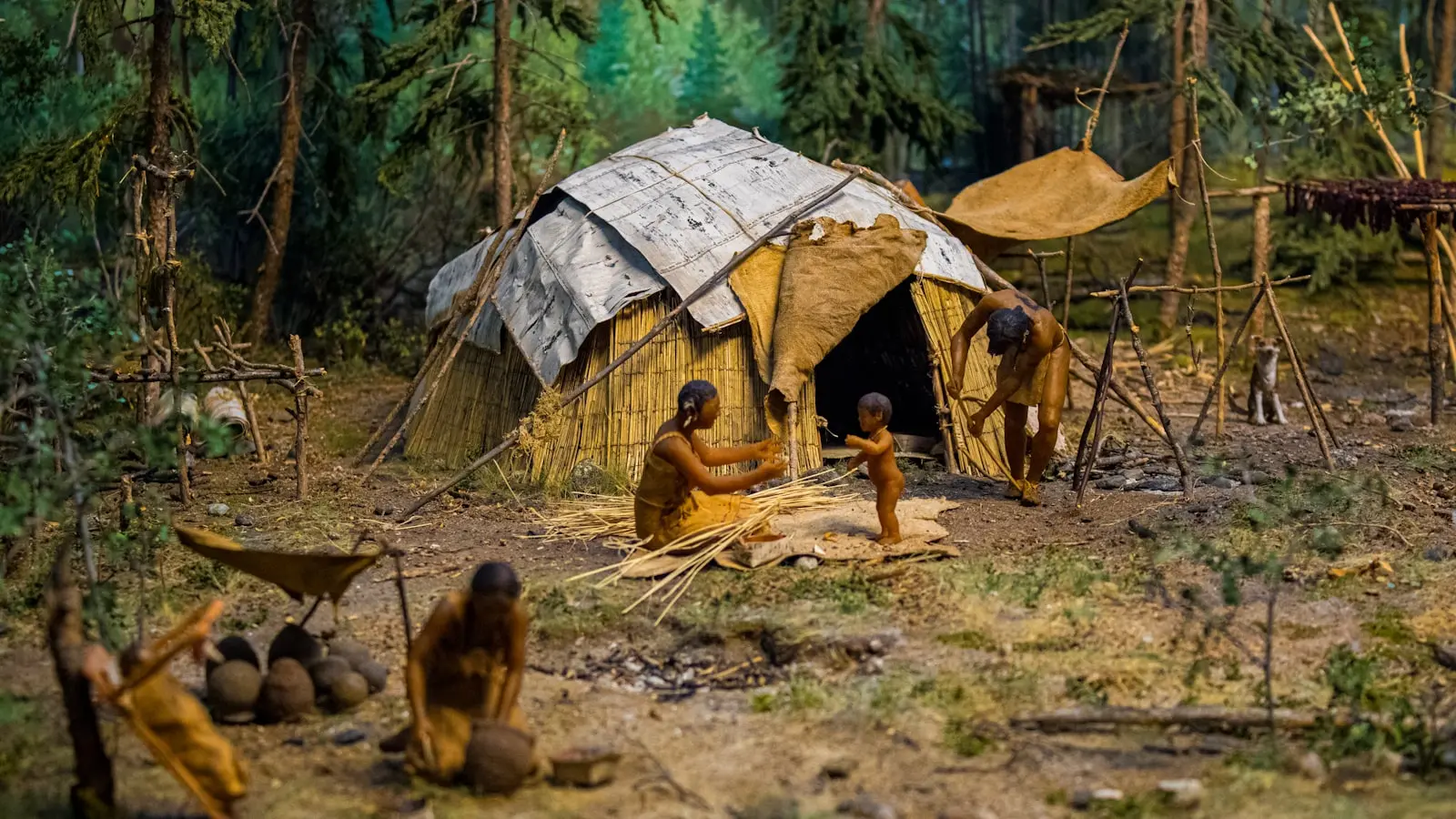

The human genome is a living archaeological record. Within the coils of our DNA lie the faint but persistent echoes of our deepest history—a story of migration, survival, and encounters with other hominins who walked the Earth long before us. For years, we have known that the DNA of most modern humans contains a small percentage of Neanderthal ancestry, the indelible mark of interbreeding events that occurred tens of thousands of years ago. But a new, high-resolution analysis of this genetic inheritance reveals a far more complex and strangely imbalanced story. The data now suggests these ancient unions were overwhelmingly one-sided, a persistent pattern of Neanderthal males pairing with Homo sapiens females that held true for over 200,000 years. The reasons remain shrouded in the prehistoric past, but the evidence is compelling. It forces a fundamental revision of how we imagine the social and biological landscape of our own origins.
The Neanderthal Genetic Mismatch
Research led by Alexander Platt at the University of Pennsylvania has uncovered a stark asymmetry in the genetic flow between our two species. Published in Science, the study examines what are known as “Neanderthal deserts”—vast regions within the modern human genome where Neanderthal gene variants, or alleles, are conspicuously absent. One of the largest and most consistent of these deserts is found on the X chromosome.
This is not a random occurrence. The X chromosome’s inheritance pattern provides a powerful tool for tracing lineage. Human females carry two X chromosomes (XX), while males carry one X and one Y (XY). A mother passes an X chromosome to all her children, but a father passes his X only to his daughters. The striking lack of Neanderthal DNA on the modern human X chromosome points to a strong reproductive filter. It suggests that pairings between Homo sapiens males and Neanderthal females produced few, if any, offspring who successfully integrated into the human gene pool over the long term.
To confirm this, the team inverted the analysis. They compared Neanderthal genomes against genetic data from sub-Saharan African populations that have no Neanderthal ancestry, allowing them to isolate ancient gene flow from anatomically modern humans (AMH) into the Neanderthal population. The results were revelatory. The Neanderthal X chromosomes showed a 62 percent relative excess of human DNA. While Neanderthal genes were being purged from our X chromosome, human genes were flooding theirs. It is a clear mirror image, a genetic imbalance that demands an explanation.
The researchers conclude this pattern was likely “colored by a persistent preference for pairings between males of predominantly Neanderthal ancestry and females of predominantly AMH ancestry.” This bias was not a fleeting event but a consistent dynamic across multiple admixture events separated by millennia. Why this occurred is a matter of intense scientific debate. The cause could be rooted in social structures or mate selection behaviors we can never fully reconstruct. (The dynamics of inter-species courtship are lost to time.) However, a more likely explanation lies in basic biology. The phenomenon, known as Haldane’s rule, posits that when two different species interbreed, if one sex of the hybrid offspring is sterile or inviable, it is most often the heterogametic sex—the one with two different sex chromosomes (XY in mammals). This suggests that male hybrids born to Neanderthal mothers and human fathers may have had low fertility or fitness, creating a biological dead end for that specific genetic exchange.
Cosmic Transition in the Large Magellanic Cloud
Shifting from the timescale of human evolution to the cosmic, astronomers are witnessing a different kind of transition—the violent, luminous death throes of a star. In the Large Magellanic Cloud, a satellite galaxy orbiting our own Milky Way some 163,000 light-years away, the star WOH G64 is undergoing a dramatic transformation. Once classified as an extreme red supergiant, it has now shifted its spectral signature to that of a yellow hypergiant.
This is not a minor change. WOH G64 is one of the largest stars known. If placed at the center of our solar system, its outer layers would extend to the orbit of Saturn. Such colossal stars burn through their fuel at an astonishing rate, living short and spectacular lives. In their final stages, they swell into red supergiants (RSGs), becoming unstable and shedding massive amounts of their own material into space. The transition to a yellow hypergiant is an exceptionally rare and brief phase of this process, a sign that the star’s internal structure is in turmoil.
A study published in Nature Astronomy by Gonzalo Muñoz-Sanchez and his team highlights the importance of this event. The final stages of massive stars are poorly understood, partly because they are often shrouded in the very dust and gas they eject. The apparent lack of luminous RSGs detected just before they explode as supernovae has created a “progenitor problem” in astrophysics. WOH G64 provides a live laboratory to study this critical phase, offering insights into post-RSG evolution and the formation of the dense circumstellar environments seen around core-collapse supernovae.
Its ultimate fate is uncertain. WOH G64 could be on the verge of detonating in a supernova explosion whose light would take 163,000 years to reach us. (It may have already happened.) Alternatively, it might be so massive that it will bypass the explosion altogether and collapse directly into a black hole. For now, telescopes remain fixed on it. It is a ticking clock on a cosmic scale.
An Evolutionary Loop in the Arctic
Back on Earth, another scientific discovery reveals a far quieter but equally profound survival strategy, one written not in the stars but in bone. Among all deer species, only in caribou (Rangifer tarandus) do females consistently grow and shed antlers. This biological anomaly has long puzzled ecologists. A study in Ecology and Evolution by Madison Gaetano provides a compelling answer: the antlers are a portable nutrient supplement, consumed after being shed.
The Arctic is a landscape of scarcity, where essential minerals like calcium and phosphorus are hard to come by. For a nursing mother, the metabolic cost of producing milk is immense, creating a severe calcium deficit. The solution, it appears, is an elegant evolutionary loop. Female caribou migrate to specific calving grounds, where they shed their bony antlers just days before or after giving birth. These shed antlers become a readily available, mineral-rich food source for the new mothers in the herd.
This behavior, known as osteophagy (bone-eating), allows them to reclaim the very nutrients they invested in growing the antlers months earlier. It is a system of profound biological efficiency, ensuring that mothers can support their calves’ survival in a harsh environment. The researchers note that pervasive antler consumption, synchronized with the birthing cycle, underscores the critical role of this nutrient transport system. Caribou also consume their own placentas. Nothing is wasted. It is a hardcore demonstration of how life adapts, turning parts of its own body into a life-support system for the next generation.
A New Predator Reshapes the Sahara’s Past
Finally, from the frozen north to the sands of the Sahara, a fossil discovery is reshaping our view of the age of dinosaurs. Paleontologist Paul C. Sereno and his team have identified a new species, Spinosaurus mirabilis, a giant carnivorous dinosaur distinguished by a massive, scimitar-shaped crest projecting from its skull. The find adds another chapter to the story of the spinosaurids, the largest terrestrial predators ever to live, eclipsing even the famed Tyrannosaurus rex.
The discovery, detailed in Science, places this remarkable animal in what was, 94 million years ago, a vast river system—a riparian habitat filled with long-necked dinosaurs and giant fish. S. mirabilis was not an apex predator in the traditional sense; evidence points to it being a semi-aquatic, wading hunter that preyed on the enormous aquatic life of the river delta. Its unique crest was not a weapon. It was almost certainly for visual display, a piece of biological ornamentation for species recognition or mate selection.
The new species helps chart the “stepwise spinosaurid radiation,” clarifying how this unique family of dinosaurs evolved and diversified across the globe. It reinforces the picture of a complex Cretaceous ecosystem where multiple giant predators coexisted by occupying different ecological niches. While one carnivore hunted on land, another patrolled the shorelines. The Sahara’s past was not a barren wasteland but a dynamic, competitive, and visually spectacular world. It serves as a reminder that even the most desolate landscapes of today hold records of a profoundly different, and often more vibrant, past.