
The first light of day filters into a quiet space. There is the low hum of an electric toothbrush, the satisfying weight of a dark glass serum bottle in the palm, the deliberate choice of a crisp, structured shirt hanging ready. This is not about vanity. It is about intention. The aesthetic landscape for men in 2026 is shaped less by the fleeting whims of the runway and more by the deliberate architecture of a considered life. It’s an emerging dialogue between internal values and their external expression, a landscape where design directly influences behavior and a shifting culture refines taste. The disparate trends—a return to tailoring, the rise of the grooming ritual, the seamless integration of wellness—are not separate phenomena. They are facets of a single, coherent movement toward a more substantive definition of modern masculinity.
The Wardrobe as Architecture
The most visible shift is happening in the closet, where structure and substance are reclaiming their primacy. The concept of the suit is being re-examined, not as a corporate uniform, but as a versatile tool for modern life. The focus is on softer silhouettes, unstructured blazers in breathable linen or textured hopsack, and wide-leg trousers cut from heavy wool that drape with an elegant, confident line. This is tailoring that moves with the body, not against it. It signals a departure from the restrictive codes of the past toward something more personal and fluid. (Thankfully, the days of the shrink-wrapped suit seem to be behind us.)
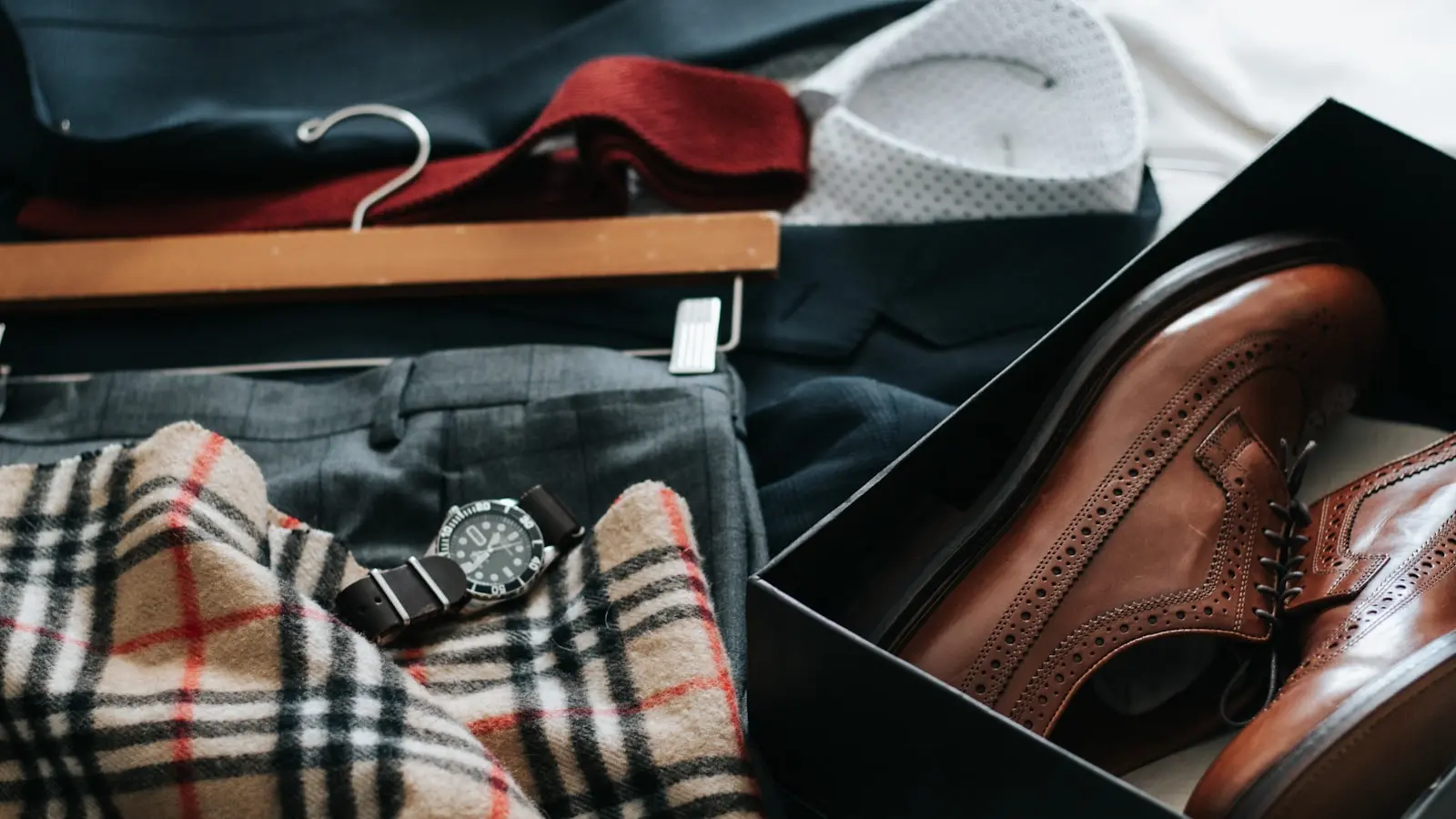
Underpinning this movement is the principle of investment dressing, a conscious rebellion against the disposability of fast fashion. The calculus is changing. Men, particularly from Millennial and Gen Z cohorts, are no longer just looking at the price tag; they are calculating the cost-per-wear. They are learning a lesson their grandfathers understood instinctively: a good coat should last a decade, not a season. A pair of well-made leather shoes should acquire a patina that tells a story, not fall apart after a few months. This is not about brand fetishism, but a renewed appreciation for craftsmanship, materiality, and longevity. The result is a wardrobe that is smaller, more versatile, and of significantly higher quality. Social media, once the engine of micro-trends, is now a platform for showcasing this minimalist ideal—a quiet flex that signals substance over spectacle.
This sartorial shift is a direct reflection of a broader search for stability and meaning in an uncertain world. When digital life is ephemeral and chaotic, the physical reality of a well-constructed garment provides an anchor. The weight of a heavy gauge knit or the smooth interior of a silk-lined jacket offers a tangible, grounding sensation. These are not just clothes; they are pieces of personal architecture.
The Modern Ritual of Grooming
The evolution extends from the closet to the bathroom cabinet, which now more closely resembles a chemist’s bench than a simple toiletry shelf. The splash-and-go morning routine is effectively dead, replaced by a multi-step ritual grounded in science and self-care. This is not a reluctant concession to anti-aging; it’s an active engagement with personal well-being. Terms like niacinamide, retinol, and hyaluronic acid have entered the male lexicon not as buzzwords but as functional ingredients. They are understood as tools for maintaining the health of the body’s largest organ.
The market has responded with an explosion of men’s skincare lines that prioritize efficacy, transparency, and sophisticated formulations. Industry analysts predict the men’s luxury grooming sector will surge past the $100 billion mark by 2028, a figure that speaks to a profound cultural change. This growth is not built on repackaging women’s products in darker bottles. It is driven by science-backed products designed specifically for male skin physiology. The ritual itself has become as important as the results. The few minutes spent each morning and evening applying a sequence of products is a moment of quiet focus, a deliberate act of control that bookends the day. It’s a meditative practice that prepares one for the pressures of the world or helps to wash them away. The design of these products reinforces the experience—minimalist packaging, subtle and earthy scents, and satisfying textures. It is a sensory experience designed to ground, not to announce.
Designing a Life, Not Just a Look
The most holistic trend is the complete erosion of the boundaries between different spheres of life, powered by a new philosophy of wellness. The distinction between workout clothes and daily wear has dissolved, but the resulting category is far more sophisticated than the simple athleisure of the past. This is life-wear: performance apparel designed for the seamless transitions of a modern day. Technical fabrics that manage moisture, regulate temperature, and offer four-way stretch are now being integrated into tailored trousers, overshirts, and commuter jackets. The design language is clean, architectural, and utilitarian, creating a wardrobe that supports a fluid existence. A man can move from a morning workout to a video conference to an evening out without a series of jarring changes. Design is shaping behavior by removing friction from daily life.
This wellness integration extends deep into the private sphere with the rise of recovery-focused loungewear. The old, worn-out sweats have been replaced by garments engineered for rest and recuperation. Cashmere-blend joggers, merino wool hoodies, and modal-cotton robes are not just comfortable; they are designed with materials that have tangible benefits for relaxation and recovery. (Is this just a clever way to sell more expensive sweatpants? Perhaps. But the intention and the quality feel fundamentally different.) This represents an understanding that rest is not a passive activity but an active and essential component of a high-functioning life. The home becomes a sanctuary, and the clothes worn within it are part of that restorative ecosystem.
Ultimately, all these threads weave together to redefine luxury for the modern man. In 2026, luxury is not about overt branding or conspicuous consumption. It is about the quiet confidence that comes from substance, craft, and time. It is the luxury of time saved by a curated wardrobe where every piece works in harmony. It is the luxury of physical comfort, of wearing a perfectly cut garment made from a superior material. And it is the luxury of self-knowledge, of investing in one’s own well-being with a discerning eye that prioritizes longevity over novelty. The cultural plates have shifted, revealing a version of masculinity that is less about rigid performance and more about considered, authentic self-expression.