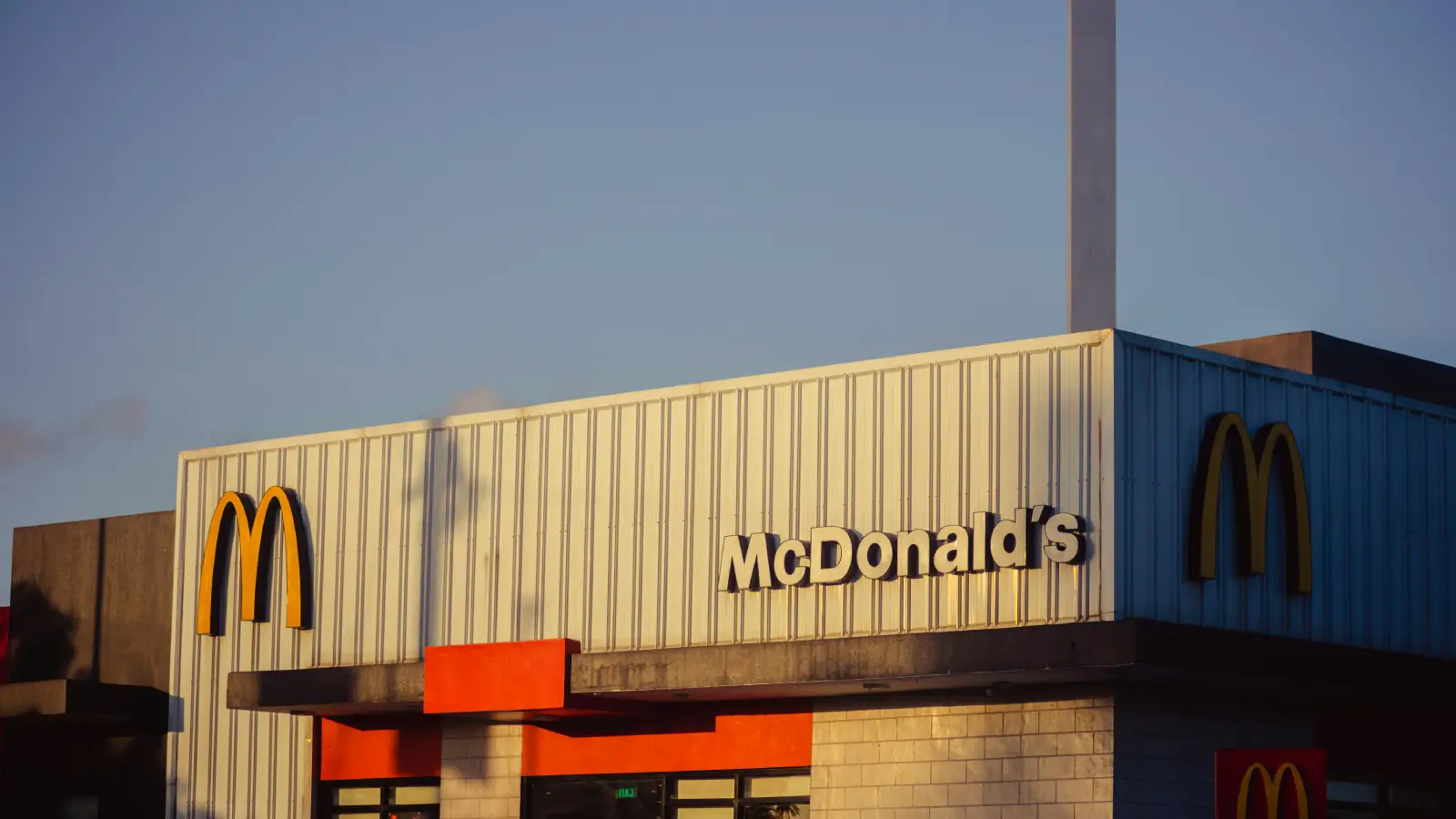

If you needed proof that the American consumer is feeling the pinch, look no further than the Golden Arches. On Wednesday, McDonald’s reported a 6.8 percent jump in U.S. same-store sales for the fourth quarter, a figure that defies the broader slowdown in the restaurant industry.
The driver? A strategic pivot back to the basics: value meals, and, surprisingly, 50 million pairs of Grinch-themed socks.
While competitors like Chipotle and Cava have seen their stocks slide over 30 percent in the last year, McDonald’s stock has climbed 4.7 percent to $324.91. But beneath the celebratory earnings call lies a brewing tension between the corporate office and the franchisees who operate 93 percent of the restaurants.
The “Value” Pivot
For the past two years, the narrative in the food/beverage sector has been about pricing power. Burgers, burritos, and wings got more expensive, and for a while, consumers paid up. That dynamic has shifted.
CEO Chris Kempczinski was blunt with Wall Street analysts: the lower-income consumer is under pressure.
“Industrywide, we’ve seen traffic hold up pretty well with upper-income consumers, but traffic has been pressured with lower-income consumers… We were pleased to see that we gained share with that low-income consumer in December.”
To capture this demographic, McDonald’s leaned heavily on the $5 Meal Deal (Sausage, Egg and Cheese McGriddle) and an $8 McNuggets bundle. It worked. The company successfully lured back the demographic that had started eating at home to save money.
The Grinch Effect
In what might be the oddest statistic of the quarter, McDonald’s executives noted that for a single week, the burger chain was the largest global seller of socks.
The limited-time Grinch meal deal, which included themed socks, sold out rapidly. “We sold about 50 million pairs globally across the first few days of the campaign,” Kempczinski noted. It’s a classic case of utilizing high-margin IP partnerships to drive foot traffic for lower-margin food items.
The Franchisee Squeeze
Here is where the outlook gets complicated. Offering discounted meals in an environment where beef and labor costs remain “stubbornly high” is expensive. To make the math work for franchise owners, McDonald’s corporate spent roughly $75 million in Q4 to subsidize these value deals.
That safety net is being pulled.
Ian Borden, the CFO, confirmed that while some limited support will continue through Q1 for cash-flow-negative restaurants, the broad subsidies are ending.
“We don’t subsidize pricing on a permanent basis,” Kempczinski said, describing the support as “timely, targeted and temporary.”
The corporate bet is that franchisees will see the volume benefits—consumers coming in for the $5 deal but adding high-margin fries or drinks—and continue the strategy voluntarily. However, with the subsidy gone, franchise owners are about to face a direct test of their margins in 2026.
For now, Wall Street is buying the story. Global revenue is up 10 percent to $7 billion, and net income rose 7 percent to $2.2 billion. But as the “subsidy training wheels” come off in April, we’ll see if the franchisees are as enthusiastic about the value menu as the shareholders are.