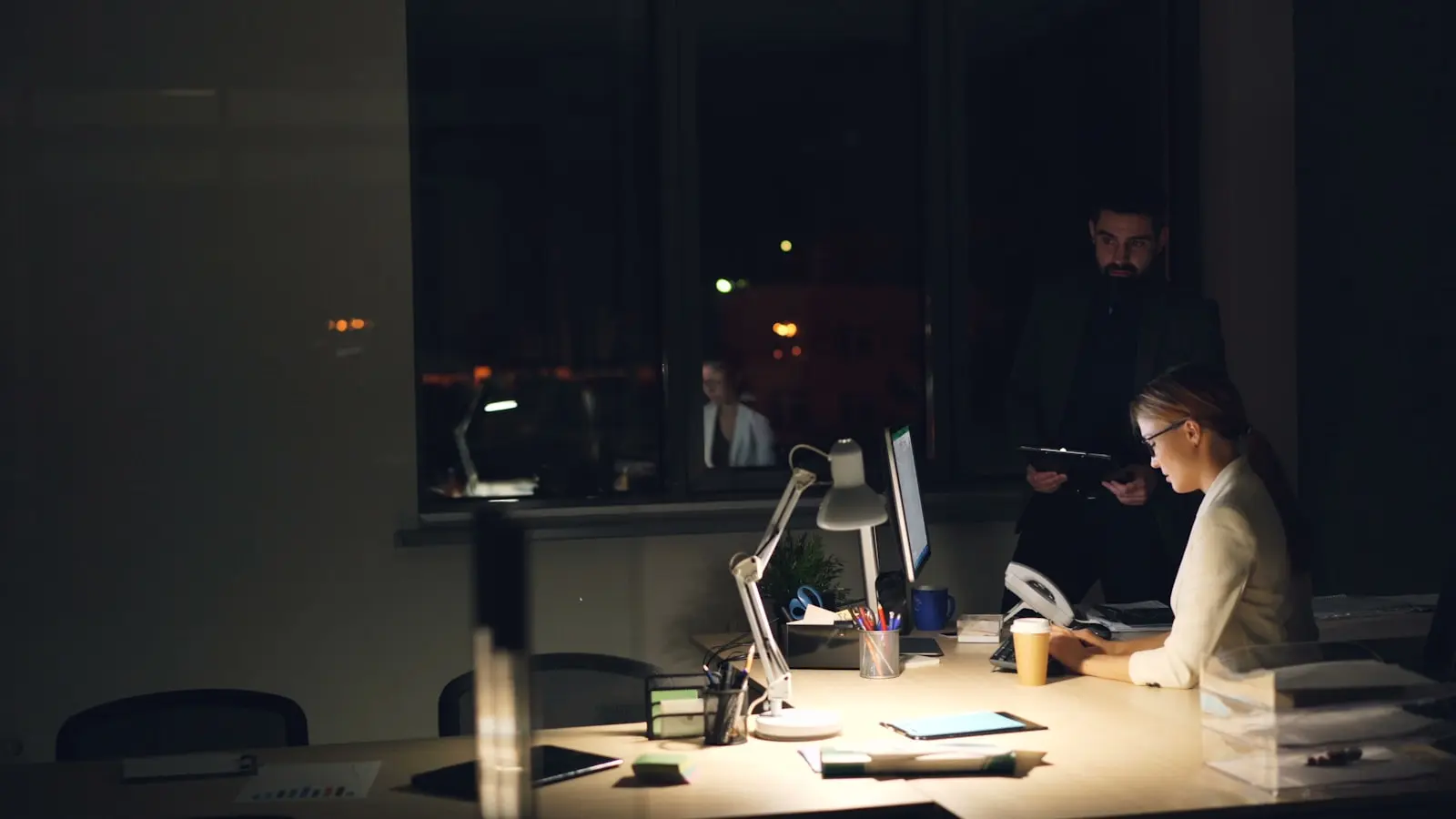

The Physiological Toll of Nocturnal Labor
Night shift work places the human visual system in a state of sustained, artificial demand. Unlike daylight labor, where natural light cues regulate ocular resting states, night shift work forces the eyes to remain locked in hyper-focus under high-intensity LED sources. This environmental mismatch frequently results in digital eye strain, characterized by blurred vision, headaches, and prolonged ocular irritation. (It is a predictable outcome for an evolutionary biology unsuited for 4:00 AM screen time.) According to data from the National Institute for Occupational Safety and Health (June 2024), the primary driver of this fatigue is the lack of ciliary muscle reset during extended periods of focal distance maintenance.
Implementing the 20-20-20 Rule
Ophthalmological consensus emphasizes that the most effective intervention remains the simplest: the 20-20-20 rule. The mechanism is straightforward. Every 20 minutes, an individual must shift their gaze to an object at least 20 feet away for 20 seconds. This brief interruption forces the ciliary muscles to relax, preventing the chronic spasm that leads to “locked-in” vision. (Frankly, adherence is the only variable that matters.) While digital pop-ups and reminders can assist, internalizing this habit is essential for long-term health.
Lighting Dynamics and Circadian Regulation
Managing ocular health during the night shift requires manipulating ambient light exposure to balance alertness with long-term visual comfort. Clinical guidance suggests a bifurcated approach to color temperature:
- Workspace Illumination: Maintain a color temperature of approximately 5000K to ensure high contrast and focus during active tasks.
- Break Area Optimization: Transition to roughly 3000K in rest zones. This lower color temperature reduces the suppression of melatonin, allowing the ocular system and the brain to achieve a minor restorative state during downtime.
Environmental Variables Beyond the Screen
While workers often focus on monitor brightness, the desiccating effect of climate-controlled office air is frequently underestimated. Recirculated air in modern facilities rapidly increases tear film evaporation, leading to chronic dry eye—a condition that exacerbates existing strain.
Hydration status serves as a foundational pillar for ocular surface integrity. When the systemic water level drops, the aqueous layer of the tear film thins. Simple hydration habits are not merely wellness advice; they are a mechanical necessity for eye health. (Thankfully, this requires no expensive equipment.)
The Role of Emerging Optical Technology
Technological interventions are gaining traction, particularly for those working in high-glare environments like laboratories. Wearable optical technology, including blue-blocking contact lenses and specialized coatings, serves to filter high-energy visible (HEV) light. While these tools provide a measurable reduction in glare-induced fatigue, they function as a secondary layer of protection.
| Strategy | Mechanism | Priority Level |
|---|---|---|
| 20-20-20 Rule | Ciliary muscle relaxation | Essential |
| Ambient Light Control | Melatonin/Contrast balance | High |
| Hydration | Tear film integrity | Essential |
| Blue-Blocking Optics | Glare reduction | Supplementary |
Conclusions on Sustainable Ocular Health
Evidence suggests that ocular comfort for shift workers is not a product of single-tool adoption, but a systems-based approach. The most successful strategies prioritize biological requirements—such as the resetting of eye muscles and the maintenance of the tear film—over passive reliance on secondary gear. As occupational demands increase, the integration of these evidence-based practices will differentiate those who sustain their visual acuity from those who succumb to preventable chronic irritation. (Logic, not miracle cures, remains the gold standard.)