
In February 1966, a Soviet robot the size of a beach ball did something no human-made object had ever done before: it bounced to a stop on the Moon and didn’t explode.
Luna 9 was a pivotal moment in history. It opened its petal-like covers, snapped the first-ever panorama from the lunar surface, and proved to terrified scientists that the moon was solid ground, not a layer of “quicksand” that would swallow spacecraft whole.
But after its batteries died, Luna 9 went silent. For six decades, it has sat somewhere in the Ocean of Storms, its precise location lost to history.
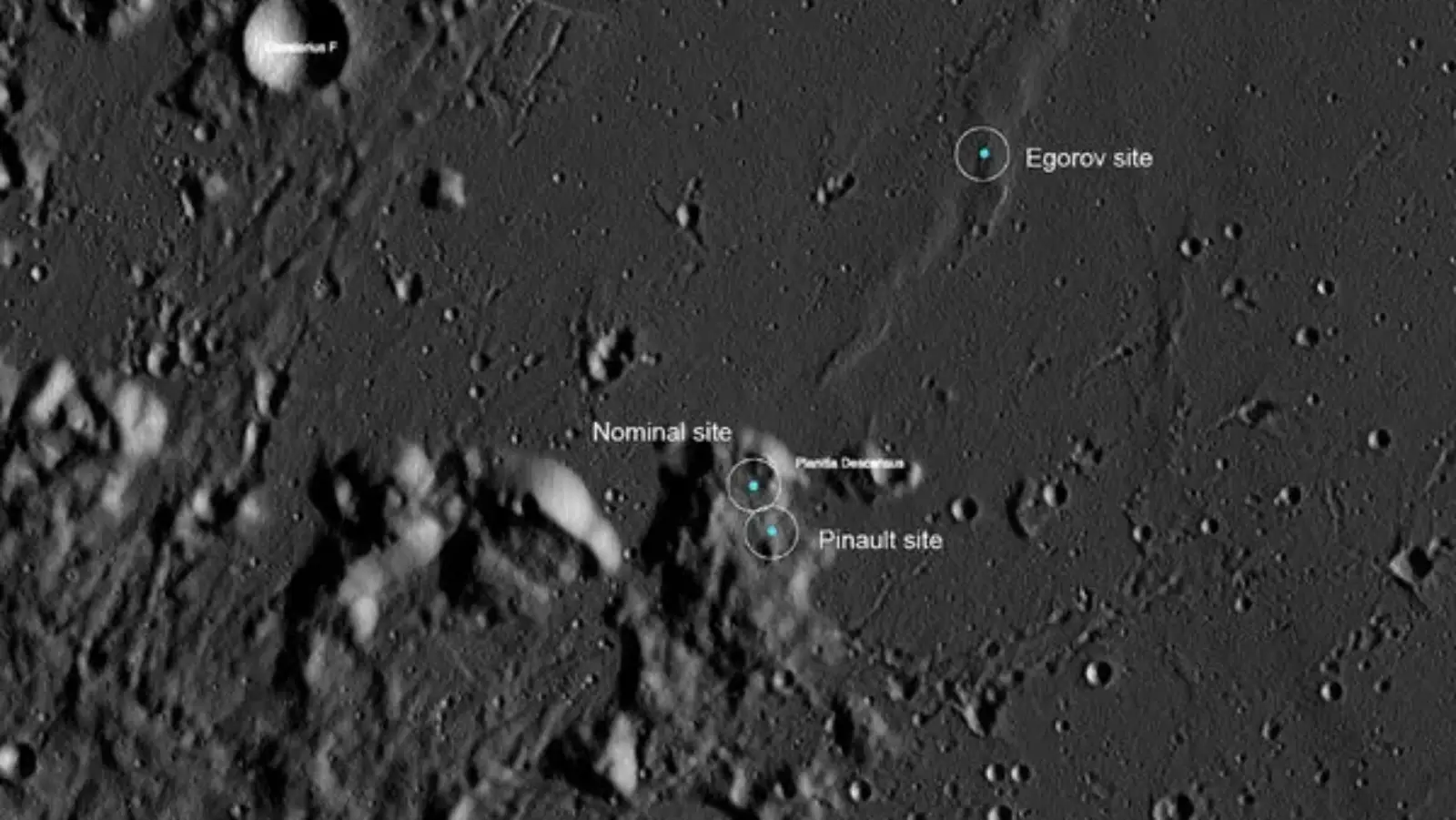
Now, two separate research teams believe they have found it. The problem? They point to two different spots.
The “Needle in a Haystack” Problem
“One of them is wrong,” says space journalist Anatoly Zak. And frankly, it’s easy to be wrong when you are looking for something this small.
The core of Luna 9 is only about two feet wide. From orbit, that is barely a pixel. Mark Robinson, the principal investigator for NASA’s Lunar Reconnaissance Orbiter (LROC), puts it bluntly: “You can stare at an image, and maybe that’s it, but you can’t really know for sure.”
Team 1: The Detective Work
The first claim comes from Vitaly Egorov, a science communicator who took an old-school approach. He used crowdsourcing to scour LROC data and then matched the horizon features from Luna 9’s original 1966 grainy photos with modern 3D orbital maps.
It’s like trying to find where a tourist stood 60 years ago by matching the mountain peaks in the background of their selfie. Egorov is “fairly confident” he found the spot where the jagged horizon lines up perfectly.
Team 2: The AI Hunter
The second claim comes from Lewis Pinault and a team at University College London. They didn’t use human eyes; they used a machine-learning algorithm called YOLO-ETA (You-Only-Look-Once–Extraterrestrial Artefact).
Trained to spot anomalies, the AI flagged a bright pixel paired with dark spots that could be the lander’s discarded airbag shell. Pinault admits it’s speculative but is optimistic they’ve found an “unknown artifact.”
The Verdict?
So far, independent experts are leaning slightly toward the human detective. Planetary scientist Jeffrey Plescia notes that Egorov’s horizon-matching makes a “good case.” However, without higher-resolution images, it’s impossible to confirm.
We may get an answer soon. India’s Chandrayaan-2 orbiter, which boasts a sharper camera than NASA’s LROC, is scheduled to image the target sites in March. Until then, the first emissary from Earth remains a ghost, waiting for us to remember where we left it.