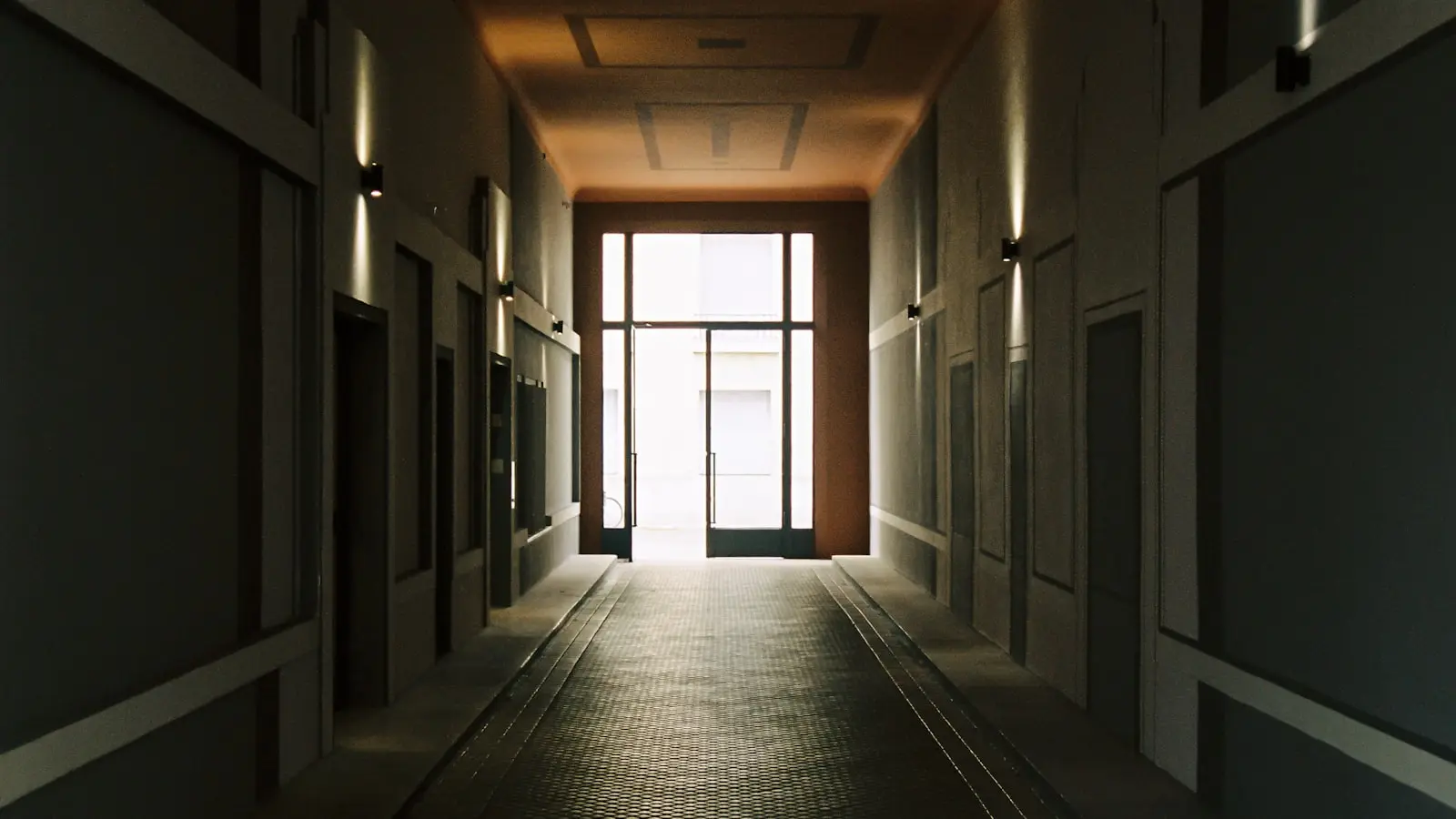
The Unexpected Unease of Transitional Spaces
The internet phenomenon known as the Backrooms—a fictional maze of yellow, fluorescent-lit office hallways—has tapped into a primal discomfort. This concept, often described as a liminal space, refers to environments that are transitional, in-between, or abandoned. Analysts report that these spaces evoke a distinct blend of nostalgia, anxiety, and disorientation. But why does a seemingly harmless empty corridor trigger such a visceral reaction? (The brain doesn’t handle ambiguity well.)
Psychologists studying spatial perception have identified a mechanism: the brain’s threat-detection system activates when environments violate learned expectations. An endless hallway with no clear purpose or endpoint signals unpredictability. In evolutionary terms, uncertainty about one’s surroundings could mean danger. The amygdala and insula ramp up arousal. (This is not a clinical diagnosis.)
The Psychological Circuitry of Unease
Research on the uncanny valley—the discomfort we feel toward nearly human but not quite human entities—extends to physical spaces. Liminal spaces share a similar quality: they are familiar yet wrong. A waiting room without people, a school corridor after hours, an airport terminal at night. These places lack the expected social context and functional cues. The brain encounters a mismatch between stored schemas (what an office should look like) and sensory input (empty, silent, infinite).
A 2017 study in Frontiers in Psychology examined how humans process empty rooms. Participants viewed images of cluttered versus bare interiors. Bare rooms with repetitive geometry (like the Backrooms) elicited higher physiological arousal and negative affect scores. The authors argued that such spaces trigger a “predictive coding” failure: the brain generates expectations of human activity or purpose, but the environment provides none. The resulting uncertainty demands cognitive resources (think of it as a mental red light flashing).
Why the Brain Misinterprets Empty Corridors
The Backrooms aesthetic—low-angle shots, yellow lighting, repetitive wallpaper—amplifies this effect. Fluorescent lighting lacks the warmth of natural light; it signals institutional or unnatural spaces. The absence of windows removes temporal anchors (day/night). The lack of doors or exits removes escape routes. Altogether, the brain registers a potential threat (a place where you might get lost, trapped, or attacked).
Clinicians on Reddit have noted that individuals with anxiety disorders—particularly agoraphobia or panic disorder—report heightened distress when viewing such images. Yet even neurotypical individuals experience a low-grade unease. This is not pathological; it is an adaptive response to ambiguous environments. However, for some, exposure can trigger genuine panic attacks. (One user described feeling “a sinking dread” that lasted hours.)
Liminal Space Anxiety Versus Clinical Disorders
It is important to distinguish between the aesthetic appreciation of liminal spaces and a clinical reaction. Many people find these images strangely calming or meditative. The absence of social pressure can be soothing. Yet others cannot tolerate the perceptual dissonance. Mental health professionals emphasize that this is not a disorder. (We do not need another label for normal human variation.)
Still, the overlap with sensory deprivation responses is worth noting. Prolonged exposure to monotonous visual input can induce hallucinations or dissociation in sensitive individuals. Studies of confinement—such as isolation tank experiments—show that the brain craves variability. Liminal spaces strip away that variability. The result can be a disorienting mix of boredom and vigilance, similar to the experience of waiting in an airport for a delayed flight (only magnified).
Practical Considerations for Sensitive Individuals
If you find that images of endless hallways or abandoned buildings trigger significant anxiety, you are not alone. The reaction is rooted in the brain’s threat-detection systems. Acknowledging the mechanism—understanding that your amygdala is reacting to ambiguity—can reduce secondary distress. (The feeling is not a sign of weakness.)
For those who enjoy the aesthetic, there is no harm in exploring it. The internet has created communities around liminal photography, and the emotional response can be a form of safe exposure that helps individuals build tolerance to mild uncertainty. However, if the anxiety becomes intrusive or interrupts daily functioning, consider limiting exposure and consulting a professional. Cognitive-behavioral techniques can help reframe the interpretation of such spaces (e.g., “This is just a photo, not a real threat”).
The Bottom Line: Signal, Not Pathology
The phenomenon of liminal spaces and the Backrooms myth provides a fascinating window into how the brain constructs reality. The unease you feel is not a bug; it is a feature of a well-functioning threat-detection system. The environment violates expectations, and the mind raises an alarm. (Thankfully, the alarm is usually false.)
Evidence before enthusiasm: no one should pathologize a normal cognitive response. Yet the widespread resonance of the Backrooms concept suggests that many people share this sensitivity. Understanding the mechanism—predictive coding, amygdala activation, schema mismatch—gives us a clear lens to separate genuine discomfort from the fear of discomfort itself. The next time you see an empty corridor bathed in yellow light, you will know exactly why your pulse quickens. The brain is doing its job. The trick is to remember that you are not actually in that corridor.