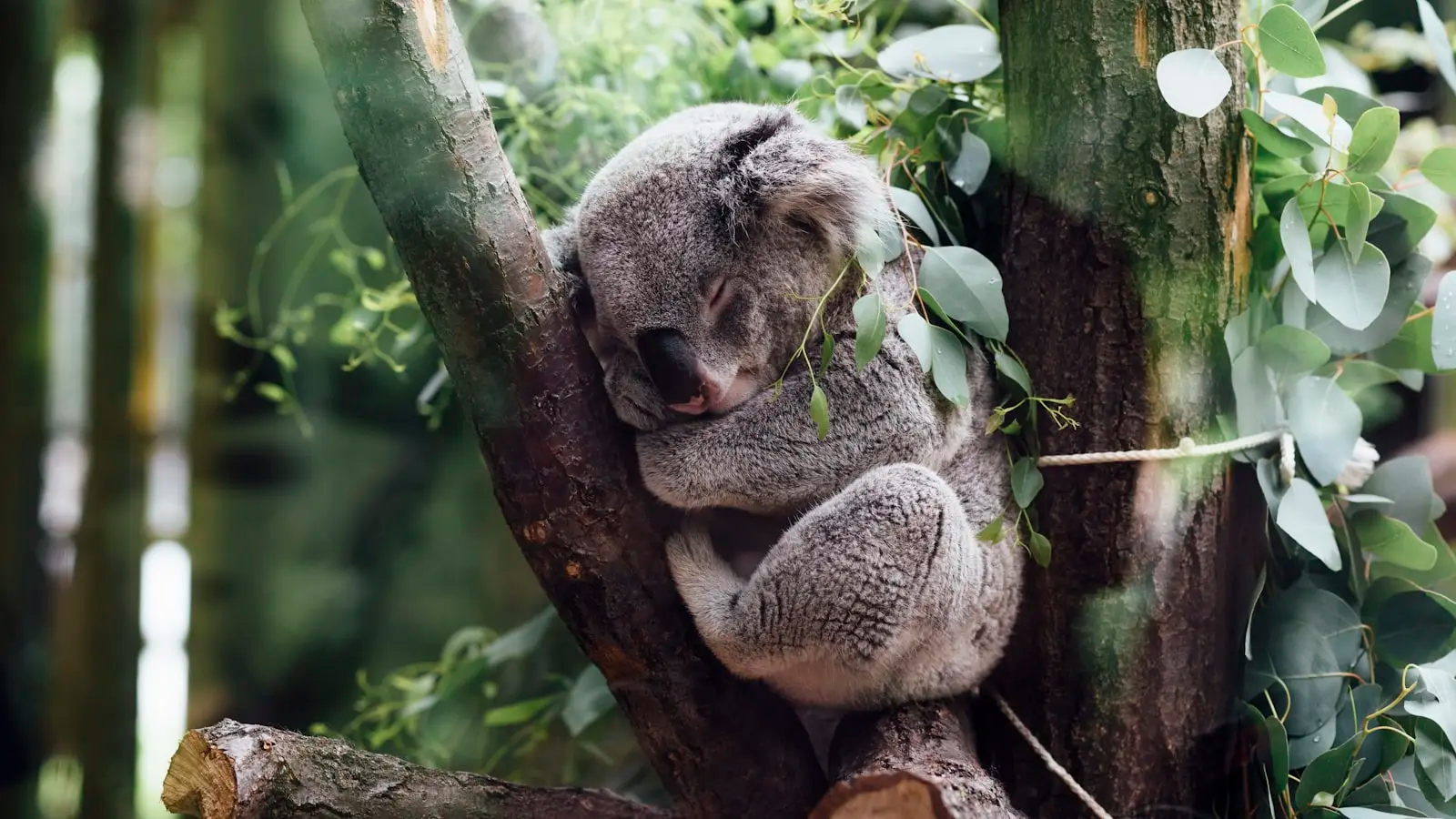

The genetic code of the koala, an animal pushed to the very edge of viability by fire, disease, and human encroachment, is telling an unexpected story of resilience. For years, the narrative has been one of irreversible decline. A catastrophic population crash funneled the species through a severe genetic bottleneck, leaving the survivors with a dangerously shallow pool of DNA—a biological library with most of its books burned. The scientific consensus pointed toward a future where koalas lacked the adaptive toolkit to face new threats. But new genomic research is challenging that grim prognosis, revealing that deep within their cells, a powerful evolutionary rebound is already underway.
Scientists analyzing the DNA of koala populations across southeastern Australia have uncovered compelling evidence that the species is not just passively recovering its numbers, but actively rebuilding its genetic diversity. The research confirms the bottleneck’s devastating impact; the genetic impoverishment is real and measurable. Yet, counteracting this loss are the relentless forces of natural selection and the unintended consequences of disaster. The koala genome is not a static relic of a bygone era. It is a dynamic battleground where survival pressures are actively culling weaker traits and promoting robust ones, rewriting the koala’s future one generation at a time.
The context for this discovery is a relentless multi-front assault on the species. Decades of habitat destruction for agriculture and urban sprawl fragmented koala populations into isolated pockets, starving them of the genetic exchange necessary for long-term health. On top of this, a debilitating chlamydia epidemic has swept through populations, causing infertility and death. Then came the Black Summer of 2019-2020. The bushfires were an accelerant on an already smoldering crisis, an event of apocalyptic scale that killed or displaced an estimated 60,000 koalas, vaporizing entire habitats and pushing the species into an official “endangered” status in key regions.
A Bottleneck and a Rebound
A genetic bottleneck occurs when a population is drastically reduced, and the few survivors carry only a fraction of the original genetic variation. Imagine a vast, diverse library of millions of books suddenly burning down, with only a few thousand random volumes saved. The new library built from those survivors would be a pale imitation, lacking the breadth of knowledge and ideas of the original. For a species, this genetic impoverishment is perilous. It limits the ability to adapt to changing environments, new diseases, or shifting food sources. The fear was that the koalas who survived the fires and disease were so genetically similar that the species as a whole had lost its evolutionary agility.
The new study, however, looked closer. Using advanced genomic sequencing, researchers mapped the DNA of koalas from different regions, comparing modern populations to historical samples. The signature of the bottleneck was clear, but so was something else. Natural selection had been working with ruthless efficiency. The data showed strong selection pressure on genes associated with the immune system, particularly those involved in fighting chlamydia. In this harsh new environment, koalas with even slightly superior immune responses were more likely to survive, reproduce, and pass on those advantageous genes. It is a brutal form of evolutionary accounting, where the immense pressure of disease is inadvertently forging a more resilient population.
Even more surprising was the role of habitat fragmentation and destruction. The very fires that decimated populations also broke down the invisible walls separating isolated groups. As koalas fled their incinerated homes in search of new territory and resources, previously disconnected populations began to mix. This intermingling, a direct result of tragedy, has acted as a crucial injection of fresh genetic material. Genes that were once confined to a single, small group are now spreading through a wider population, introducing new variations and expanding the koala’s adaptive toolkit. (The very disasters that nearly wiped them out may have seeded their recovery).
The Blueprint for Conservation
These findings are far from a declaration of victory. They are, as conservation biologists note, a source of cautious optimism and, more importantly, a new blueprint for action. The research provides a clear scientific mandate for one of the most critical conservation strategies: habitat connectivity. Protecting isolated patches of forest is no longer enough. The long-term survival of the koala depends on building and maintaining “genetic corridors”—safe passages of land that allow koalas to move between territories. These corridors are the physical infrastructure that enables the genetic mixing the study found to be so vital.
This new understanding also recalibrates the focus of captive breeding programs. For years, the goal was simple multiplication. Now, the objective becomes more complex. It’s not just about producing more koalas; it’s about producing genetically diverse koalas. Genomic analysis can now guide conservationists to pair specific individuals to maximize the genetic variation of their offspring, ensuring that any koalas reintroduced to the wild carry the most robust and diverse genetic legacy possible. (A more complex, but necessary, calculus).
The analysis also identified selection pressure on other crucial traits. Scientists found evidence of selection on genes related to heat tolerance—an essential adaptation on a continent heating faster than the global average. They also saw shifts in genes linked to dietary adaptation, suggesting koalas may be slowly evolving to subsist on different species of eucalyptus as their primary food sources become less reliable due to drought and habitat change. This demonstrates that the koala is not a static creature waiting for extinction, but an adaptable species responding to immense environmental pressure at the most fundamental, molecular level.
The Race Against Time
Ultimately, the koala’s genetic rebound is a testament to the power of evolution, but it is not a solution in itself. The process of rebuilding genetic diversity is slow, unfolding over many koala generations. Meanwhile, the threats they face are accelerating. Climate change promises more frequent and intense bushfires and droughts. Deforestation for housing and industry continues to shrink their available habitat. The koala’s innate resilience has bought humanity time, but it is a finite resource.
The discovery that the species is fighting back from within its own DNA does not absolve us of responsibility; it heightens it. We now have a clearer understanding of the mechanisms of their survival and a scientifically-backed path forward. The challenge is to act decisively enough to ensure that the koala’s remarkable evolutionary comeback is not cut short by our own inaction. The koala genome is rewriting its survival story, but we are the ones who will ultimately determine how it ends.