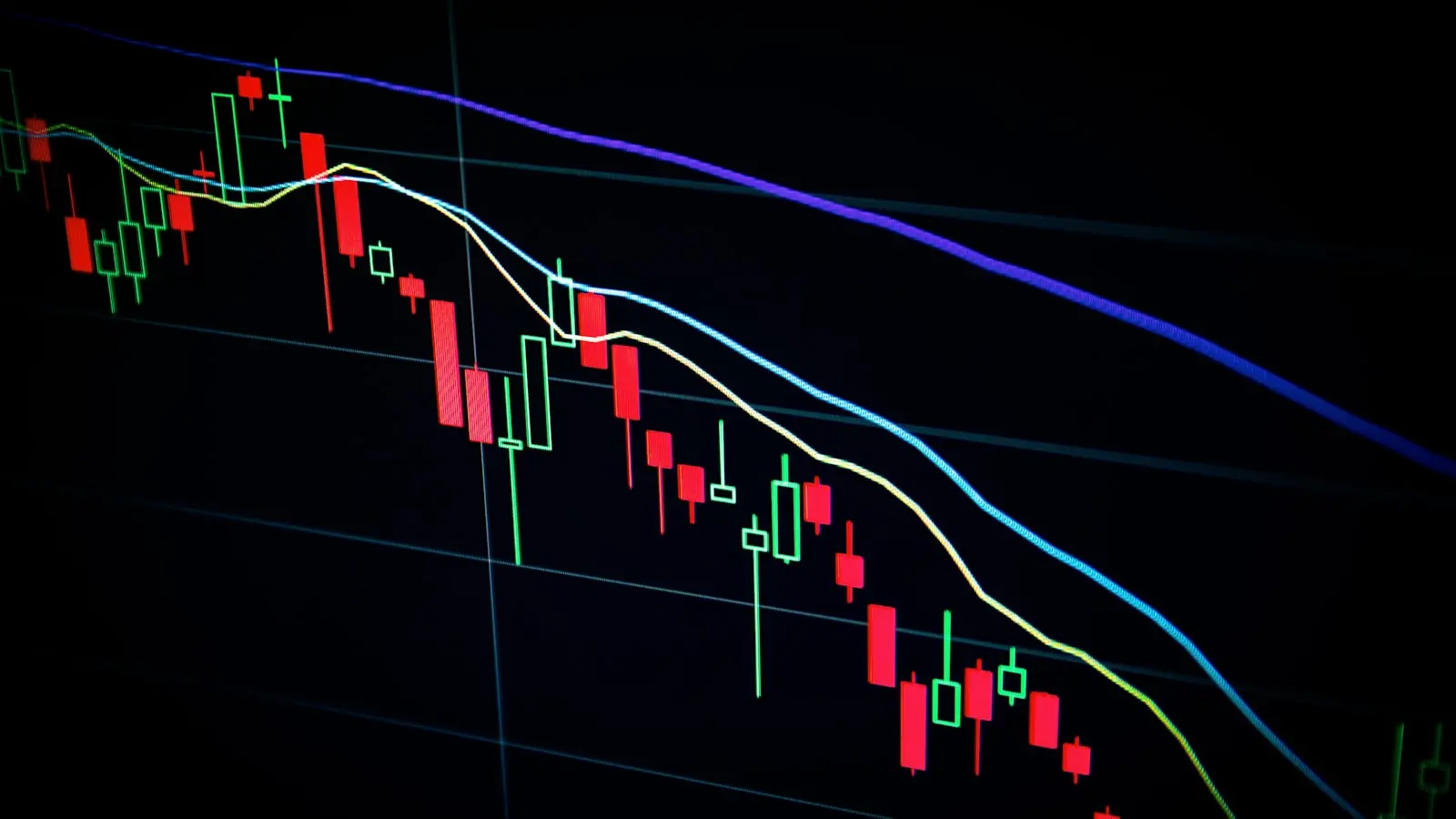

A precision strike has rewritten the global energy map. On March 14, 2026, the United States military executed targeted attacks against military installations on Iran’s Kharg Island, a critical node in the global oil supply chain. The immediate market response was not panic, but a cold, calculated repricing of geopolitical risk. The move, confirmed by US Central Command as hitting over 90 Iranian military objectives, followed warnings from President Trump that oil facilities were viable targets should Iran continue its disruption of maritime traffic in the Strait of Hormuz.
The numbers paint a stark picture of the fallout. Crude oil benchmarks surged over 40% since the conflict began, pushing prices perilously close to the psychological and economic threshold of $100 per barrel. This is the most significant geopolitical oil shock since the events of 2022. Equity markets registered the pressure immediately, with the S&P 500 hitting its lowest level of 2026 as investors fled risk assets for perceived safe havens. The Pentagon’s deployment of an additional 2,500 Marines to the Middle East signals that this is not a short-term diplomatic spat; it is a structural shift in regional military posture.
This escalation did not occur in a vacuum. It follows a pattern of increasing friction, including an Iran-backed militia attack on the US Embassy in Baghdad. For its part, Tehran has threatened swift retaliation against any US-linked oil facilities in the region, promising a symmetric response. The market now finds itself caught between direct military action and the credible threat of a wider, asymmetric conflict targeting the fragile infrastructure of global energy production. This is no longer a theoretical risk.
The Mechanics of a Critical Supply Shock
Kharg Island is not merely an island; it is the primary artery for Iran’s economic lifeblood. Approximately 90% of the nation’s crude oil exports are processed through and shipped from its terminals. Taking these facilities offline, even partially, removes a significant volume of crude from an already tight global market. While the US strikes were officially aimed at military targets, the proximity to irreplaceable energy infrastructure has the same practical effect as a direct attack on the terminals themselves. The risk premium on every barrel of oil has expanded overnight.
To materialize this, consider Iran’s typical export capacity. Removing millions of barrels per day from the global ledger creates a supply deficit that cannot be instantly filled. OPEC+ emergency meetings are reportedly being discussed, but the cartel’s spare capacity has been a subject of intense debate. It is uncertain whether members like Saudi Arabia or the UAE have the immediate ability, or political will, to ramp up production sufficiently to calm the market. Their decision-making process will now be weighed against the direct threat of Iranian retaliation on their own production facilities. The incentive structure has been fundamentally altered.
This is a logistics and infrastructure crisis as much as a political one. The global tanker fleet, insurance underwriters, and commodity trading houses must now account for active military conflict in a vital shipping lane. War risk insurance premiums will skyrocket, adding further cost to every shipment that traverses the Strait of Hormuz. The physical flow of capital and crude is slowing down precisely when the market needs it most. (This is how recessions begin).
Financial Market Contagion Beyond Crude
The red ink on the S&P 500 is a direct consequence of the physics of energy. Higher oil prices are not just a problem for consumers at the pump; they are a tax on the entire global economy. For corporations, elevated energy costs compress profit margins, particularly in transport-heavy sectors like aviation, logistics, and manufacturing. Airlines face the dual threat of soaring fuel costs and decreased travel demand as consumers pull back spending in the face of economic uncertainty.
The market’s reaction also reveals a clear rotation of capital. While broad indices fell, capital flowed predictably into the defense sector. Analysts at Citigroup, for instance, maintained their “buy” ratings on major defense contractors, a reflection of the market’s expectation that the conflict will drive government spending and weapons orders. This is the cold calculus of conflict-driven economics. Capital follows the kinetic events. Meanwhile, investors are pricing in a higher probability of demand destruction, the economic term for a recession severe enough to reduce energy consumption.
The core problem is inflation. A sustained period of oil prices above $100 per barrel forces central banks into an impossible position. The US Federal Reserve and the European Central Bank are already grappling with persistent inflation. A supply-side oil shock pours fuel on that fire, forcing them to choose between fighting inflation with higher interest rates (and likely triggering a recession) or allowing inflation to run hot to support a fragile economy. There is no clean exit. The risk of a policy error is now extraordinarily high.
The Geopolitical Chessboard and Escalation Scenarios
President Trump’s demand that other nations contribute to securing the Strait of Hormuz is a clear signal that the United States is attempting to multilateralize the conflict’s financial and military burdens. However, international appetite for involvement may be limited, given the direct economic consequences. Major importers of Middle Eastern oil, particularly in Asia, face a severe economic threat but may be hesitant to engage in military operations that could provoke direct retaliation from Iran.
The threat of asymmetric warfare is the largest unknown. Iran’s capacity to disrupt oil facilities throughout the Gulf—whether through drone strikes, missile attacks, or naval mines—means that the conflict is unlikely to remain contained to Kharg Island. Every oil terminal, pipeline, and tanker in the region is now a potential target. This uncertainty keeps traders on edge and will keep a significant risk premium embedded in the price of crude for the foreseeable future.
The deployment of additional Marines serves two purposes. First, it reinforces US assets and personnel in the region, particularly in Iraq and the Gulf states. Second, it is a deliberate signal to Tehran of American resolve and readiness to escalate further if necessary. The market is watching these troop movements as closely as it watches oil inventories. Each deployment is a data point indicating a lower probability of a swift de-escalation.
Outlook and Key Variables to Monitor
Economists have been clear in their warnings: a sustained period of crude oil prices above the $100 mark significantly increases the probability of a global recession. The current trajectory points directly toward that outcome unless a powerful countervailing force emerges. The path forward will be dictated by three critical variables.
-
Diplomatic Off-Ramps: The first and most crucial variable is the potential for de-escalation through back-channel diplomacy. While public rhetoric remains hostile, the economic cost of a full-blown regional war is catastrophic for all parties involved, including the United States during an election year. Observers will be watching for any signs of quiet negotiations or third-party mediation. (Frankly, the odds appear low).
-
OPEC+ Response: The outcome of any emergency OPEC+ meeting will be pivotal. A coordinated and significant increase in production could provide a temporary ceiling for prices. However, if the cartel’s response is muted, or if it reveals less spare capacity than the market hopes for, it could trigger another upward leg in oil prices.
-
Strategic Petroleum Reserves (SPR): Major consuming nations, led by the United States, have the ability to release strategic reserves to buffer the market from the initial shock. While not a long-term solution, a large, coordinated SPR release could break the market’s upward momentum and provide time for diplomatic or supply-side solutions to materialize. The size and timing of such a release will be a key policy signal.
For now, the market is operating in an environment of extreme uncertainty. The attack on Kharg Island was not an isolated incident but the beginning of a new, more volatile chapter in the global energy market. The core assumption of stable supply from the Middle East has been broken. The price of that break is now being discovered on trading screens worldwide.