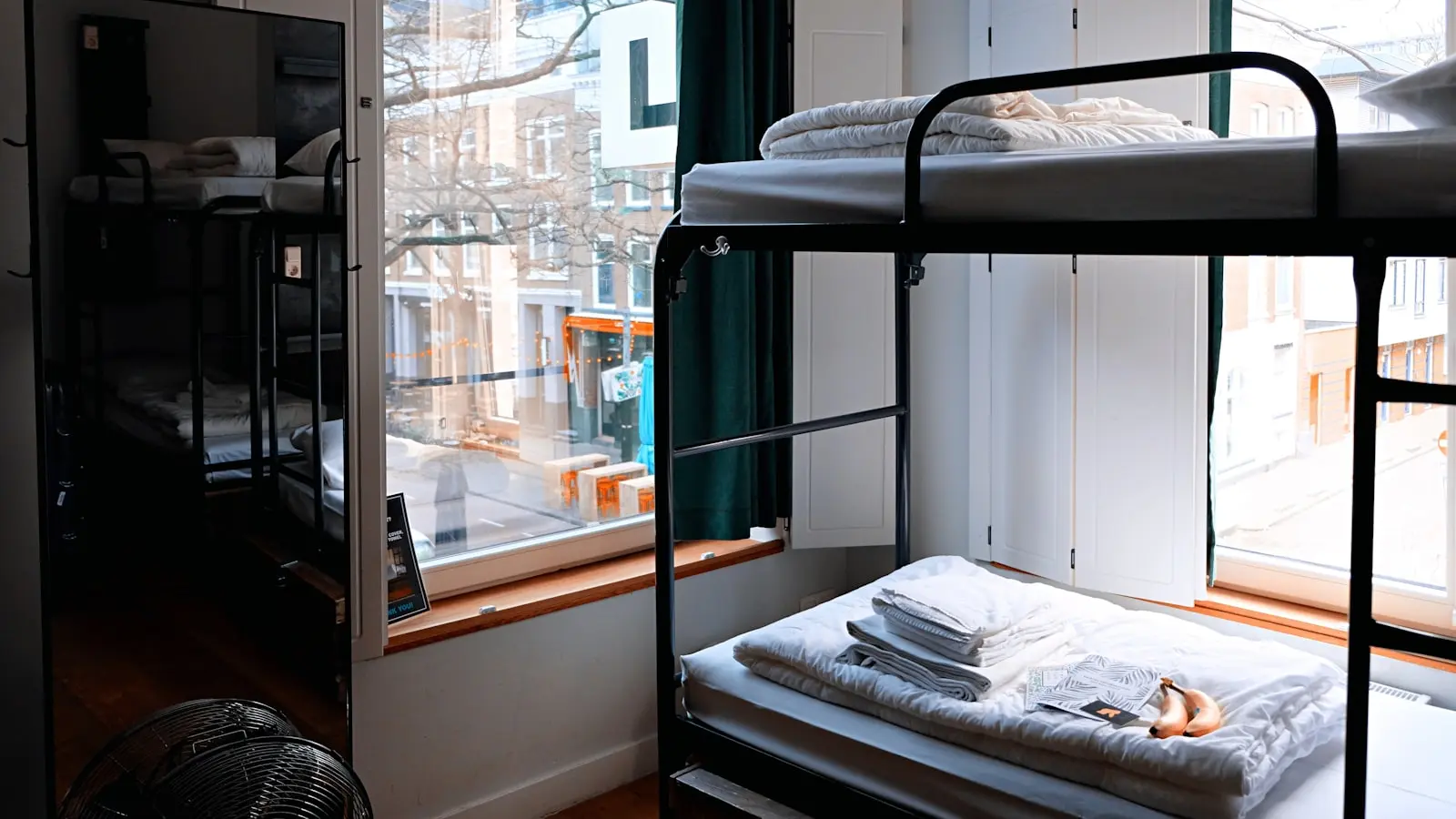
A recent Reddit challenge documented two weeks of buying the cheapest daily flight and staying in hostels. The experiment, while extreme, amplified a common traveler complaint: poor sleep in shared hostel accommodations. Noise from other guests, thin mattresses, and minimal privacy are not mere inconveniences. They disrupt the fundamental biological process of sleep. For the budget traveler, the question becomes whether adequate rest is achievable without upgrading to a private room.
The Evidence Behind Sleep Disruption in Hostels
Complaints cataloged across r/solotravel and r/backpacking reveal consistent themes. Auditory intrusions from snoring, late arrivals, and early departures fragment sleep architecture. Research on sleep continuity shows that frequent micro-awakenings—even without full consciousness—impair slow-wave and REM sleep. Thin polyurethane foam mattresses, often compressed to save space, fail to provide proper spinal alignment. A 2018 study in the Journal of Chiropractic Medicine found that mattress firmness significantly affects subjective sleep quality and morning pain. The lack of visual barriers increases cortisol levels due to perceived lack of security. Cortisol elevation before bedtime delays sleep onset and reduces sleep efficiency. These factors collectively raise the risk of sleep deprivation, which can impair cognitive function, mood, and immune response—undermining the very purpose of travel.
Practical Solutions Grounded in Research
Noise Mitigation
Noise-cancelling earplugs are the most cited intervention. The mechanism is straightforward: they reduce the amplitude of transient sounds that trigger neurophysiological arousal. Active noise cancellation (ANC) earplugs perform better than passive foam types because they attenuate low-frequency noise—common in hostel environments (e.g., HVAC hum, footsteps). A 2020 review in Noise & Health confirmed that earplugs improve subjective sleep quality in noisy environments. However, users must ensure proper insertion; even a 5 dB leak reduces efficacy. Pairing earplugs with a white noise app on a phone placed under the pillow creates a consistent auditory background, masking irregular sounds.
Light Management
Silk sleep masks offer multiple advantages: they block 100% of light, reduce pressure on the eyes, and wick moisture. Light exposure, especially blue light, suppresses melatonin production. A study in the Journal of Clinical Endocrinology & Metabolism demonstrated that even dim light before bedtime delays the circadian phase. In hostels with erratic lighting schedules (lights on at 2 AM for a late check-in), a quality mask maintains darkness. Travelers should test the mask at home to ensure comfort and fit.
Mattress and Bedding Adjustments
Thin mattresses are a persistent problem. Solutions include portable mattress toppers (though bulky) or using a sleeping bag liner for extra cushioning. More practically, requesting a bottom bunk reduces vibration from upper bunk movement. Some hostels now offer mattress toppers upon request. The most evidence-supported strategy is to book a hostel that explicitly states mattress thickness or uses memory foam toppers. Review analysis on Hostelworld shows that listings mentioning “thick mattress” receive higher sleep ratings.
Social Environment and Regulations
Hostels with dedicated quiet hours enforce a norm that reduces noise after a certain time. The key is enforcement: guests who violate quiet hours should be warned or moved. Some hostels use noise monitors or employ night staff. Travelers should prioritize hostels that list quiet hours in their house rules. Additionally, dorms with four beds or fewer produce fewer disturbances than larger dorms. Studies on shared sleeping spaces indicate that group size directly correlates with arousal events.
The Private Room Option
Booking a private room is the most reliable solution, but it contradicts the budget hostel premise. The economics, however, favor the private room for those who value sleep. A private room in a good hostel costs 2–3 times a dorm bed, but the cost of sleep deprivation—missed excursions, poor decision-making, illness—can exceed that difference. Travelers on long trips should consider mixing dorm and private stays: private rooms on arrival and departure nights to combat jet lag, and dorm beds in between if the hostel meets sleep quality criteria.
Hostel Selection Criteria for Sleep Quality
Reviews are the first line of defense. Travelers should search for keywords: “quiet,” “no noise,” “good sleep,” “thick mattress,” “blackout curtains.” A hostel with more than 20% recent reviews complaining about sleep should be avoided. Physical attributes matter: dorms located away from common areas, with solid doors (not hollow-core), and windows that close fully. Air conditioning reduces ambient noise from open windows. Some new hostels are designed with sleep pods that provide partial soundproofing and privacy.
The True Cost of Poor Sleep on Travel
Sleep deprivation is not just about feeling tired. It impairs memory consolidation, reduces immune function, and increases irritability—factors that directly affect travel enjoyment. A study in Nature Communications found that even one night of poor sleep reduces next-day cognitive performance by 20–40%. For solo travelers, this can mean missing a connection, making a poor financial decision, or getting lost in an unsafe area. The literal cost of upgrading to a private room or buying quality earplugs is negligible compared to the risk of a ruined trip.
Conclusion: Balancing Budget and Biology
The evidence is clear: sleep quality in shared hostel dorms is compromised by multiple factors. But with deliberate planning—noselection of earplugs, sleep mask, hostel reviews, and occasional private room bookings—adequate sleep is achievable. The traveler must treat sleep as a non-negotiable component of the trip, not an afterthought. The Reddit challenge highlighted the worst-case scenario: cheap flights and hostels without safeguards. A smarter approach integrates the science of sleep into the budget travel equation. It is possible to sleep well, but it requires effort and investment. The alternative is a vacation that leaves you more exhausted than when you left home.