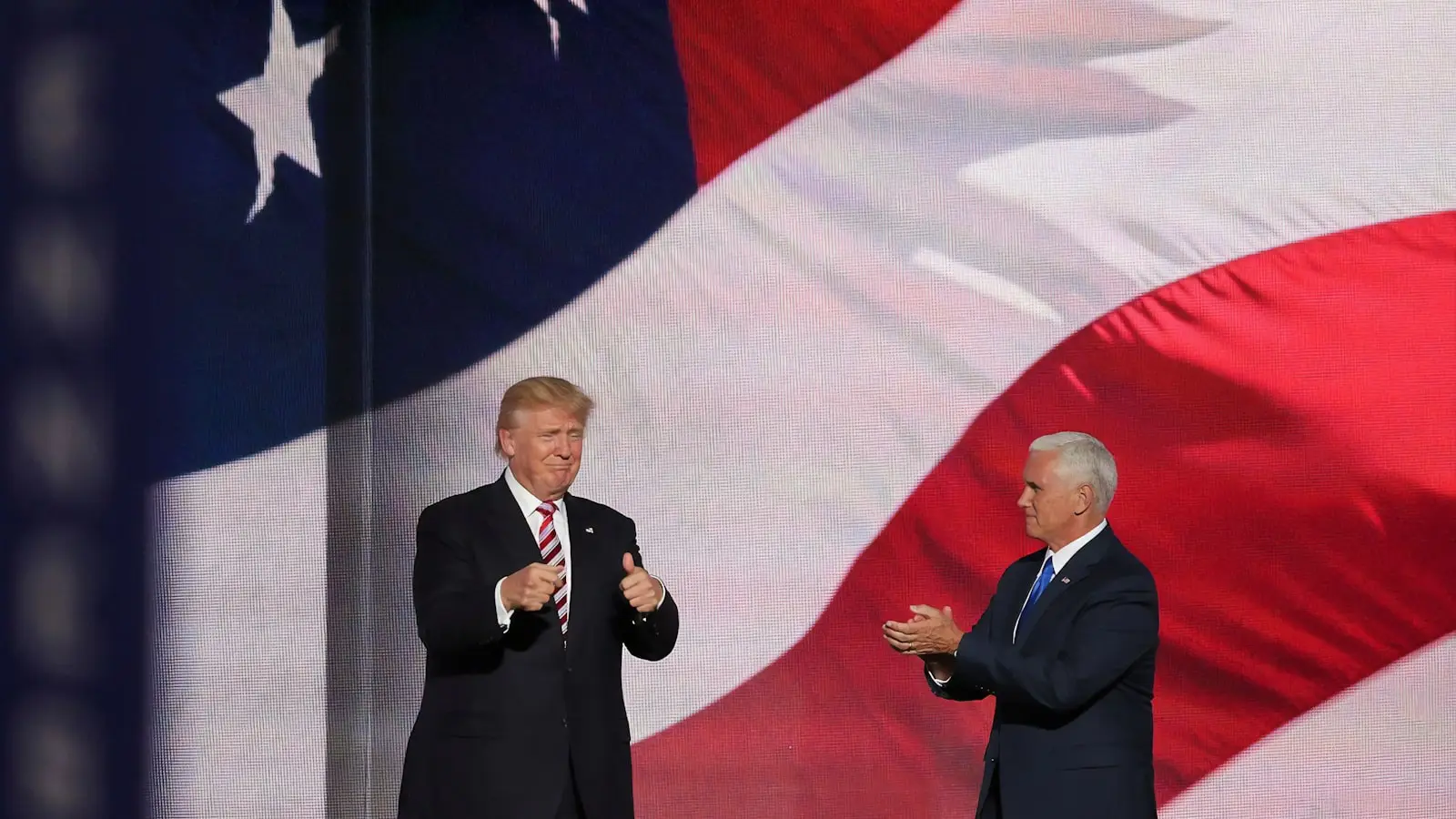

Markets process information, not rhetoric. The declaration of military operations against Iran by the United States executive branch on Monday was, in itself, a predictable geopolitical event long priced into risk models. Capital flows had already anticipated heightened tension in the Persian Gulf. What markets cannot efficiently price is erratic executive function. The juxtaposition of a war announcement with a detailed, almost gleeful, description of a new White-House ballroom introduces a variable of profound uncertainty. This is no longer about calculating the kinetic outcomes of a regional conflict; it is about assessing the stability of the command structure authorizing it.
The immediate, mechanical reaction is in the energy markets. The Strait of Hormuz is not merely a geographic feature; it is the circulatory system for approximately 21% of global petroleum liquids consumption. A military conflict that threatens the 39-kilometer-wide chokepoint triggers an instantaneous repricing of every barrel of oil on the planet. Brent crude futures would not just climb; they would launch. A sustained closure could drive prices from a baseline of $85 per barrel toward the $180-$200 range, a level that would trigger systemic demand destruction and a global recession. War risk insurance premiums for tankers would multiply overnight, effectively halting a significant portion of maritime traffic. Companies like Maersk and COSCO would face a binary choice: risk vessel and crew, or reroute around Africa, adding two weeks and millions in fuel costs to every single voyage from the Gulf to Europe. This is a tax on the entire global supply chain.
The conflict’s stated objectives, as articulated by the President, require careful disassembly. The goals include the destruction of Iran’s missile capabilities, the annihilation of its navy, the cessation of its nuclear program, and the termination of its support for regional militant groups. The projected timeline for this comprehensive strategic victory was given as “four to five weeks,” immediately followed by the qualifier that it could “go far longer than that.” Military strategists at the Pentagon and associated think tanks would privately, and correctly, assess the initial timeline as a work of political fiction. Neutralizing a dispersed and hardened missile infrastructure, let alone dismantling a complex network of regional proxies, is the work of years, not weeks. This disconnect between stated ambition and logistical reality creates a credibility gap that rational investors must treat as a foundational risk.
The Anatomy of Executive Risk
The pivot from discussing military casualties and strategic objectives to the architectural merits of a new ballroom (“most beautiful ballroom in the world,” built “under budget”) is the core data point for risk analysis. It signals a level of focus and gravity that is fundamentally misaligned with the event itself. For foreign central banks holding trillions in U.S. Treasury debt, for institutional investors allocating capital, and for corporate boards planning long-term investments, this behavior matters more than the number of carrier groups in the Arabian Sea. It suggests that decision-making could be subject to whim, distraction, and non-strategic impulses. (Frankly, it forces a repricing of the sovereign risk of the United States itself).
This translates into a tangible economic cost: the political risk premium. Lenders will demand higher yields on U.S. government bonds to compensate for the heightened uncertainty. The dollar, typically a safe-haven asset, could see its status challenged if global capital managers perceive the leadership as unstable. Gold, the Swiss franc, and even cryptocurrencies would likely absorb flight-to-safety flows. The president’s casual dismissal of becoming “bored” with the conflict is not a sign of resolve; it is a signal to the market that long-term strategic commitment is not guaranteed. Markets reward discipline, not impulse.
Sector-by-Sector Shockwaves
The distribution of economic impact will be brutally uneven. A clear delineation of winners and losers emerges almost immediately.
-
Defense & Aerospace: The primary beneficiaries. The share prices of Lockheed Martin, Raytheon Technologies, and Northrop Grumman are not merely reflecting current events; they are pricing in a sustained period of conflict, replenishment of spent munitions, and potentially new, long-term defense contracts. The war, for them, is a demand signal. An F-35 fighter jet, a Tomahawk missile, a Reaper drone—these are products whose order books are now validated by live fire.
-
Energy: The picture is complex. U.S. shale producers in the Permian Basin will see windfall profits from the spike in crude prices. Their production costs are fixed, and every dollar increase in Brent is pure margin. However, the secondary effect of a global recession caused by that same price spike would eventually lead to demand destruction, placing a ceiling on their long-term gains. The initial surge is a certainty; the sustainability is not.
-
Transportation & Logistics: This sector faces a full-spectrum crisis. Airlines, already operating on razor-thin margins, would be crushed by the surge in jet fuel prices. They would be forced to pass these costs to consumers, which, combined with the inflationary pressure on households, would decimate travel demand. Shipping and freight companies face the Hormuz dilemma, with rising fuel and insurance costs fracturing global trade routes. The cost to ship a standard container from Shanghai to Rotterdam could easily double.
-
Consumer Goods & Retail: Discretionary spending evaporates when household budgets are consumed by gasoline and heating oil. Companies selling non-essential goods, from apparel to electronics to automobiles, will face a sharp contraction in revenue. The inflation driven by the energy shock will force central banks globally to maintain high interest rates, further constricting credit and consumer spending.
The Fallacy of a Short War
The market’s gravest error would be to price this conflict based on the four-to-five-week projection. The president’s own admission that it could last longer is the only credible part of the timeline. A protracted war invites a cascade of second- and third-order effects. Iran, while militarily inferior in a conventional sense, has significant asymmetric capabilities. It can activate proxy forces across the Middle East—in Iraq, Syria, Lebanon, and Yemen—turning a bilateral conflict into a multi-front regional conflagration.
This is the long tail risk. It is a scenario where supply chains do not just bend but break. Where regional powers like Saudi Arabia and the UAE are drawn directly into the fighting. Where the initial shock to the oil market is not a temporary spike but a new, elevated plateau of sustained high prices. A war that drags on for months or years would re-draw the map of global energy flows, accelerate the transition to alternative sources out of pure economic necessity, and potentially destabilize governments far from the theater of conflict who are dependent on energy imports. The construction of a ballroom is a finite project with a clear budget and timeline. A war in the Middle East is not. One of these is being treated with more seriousness than the other.