
The global economy priced in a new reality Monday. A regional brushfire involving the U.S., Israel, and Iran has, in under 72 hours, metastasized into a conflict spanning a dozen nations. Financial markets, which had operated under a fragile, U.S.-brokered ceasefire, reacted with predictable and brutal logic. The core disruption is not territorial, but logistical. The Strait of Hormuz, the artery through which one-fifth of the world’s daily oil consumption flows, is effectively closed.
Capital immediately fled from risk. Brent crude futures jumped over 18% in Asian trading before settling near $105 a barrel, a level not sustained since the last major global supply shock. The CBOE Volatility Index (VIX), Wall Street’s so-called fear gauge, surged past 30, signaling acute investor anxiety. The corresponding move was into safe-haven assets. Yields on U.S. 10-year Treasuries compressed as capital sought the relative security of government debt, while gold surged past $2,400 an ounce. This is the classic playbook for geopolitical turmoil. This is a flight to safety.
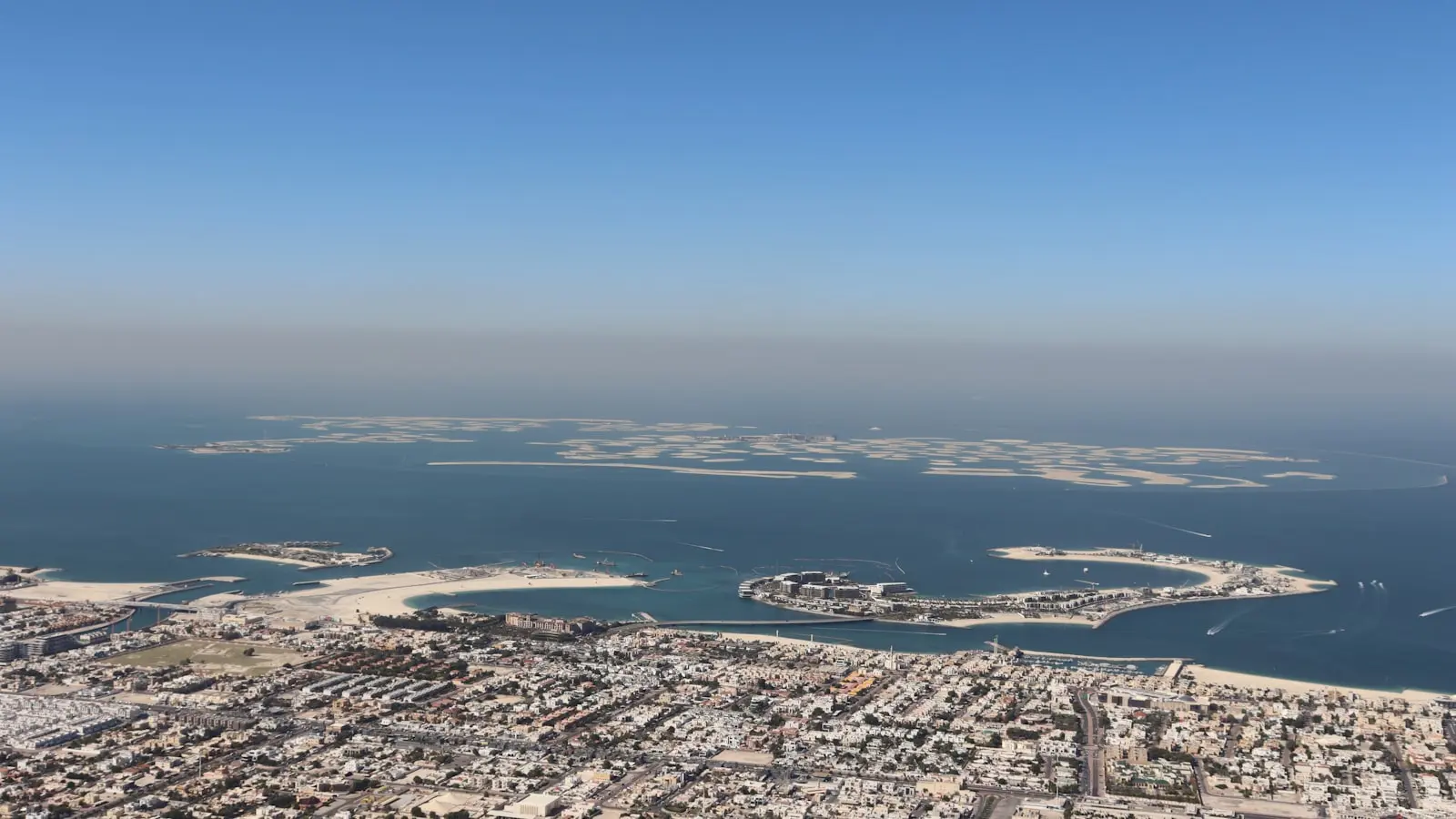
The conflict’s geographic spread provides the context for the market’s panic. Initial U.S. and Israeli strikes on Iranian soil were met with a swift, multi-pronged retaliation. Iran’s ballistic missile and drone barrages were not limited to Israel. They targeted U.S. military installations and allied nations across the Gulf, striking the UAE, Bahrain, Kuwait, and Qatar. The attacks on civilian and financial centers, such as the tourist districts in Dubai, were not accidental. They were designed to inflict maximum economic pain, demonstrating that no regional hub is immune. The message was clear: Iran’s response would not be contained to military targets.
The Economic Contagion Spreads
The expansion of strikes to Saudi Arabia and Oman on the second day marked a significant escalation. Debris from Iranian drones hitting an Aramco oil refinery is a chilling echo of the 2019 attacks that temporarily crippled Saudi production. While damage reports remain preliminary, the psychological impact is severe. It signals that the core of global oil production infrastructure is now a primary target. For its part, Qatar, a key mediator now turned target, reported downing two Iranian jets over its territory. Its subsequent suspension of liquefied natural gas (LNG) production sent a secondary shockwave through energy markets, particularly in Europe, which has grown increasingly dependent on Qatari LNG.
Iran’s official statements, which insist its war is only with the U.S. and Israel, are completely disconnected from its actions on the ground. This dissonance is forcing a recalculation in regional capitals. Arab sources indicate that the strikes on civilian infrastructure and the blatant disregard for diplomatic mediators are pushing Gulf states toward direct retaliation. The economic incentive for neutrality is evaporating. When commercial hubs are targeted, the conflict ceases to be a proxy war and becomes an existential economic threat. They have little choice.
The northern front opened as expected. Hezbollah’s entry into the war, launching rockets from Lebanon into Israel, was a long-anticipated move. While Israeli officials publicly question the limited scale of the initial barrages, the response was anything but limited. Massive Israeli airstrikes on Hezbollah positions, including command centers in Beirut, signal a new, more destructive phase of that confrontation. The most telling development, however, was not military but political. The Lebanese cabinet’s vote to ban Hezbollah’s military activity and demand it surrender its weapons is an act of desperation from a state on the brink of total collapse. (Frankly, it’s an unenforceable decree but a powerful signal of the internal fracture Hezbollah’s actions are causing).
The conflict then crossed a critical threshold, arriving at the gates of Europe. Drone strikes on the British Royal Air Force base at Akrotiri in Cyprus, reportedly launched by Hezbollah from Lebanon, directly involve a European Union member state. Cyprus, the current holder of the EU presidency, is not a peripheral actor. It is a financial and logistical hub for the Eastern Mediterranean. The attack forced the postponement of an EU summit and triggered an immediate military response from Greece, which dispatched naval and air assets to defend the island. The war is no longer a Middle Eastern problem.
The Artery Is Severed
The central pillar of the global economic threat remains the Strait of Hormuz. Iran’s vow to set fire to any ship transiting the strait is more than rhetoric. The U.S. Navy has engaged and sunk several Iranian naval vessels to keep the passage open, but the war risk has rendered it commercially unviable. This is not about physical blockades alone; it is about insurance. War risk premiums for oil tankers seeking to enter the Persian Gulf have become prohibitive. For a vessel owner, the cost to insure a $2 billion supertanker and its cargo against attack now outweighs the profit from the voyage. Capital allocation is rational. The strait is closed.
That 20% of global oil shipments figure fails to capture the dependency it represents. It is the overwhelming majority of supply for key Asian economies like Japan, South Korea, and Taiwan. It is a critical component of China’s energy matrix and a significant source for Europe. The disruption translates into immediate industrial slowdowns and a severe inflationary shock for economies already struggling with post-pandemic recovery. Materializing the data, this isn’t just a number. It’s the equivalent of shutting off the power to a factory that produces the world’s semiconductors.
The policy response from the West is firming up. A joint statement from the U.K., France, and Germany threatening “necessary and proportionate defensive action” is diplomatic language for direct military involvement. They are not talking about sanctions; they are talking about destroying Iran’s launch capabilities at the source. The U.K.’s decision to allow the U.S. to use its regional air bases for offensive strikes is the first concrete step in this direction. This operationalizes the threat and commits European powers to the conflict’s trajectory, further expanding the fiscal burden and economic risk.
Pricing a New Era of Risk
For investors, the landscape has fundamentally shifted. The primary directive is to assess exposure and reallocate capital away from assets most vulnerable to a sustained energy shock and logistical breakdown.
- Energy Sector: The immediate beneficiaries are oil and gas producers located far from the conflict. U.S. shale producers in the Permian Basin, North Sea operators, and South American suppliers will see margins expand dramatically. Conversely, integrated oil majors with significant refining and shipping operations in the Gulf face catastrophic asset risk.
- Defense & Aerospace: Shares in defense contractors are seeing significant inflows. The conflict guarantees increased budgetary allocations for missile defense systems, drone technology, and naval assets across NATO and its Middle Eastern allies.
- Transportation & Logistics: Airlines and maritime shipping companies face a dual crisis: skyrocketing fuel costs and forced rerouting around a massive conflict zone. This will crush margins and likely lead to bankruptcies if the crisis is prolonged. Global supply chains, just beginning to normalize after the pandemic, are broken again.
Central banks now face an impossible choice. Confronted with a massive inflationary shock from energy prices, the standard playbook calls for monetary tightening. However, the same shock is profoundly recessionary, threatening to cripple economic growth. Hiking rates into a slowdown risks stagflation on a scale not seen since the 1970s. (They will likely pause, prioritizing financial stability over inflation targets in the short term). Meanwhile, the threat matrix has extended to the U.S. homeland. The FBI and DHS warnings of a “heightened threat environment” translate into real economic costs—increased security for critical infrastructure, potential cyberattacks on financial networks, and a general drag on commercial activity. The conflict is no longer a foreign policy issue. It is a domestic economic reality.
The market is processing a structural shift. This is not a short-term disruption to be waited out. The closure of the Strait of Hormuz, the direct involvement of European powers, and the targeting of global economic hubs represent a fundamental repricing of geopolitical risk. The era of assuming stable, low-cost global energy transit is over. The coming weeks will be defined by volatility. Capital will reward discipline, not emotional reaction.