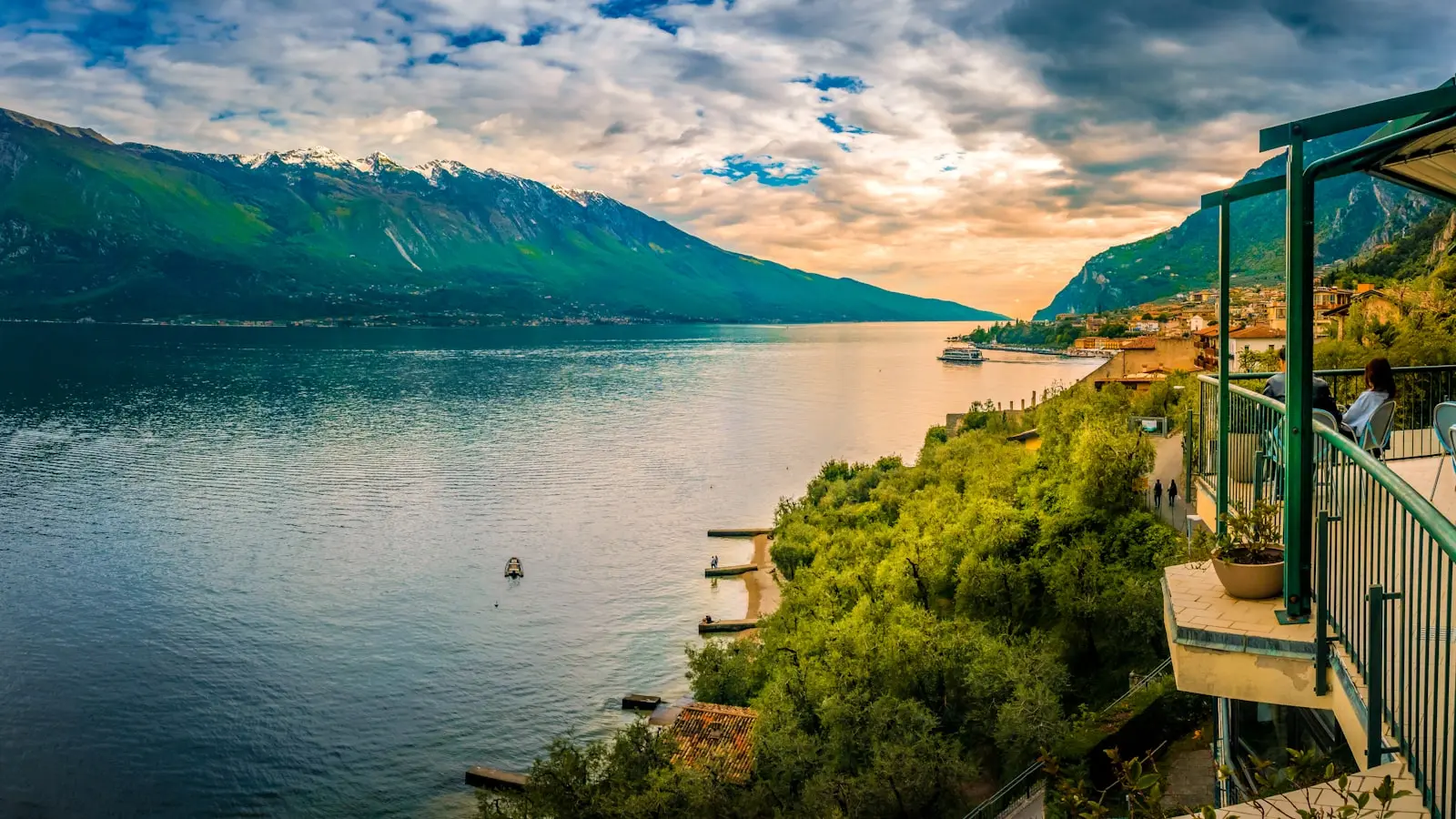

The Geography of Contrast
Lake Garda serves as an uneasy bridge between two worlds. To the south, the terrain flattens into the Lombardy plains, hosting the heavy foot traffic of mass tourism. To the north, however, the lake narrows into a limestone funnel, where the Alps descend directly into the water. This is where the atmosphere shifts from resort-style commercialism to the raw mechanics of wind and elevation. (A welcome change.) Understanding this divide is the first step in planning a trip that avoids the friction of summer congestion.
The Logic of the Shoulder Season
Regional data from March 2026 confirms that the optimal window for engagement with the northern basin is restricted to late April or early October. During these months, the microclimate stabilizes, providing the necessary thermal conditions for windsurfing in the morning and mountain trekking by the afternoon. Attempting to navigate the northern corridors in mid-July is a tactical error; traffic narrows to a crawl as regional roads fail under the weight of seasonal vehicles.
A Seven-Day Operational Plan
For travelers aiming for depth rather than breadth, the following allocation is recommended for a balanced immersion:
- Days 1-3: Alpine Integration. Focus on the elevation surrounding Torbole and Riva del Garda. This is territory for boots and mountain bikes. The terrain here requires physical engagement—an inversion of the sedentary vacation model.
- Days 4-5: Kinetic Water Activities. Transition to the lake surface. The northern wind corridors create a world-class environment for windsurfing and sailing. Participation is advised over observation.
- Days 6-7: Historical Anchoring. Relocate to the southern or central nodes like Sirmione or Malcesine. These areas function as open-air archives of regional history. (The contrast in architecture here is striking.)
Mobility and Infrastructure
The primary constraint in the Garda region is the transit bottleneck. Relying on rental cars for short-distance movement between northern villages often results in wasted hours in stationary traffic. The most efficient logistical choice is the bicycle. The road networks, specifically those hugging the northern cliff lines, are designed for two-wheeled navigation. By opting for a bicycle, a traveler recovers time that would otherwise be lost to the inefficiency of the combustion engine.
Economic and Environmental Realities
Analysts observe that the regional shift is moving toward high-intensity, low-impact tourism. The lake serves as a natural border between three distinct provinces, each with its own regulatory quirks and cultural cadence. While the south caters to volume, the north operates on a principle of specialization. By selecting a base in the northern reaches, one is not merely choosing a location; one is opting into a specific lifestyle where the environment dictates the daily schedule. If the goal is to experience the lake as a local entity rather than a commercial product, the north remains the only viable choice. It is a place of sharp edges, deep water, and wind—a necessary corrective to the over-polished veneer of typical Italian holiday destinations.