
Professional tennis remains a game of physics disguised as athletics. While spectators focus on the power of a serve, the true determinant of a match outcome is the court surface beneath the players. Data from the International Tennis Federation reveals that the surface-to-ball interaction is the single greatest variable in tour-level performance. When a ball strikes a surface, the friction coefficient initiates a chain reaction that alters velocity, spin trajectory, and ultimately, the viability of a player’s tactical profile. (It is rarely just about skill.)
The Friction Gap
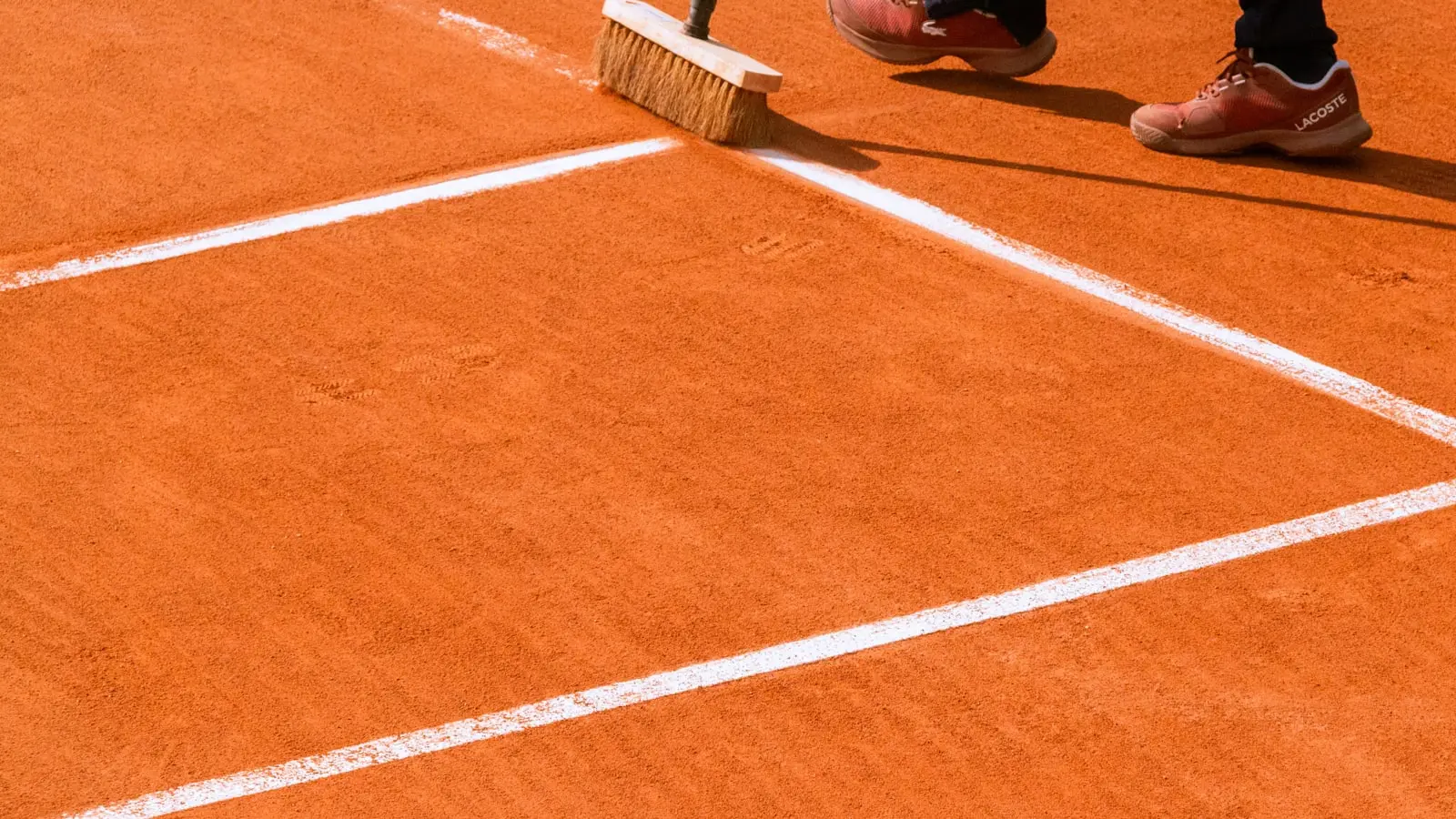
The primary differentiator between the three main surfaces—clay, grass, and hard courts—is the energy absorption and horizontal resistance provided by the substrate. On clay, the surface is inherently distributive. The granular nature of the court creates high friction, slowing the ball speed by 25% to 30% relative to grass. This deceleration acts as a filter, favoring defensive baseliners and heavy topspin practitioners who prioritize movement and endurance over raw velocity. On these surfaces, the rally length increases significantly, and the point-ending power of a flat-trajectory serve is neutralized.
Grass courts function on the opposite end of the spectrum. With low friction and low-to-the-ground bounces, the ball maintains a high portion of its velocity post-impact. This forces a collapse in decision-making windows. Serve-and-volley players thrive here because the court rewards immediate reaction and aggressive positioning. When the court offers little resistance, the advantage shifts toward the server and the net-rusher. The tactical requirement is not endurance, but anticipation.
The Hard Court Equilibrium
Hard courts occupy the middle ground, constructed from acrylic-coated concrete. While marketed as neutral, the reality is far more nuanced. Modern hard courts provide a predictable bounce, which theoretically benefits all-court players. However, recent trends indicate a phenomenon known as “speed creep.” As surface technology advances, many tournament organizers have opted for faster acrylic coatings. This shift forces players to adjust their strike zones and footwork patterns mid-season. Novak Djokovic and other top-tier athletes have noted that even slight changes in court speed dramatically impact the duration of rallies. (And often, the fatigue of the field.)
Surface Impact on Tactical Selection
Coaches now implement specialized training modules centered on surface-specific biomechanics. The footwork required for a sliding recovery on clay is fundamentally incompatible with the explosive lateral movement needed on a fast hard court. The following table summarizes the performance dynamics observed in recent ITF datasets:
| Surface Type | Ball Speed Reduction | Tactical Bias | Primary Physical Stress |
|---|---|---|---|
| Grass | Low | Serve & Volley | Ankle / Knee Pivot |
| Hard Court | Moderate | All-Court | Hip / Lower Back |
| Clay | High | Defensive Baseline | Calf / Hamstring |
The Cost of Evolution
The push for standardized playability is a direct response to injury prevention, yet it creates a secondary issue: the homogenization of player profiles. As polymer-based court construction becomes more sophisticated, the distinction between surfaces is narrowing. This reduction in variety forces players to adapt their games into a singular, high-efficiency model rather than mastering surface-specific techniques. When the surface becomes predictable, the game loses a layer of tactical complexity.
Analysts argue that the future of tennis construction will prioritize durability and uniformity. However, for the player on court, this uniformity masks a dangerous reality. The human body is not built for the repetitive, high-impact stress of modern hard courts. If the surface is too fast, the load is placed on the shoulders and joints during serves; if too slow, the load shifts to the soft tissues during long, grueling rallies. There is no such thing as a perfect surface, only a set of mechanical trade-offs that the athlete must navigate in real-time. (Technology, despite its polish, cannot fully account for human limits.)