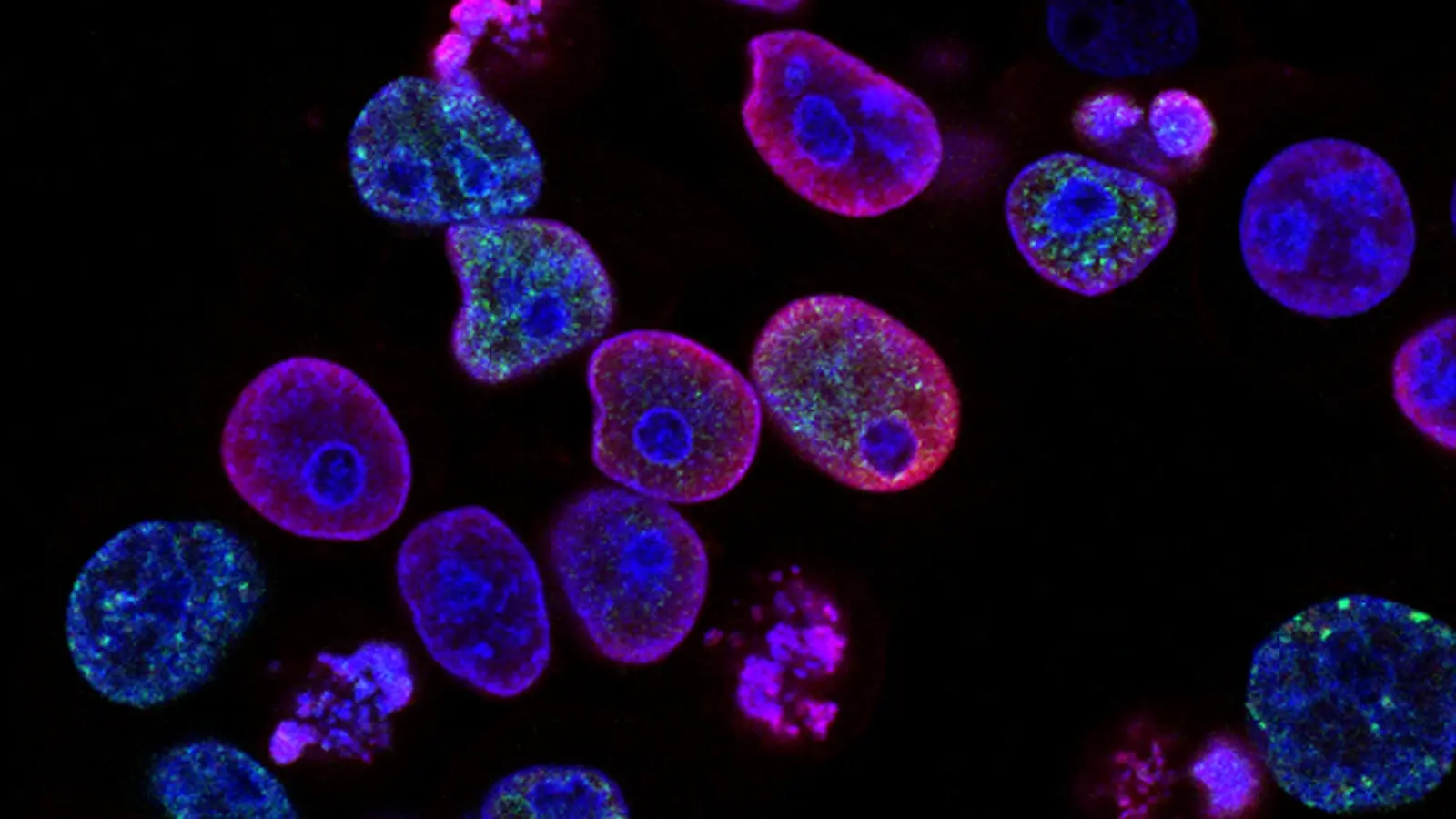

The foundational assumption of neuroscience—that complex learning requires a brain—has been fundamentally broken. In a discovery that re-calibrates our understanding of intelligence itself, researchers at Harvard University have demonstrated that a single-celled organism, Stentor coeruleus, can be taught through associative learning, the same mechanism immortalized by Pavlov’s dogs. The finding suggests the building blocks of cognition are not an exclusive club for organisms with neurons and synapses, but a primordial property of life, operating at the most basic cellular level.
Led by Sam Gershman, the research team subjected the trumpet-shaped protist to a series of conditioning experiments that were elegant in their simplicity yet profound in their implications. Individual Stentor cells were carefully affixed to Petri dishes and exposed to a sequence of stimuli: a weak, almost unnoticeable mechanical tap, followed immediately by a strong, irritating tap that would cause the organism to contract in a defensive reflex. After just ten trials, the cells began to change their behavior. They learned the association. The weak tap, once meaningless, became a predictor of the imminent, stronger disturbance. The probability of the organisms contracting in response to the weak tap alone showed a distinct, characteristic bump, an unmistakable signature of learned anticipation.
This is not mere habituation, a simple dulling of response to a repeated stimulus, which has been observed in protists before. This is associative learning, a far more sophisticated cognitive process where an organism links two unrelated events to predict its environment. Until this report, published in the March 13, 2026 issue of New Scientist, this capability was believed to be the exclusive domain of multicellular life equipped with a nervous system. The discovery effectively pushes the evolutionary origin of learning back by hundreds of millions of years, long before the first neuron ever fired. It is a paradigm shift. A single cell, it turns out, can remember.
What Replaces the Synapse in a Single Cell?
The central, mind-bending question arising from the Harvard study is one of mechanism. In animals with nervous systems, learning and memory are products of synaptic plasticity—the strengthening or weakening of connections between neurons. But Stentor coeruleus has no neurons. It has no brain. It has no synapses. So where is the memory stored? How does a lone cell physically encode the predictive value of a weak tap?
While the exact process is now the subject of intense investigation, leading hypotheses center on the cell’s intricate internal machinery. One strong candidate is the cytoskeleton, the complex network of protein filaments that provides the cell with structure and shape. Researchers theorize that the conditioning process may induce physical, lasting changes in the cytoskeletal architecture. The memory, in this model, is not an abstract electrical pattern but a tangible, structural modification. The cell physically reconfigures itself to ‘remember’ the association between the two taps, a form of mechanical memory etched into its very scaffolding.
Another possibility lies in the dynamics of ion channels, the protein gateways embedded in the cell’s membrane that control the flow of charged particles. Associative learning might tune the sensitivity of these channels. The initial weak tap could ‘prime’ specific channels, making them more likely to trigger a full contraction when the pattern is repeated. This would constitute a form of electrochemical memory, where the cell’s readiness to react is altered based on past experience. (Frankly, the cell is programming its own hardware in real-time).
What makes this cellular learning so remarkable is that it must be both stable enough to persist yet flexible enough to be unlearned if the environment changes. The brain achieves this balance through complex molecular cascades. Discovering the analogous process within a single cell represents a new frontier in cell biology. The organism isn’t just reacting. It is building a simple model of its world.
Rewriting the Timeline of Intelligence
The implications for evolutionary biology are nothing short of a shockwave. The traditional narrative of intelligence has been a neat, linear progression: from simple reflexes in primitive organisms to the complex cognitive architectures of vertebrates, culminating in the human brain. That story assumed that true learning was a late-stage evolutionary luxury, an expensive add-on that only appeared after the development of multicellularity and nervous systems.
This discovery obliterates that timeline. It posits that learning is not a derived trait but a fundamental characteristic of life itself. The ability to associate environmental cues to predict future events provides an immense survival advantage. An organism that can learn that stimulus A predicts danger B is far more likely to survive and reproduce than one that cannot. The Stentor findings suggest this powerful evolutionary driver has been in play since life existed at the single-cell level. This capacity may have been a critical, and previously invisible, engine of evolutionary innovation, providing a selective pressure that favored organisms capable of more complex information processing long before the Cambrian explosion diversified animal body plans.
The neat textbook chapters on the evolution of cognition will need a significant rewrite. The foundation of intelligence wasn’t laid with the first brain; it was laid with the first cell that could learn from its past to anticipate its future. The rest, it seems, has been an elaboration on a truly ancient theme.
If Brains Are Not Essential for Learning What Is?
This radical reframing extends far beyond evolutionary theory, sending ripples through neuroscience and even artificial intelligence. For neuroscientists, the study forces a difficult re-evaluation of core concepts. If a single cell can perform a cognitive task that was thought to require a neural network, then what, precisely, is a memory? Is it possible that synaptic plasticity is just one biological implementation of a more universal principle of information storage? The focus may now shift from studying networks of neurons to understanding the sub-neuronal, molecular mechanisms that enable information processing within any cell.
This opens up speculative but exciting possibilities in the realm of bio-computing. Current computational models, even neural networks, are largely inspired by a neuron-centric view of the brain. The Stentor discovery provides a proof-of-concept for a completely different kind of information processing—cellular computation. Imagine engineering organisms that use their internal molecular machinery to store and process data. One can envision living computational systems: self-repairing, incredibly energy-efficient bioreactors where the logic gates are not silicon transistors, but the learned responses of countless cells.
This is not science fiction. It is the logical technological extension of a newly discovered biological reality. The boundary between living matter and computational substrate has become dramatically blurred. The question is no longer just how brains compute, but how life itself computes.
The New Frontier of Cellular Cognition
Of course, the Harvard study raises more questions than it answers. Is Stentor coeruleus an anomaly, or is associative learning a widespread, latent ability across the microbial world? How complex can this cellular learning become? Can a single cell learn to discriminate between multiple predictive cues, or is it limited to simple one-to-one associations? And perhaps the most profound question of all: where does this leave our understanding of consciousness?
The finding does not imply that a single cell is ‘aware’ or ‘thinking’ in any way we would recognize. (That would be a severe overstatement). However, it forces us to confront the origins of subjective experience. If a primary function of a brain is to create a predictive model of the world to guide behavior, and a single cell can be shown to do a primitive version of the same thing, it complicates any simple line we might try to draw between non-cognitive and cognitive life.
The search for the roots of intelligence has been irrevocably altered. It is a search that no longer looks only at the intricate dance of neurons within a skull but must now also look into the cytoplasm of a single cell, where the ancient machinery of learning first whirred to life. The game has changed completely.